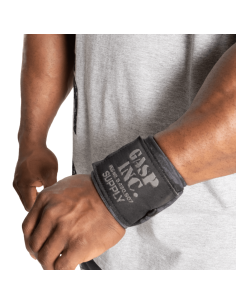
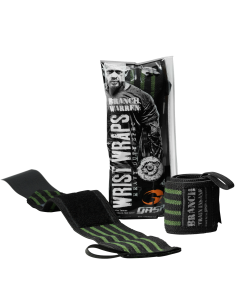
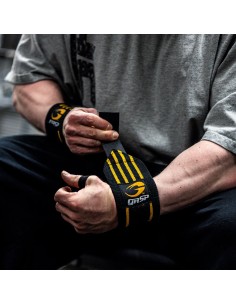
Wrist Wraps & Wrist Supports – Support for Strength Training
Wrist wraps are a classic training accessory used in strength training, bodybuilding and powerlifting. They are wrapped around the wrist and can provide additional stability during heavy pressing exercises. Wrist wraps are particularly popular for bench presses, shoulder presses and other exercises involving heavy loads.
At Vikingstore, you’ll find wrist wraps and wrist supports for different training styles and requirements. Depending on the model, they vary in length, material, elasticity and stiffness.
One thing is important: wrist wraps don’t do the work for you. They are designed to support your wrists during certain exercises – proper technique is still essential.
What Are Wrist Wraps?
Wrist wraps are special supports designed primarily for strength training.
They are usually made from elastic or partially elastic material and are wrapped several times around the wrist.
Most models feature:
- Velcro closure
- thumb loop
- elastic or stiff material
- different lengths and levels of support
Wrapping the material around the wrist provides additional stability.
How much support you get depends on the individual model and how tightly you wrap it.
What Do Wrist Wraps Do?
During heavy pressing exercises, considerable forces are placed on your hands and wrists.
If your wrist bends too far backwards under load, it can feel uncomfortable and make it more difficult to maintain a controlled position.
Wrist wraps can help keep your wrist in a more stable position.
They are therefore commonly used for:
- bench press
- shoulder press
- incline bench press
- dumbbell press
- heavy triceps exercises
- powerlifting
- heavy strength training
However, they aren’t essential for every workout or every exercise.
Wrist Wraps for Bench Press
Bench pressing is probably the exercise where wrist wraps are seen most frequently.
With heavy weights, the wrist can tend to bend backwards excessively.
A wrist wrap can provide additional stability and help you maintain better control of your wrist position under load.
However, wearing wrist wraps doesn’t mean you should ignore poor hand positioning.
Even with wraps, the bar should sit properly in your hand and your wrist should remain as controlled as possible.
Wrist wraps support a good position – they don’t replace it.
Wrist Wraps for Shoulder Press
Wrist wraps are also commonly used for shoulder pressing.
This includes:
- barbell shoulder press
- dumbbell shoulder press
- military press
- machine shoulder press
During heavy sets, wrist wraps can provide additional stability around the wrist.
Whether you need them depends on the weight, your technique and personal preference.
Wrist Wraps for Bodybuilding
In bodybuilding, wrist wraps are mainly used during heavy pressing exercises.
Many bodybuilders wear them for heavy chest and shoulder sets.
For lighter exercises or higher-repetition sets, they often aren’t necessary.
You don’t need to wear wrist wraps from the first exercise to the final set of every workout.
Use them where they actually provide a benefit.
Wrist Wraps for Powerlifting
For many powerlifters, wrist wraps are a standard part of their equipment.
Relatively stiff wrist wraps are particularly common during heavy bench pressing.
As the weights become heavier, maintaining a stable wrist position can become increasingly important.
If you compete, however, make sure the wrist wraps you use comply with the rules of your federation.
Not every model or length is automatically approved by every federation.
Do I Need Wrist Wraps for Strength Training?
Not necessarily.
You can train effectively and lift heavy weights without wrist wraps.
They become particularly interesting when you want additional wrist support during heavy pressing exercises.
For lighter weights, many athletes don’t need them.
Think of wrist wraps as a training accessory for specific situations, rather than an essential requirement for strength training.
Are Wrist Wraps Suitable for Beginners?
Beginners can also use wrist wraps.
However, they shouldn’t be used to hide basic technique problems.
If you’re new to strength training, first learn how to:
- grip the bar correctly
- position your wrists properly
- perform movements with control
- increase weights gradually
As your training progresses and your pressing exercises become heavier, wrist wraps can be a useful addition if you want extra support.
There is no rule saying wrist wraps are only for advanced athletes.
How Do You Put On Wrist Wraps?
The exact method can vary slightly depending on the model.
Generally, the wrap is positioned around the wrist and wrapped several times before being secured with the Velcro closure.
Many models have a thumb loop to make positioning easier.
The important thing is that the wrap actually supports the wrist joint.
If you wrap it too far down your forearm, it will provide considerably less support to the wrist itself.
Where Should Wrist Wraps Sit?
Wrist wraps shouldn’t simply sit somewhere on your forearm.
Part of the wrap should cover the transition between your forearm and hand.
This allows the wrap to actually influence movement at the wrist.
Exactly how high you position it depends on the model, exercise and personal preference.
A high, tightly wrapped and stiff wrist wrap will generally restrict movement more than a loosely wrapped model positioned further down.
How Tight Should Wrist Wraps Be?
As tight as necessary – not as tight as physically possible.
For heavy sets, wrist wraps are often worn relatively tight.
But that doesn’t mean you should cut off circulation to your hands.
If your fingers become numb, change colour or start tingling, the wraps may be too tight.
For lighter sets, you can usually wear them more loosely.
More tension doesn’t automatically mean better training.
Do I Have to Keep the Thumb Loop On?
Many wrist wraps have a small thumb loop.
Its main purpose is to help position the wrap and maintain tension while wrapping it around the wrist.
Depending on the model, sport, competition rules and personal preference, the loop may remain around the thumb or be removed after wrapping.
If you compete, always check the rules of your federation.
What Length Wrist Wraps Do I Need?
Wrist wraps are available in different lengths.
Common options include approximately:
- 30 cm
- 45 cm / 18 inches
- 60 cm / 24 inches
- longer heavy-duty versions
The length affects, among other things, how many times you can wrap the material around your wrist.
Short or Long Wrist Wraps?
Both have their advantages.
Short Wrist Wraps
Shorter models are compact and often allow a little more freedom of movement.
They can be suitable for:
- general strength training
- moderate weights
- bodybuilding
- athletes who don’t want extremely stiff support
Long Wrist Wraps
Longer models can be wrapped around the wrist more times.
Depending on the material, this can provide a firmer level of support.
They are often preferred for:
- heavy bench press
- powerlifting
- very heavy pressing exercises
- athletes who prefer firm wrist support
However, the longest wrist wrap isn’t automatically the best one.
18-Inch or 24-Inch Wrist Wraps?
18 inches is approximately 46 cm, while 24 inches is approximately 61 cm.
For many strength athletes, 18-inch wrist wraps offer a good balance between support and ease of use.
24-inch models provide more material to wrap around the wrist and, depending on their construction, can provide firmer support.
If you mainly train for bodybuilding or general strength, medium-length wraps are often sufficient.
For very heavy bench pressing or powerlifting, longer and stiffer models are often preferred.
Flexible or Stiff Wrist Wraps?
Length isn’t the only important factor.
The stiffness of the material has a major influence on how a wrist wrap feels.
Flexible Wrist Wraps
More flexible models adapt easily to the wrist and allow greater freedom of movement.
They can be comfortable for bodybuilding and general strength training.
Stiff Wrist Wraps
Very stiff models restrict movement more and can provide stronger support.
They are commonly used for heavy pressing exercises and powerlifting.
However, an extremely stiff wrist wrap isn’t automatically better.
If you don’t need that level of support, it may simply feel unnecessarily uncomfortable.
Which Wrist Wraps Are Right for Me?
Here is a rough guide:
General Fitness & Strength Training
A medium-length wrap with moderate stiffness is sufficient for many athletes.
Bodybuilding
Flexible to medium-stiff wrist wraps offer a good balance between support and comfort.
Heavy Bench Press
Longer and stiffer wraps may be useful.
Powerlifting
Many powerlifters prefer longer and very stiff models. If you compete, always check whether the model is approved.
Beginners
An extremely stiff heavy-duty wrap is usually unnecessary. A moderately supportive model is easier to learn to use and adjust.
Wrist Wraps or Fitness Gloves?
Wrist wraps and fitness gloves serve different purposes.
Wrist Wraps
They primarily support the wrist during demanding exercises.
Fitness Gloves
They mainly protect the palms from direct friction and can improve training comfort.
Some fitness gloves also feature integrated wrist support.
These can be practical, but they aren’t necessarily comparable to separate, heavy-duty wrist wraps.
Wrist Wraps or Lifting Straps?
These two training accessories are surprisingly often confused.
But they have completely different purposes.
Wrist Wraps
Support the wrist, particularly during pressing exercises.
Lifting Straps
Support your grip during heavy pulling exercises.
A simple example:
Bench press → Wrist wraps
Heavy rows → Possibly lifting straps
If your grip fails during deadlifts, wrist wraps normally won’t solve the problem. That’s what lifting straps are designed for.
Wrist Wraps or Boxing Hand Wraps?
Although both products are wrapped around the wrist, they are completely different pieces of equipment.
Wrist wraps for strength training are relatively short and firm supports designed primarily to stabilise the wrist.
Boxing hand wraps are considerably longer and are wrapped around the wrist, hand and often between the fingers.
They are worn underneath boxing gloves for boxing, kickboxing and Muay Thai.
Wrist wraps for strength training are not a replacement for boxing hand wraps.
Likewise, traditional boxing wraps aren’t designed to replace powerlifting wrist wraps during heavy bench presses.
Can I Use Wrist Wraps for Deadlifts?
You can wear them, but they generally don’t serve the same purpose during deadlifts as they do during bench presses.
With deadlifts, grip strength is often the main issue.
For this, lifting straps are usually the more appropriate accessory.
Wrist wraps are mainly useful when you specifically want additional support around the wrist itself.
Wrist Wraps for Squats?
During traditional squats, the wrists obviously aren’t the primary focus.
However, depending on your grip position and mobility, holding the bar can still place stress on the wrists.
Some strength athletes therefore also use wrist wraps for squats.
If you experience significant problems with your position under the bar, however, don’t simply wrap your wrists tighter. You should also check your grip width, shoulder mobility and technique.
Wrist Wraps for Dips?
Wrist wraps can also be used for dips.
Whether they are useful depends on how your wrists feel during the exercise and how heavy you train.
During heavy weighted dips, some athletes find additional wrist support comfortable.
However, wrist wraps aren’t generally necessary for dips.
Can I Wear Wrist Wraps for the Entire Workout?
You can – but you don’t have to.
Very tightly wrapped wrist supports aren’t necessarily comfortable when worn throughout an entire workout.
Many strength athletes loosen their wraps between heavy sets or only use them for specific exercises.
Very stiff powerlifting wrist wraps in particular are often tightened immediately before a heavy set.
Do Wrist Wraps Make Your Wrists Weak?
Wearing wrist wraps doesn’t automatically make your wrists weak.
However, it still makes sense to use them selectively.
Using maximum support for every light exercise when you don’t actually need it offers little benefit.
Train with control and use wrist wraps when the additional support makes sense for your training.
Do Wrist Wraps Help with Wrist Pain?
Wrist wraps are training accessories – they aren’t a treatment for pain or injuries.
If you regularly experience wrist pain during training, don’t simply try to hide the problem with increasingly tighter wraps.
First check:
- exercise technique
- grip position
- training weight
- training volume
If the pain is persistent or severe, it should be assessed by an appropriate medical or physiotherapy professional.
How Do I Care for Wrist Wraps?
Wrist wraps absorb sweat during training.
Don’t leave them damp and rolled up inside your gym bag after your workout.
Open them up and allow them to dry completely.
Always follow the manufacturer’s care instructions when cleaning them.
Pay particular attention to keeping the Velcro clean so that it continues to close securely.
When Should I Replace My Wrist Wraps?
Check your wraps regularly for signs of wear.
Typical signs include:
- stretched-out material
- damaged stitching
- heavily frayed areas
- damaged thumb loops
- Velcro that no longer holds properly
If a wrist wrap can no longer be secured reliably or the material is badly damaged, it’s time to replace it.
Use Wrist Wraps Where They Make Sense
Wrist wraps can be a very practical training accessory for heavy strength training.
The important thing is choosing the right model and using it appropriately.
You don’t automatically need the longest and stiffest wrap available.
For bodybuilding, a more flexible model may be more comfortable, while a powerlifter performing heavy bench presses may prefer a considerably stiffer wrap.
The best wrist wraps aren’t necessarily the strongest – they’re the ones that suit your training.
Buy Wrist Wraps & Wrist Supports at Vikingstore
At Vikingstore, you’ll find wrist wraps and wrist supports for bodybuilding, strength training and powerlifting.
Whether you want additional support during bench presses, train heavy shoulder presses or need a firmer wrap for powerlifting, pay particular attention to length, stiffness and material when choosing your wrist wraps.
If you’re unsure which model is right for your training, our team will be happy to help.
Frequently Asked Questions About Wrist Wraps
What Do Wrist Wraps Do?
Wrist wraps can provide additional stability during heavy exercises and help you maintain a controlled wrist position under load.
When Should I Use Wrist Wraps?
They are mainly used during heavy pressing exercises such as bench presses, shoulder presses and incline presses.
Are Wrist Wraps Suitable for Beginners?
Yes. However, beginners should first learn proper technique and wrist positioning and use wrist wraps selectively.
What Length Wrist Wraps Do I Need?
That depends on your training style and the level of support you want. Medium-length wraps are often sufficient for general strength training, while longer and stiffer models are commonly preferred for heavy powerlifting.
Which Is Better – 18 or 24 Inches?
18-inch wraps offer a good balance between support and ease of use for many athletes. 24-inch wraps provide more material and, depending on their construction, can offer firmer support.
How Tight Should Wrist Wraps Be?
They should be tight enough to support your wrists but not so tight that your hands become numb, change colour or start tingling.
Wrist Wraps or Lifting Straps?
Wrist wraps support the wrist. Lifting straps support your grip during pulling exercises. They are two different training accessories.
Are Wrist Wraps the Same as Boxing Hand Wraps?
No. Boxing hand wraps are wrapped around the hands and wrists and worn underneath boxing gloves. Wrist wraps for strength training are considerably shorter and designed for a different purpose.
Can I Use Wrist Wraps for Bench Press?
Yes. Bench pressing is one of the most common exercises for which wrist wraps are used.
Should I Use Wrist Wraps for Wrist Pain?
Wrist wraps shouldn’t be used simply to cover up unexplained pain. If wrist pain is persistent or severe, the underlying cause should be assessed.