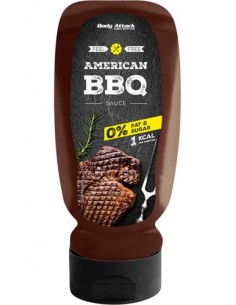
Low Carb Sauces & Dips
Sauces can make a meal much more enjoyable – but depending on the product, they can also add a considerable amount of sugar, fat and calories. Low carb sauces, zero sauces and reduced-calorie dips are therefore popular alternatives for anyone who wants to manage their diet more consciously without sacrificing flavour at every meal.
At Vikingstore, you’ll find a selection of low carb sauces, reduced-calorie sauces, zero sauces and dips for fitness nutrition, dieting and everyday meals.
Whether BBQ sauce, ketchup, mayo-style sauce or dressing: what matters isn’t the big claim on the front of the bottle. The ingredient list and nutritional information tell you much more about what is actually inside.
What Are Low Carb Sauces?
Low carb generally means that a product contains relatively few carbohydrates.
In conventional sauces, sugar and other carbohydrate-containing ingredients can make up a significant proportion of the product.
Low carb alternatives are therefore often formulated differently and may contain less sugar.
Typical varieties include:
- BBQ sauces
- ketchup
- curry sauces
- burger sauces
- mayo-style sauces
- garlic sauces
- salad dressings
- sweet chilli-style sauces
- various dips
However, the exact nutritional composition can vary considerably from one product to another.
Low Carb and Low Calorie Are Not the Same Thing
This distinction is important.
Low carb does not automatically mean low calorie.
A sauce can contain very few carbohydrates while still being relatively high in fat and therefore calories.
Conversely, a reduced-calorie sauce may still contain carbohydrates.
It is therefore useful to distinguish between:
Low Carb: the focus is on a low carbohydrate content.
Low Calorie: the focus is on a low or reduced energy content.
If your main goal is to reduce calories, the energy content is more relevant than the carbohydrate content alone.
What Are Zero Sauces?
The term “Zero Sauce” is commonly used in the fitness industry for sauces with very low sugar and/or energy content.
However, “Zero” is not a reason to ignore the nutritional information.
Depending on the product and the specific claim used, it may still contain small amounts of:
- calories
- carbohydrates
- sugar
- fat
- salt
Our recommendation with zero sauces is simple: turn the bottle around and check the nutritional values.
Are Zero Sauces Really Calorie-Free?
Not necessarily.
Very small amounts can sometimes make a product appear to provide virtually no energy.
You should therefore not automatically assume that every sauce labelled “Zero” contains exactly 0 kcal.
Check the nutritional declaration and, whenever possible, compare products per 100 ml or 100 g.
This makes it much easier to compare different sauces.
Why Can Regular Sauces Contain So Many Calories?
It depends heavily on the type of sauce.
In sweet sauces, sugar can provide a considerable proportion of the calories.
In creamy sauces and mayonnaise, fat often plays a much bigger role.
Fat provides around 9 kcal per gram, while carbohydrates and protein each provide around 4 kcal per gram.
This is why high-fat sauces in particular can have a high energy density.
Reduced-Calorie Sauces for Weight Loss
Sauces can easily be underestimated during a diet.
A little sauce here, some dressing there – and a meal that initially looked relatively low in calories can quickly contain considerably more energy.
Reduced-calorie sauces can therefore be a practical way to lower the calorie content of a meal.
They can be particularly useful with:
- rice dishes
- chicken
- vegetables
- wraps
- burgers
- sandwiches
- salads
- potatoes
- bowls
However:
A zero sauce does not turn a high-calorie meal into a diet meal.
Your overall diet still matters.
Low Carb Sauces for Fitness Meals
Anyone who regularly meal preps will probably know the problem.
Chicken, rice and vegetables may work perfectly well nutritionally – but after several identical meals, things can get pretty boring.
Different sauces and seasonings can add much more variety.
The same basic meal can be turned into a BBQ, curry, garlic or sweet chilli-style dish simply by changing the sauce.
This can make everyday fitness meals much more enjoyable.
BBQ Sauce – Regular or Low Carb?
Traditional BBQ sauces can contain relatively high amounts of sugar, depending on the recipe.
Low carb or reduced-sugar alternatives may therefore be interesting if you specifically want to reduce your carbohydrate or sugar intake.
When comparing products, check:
- carbohydrates
- sugars
- calories
- salt
- ingredients
- serving size
Whenever possible, compare several products.
Just because the bottle is black and says “Fitness BBQ” doesn’t automatically mean the nutritional values are better.
Ketchup with Less Sugar
Traditional ketchup often contains sugar in addition to tomatoes.
Today, there are numerous alternatives with reduced sugar or no added sugar.
If you use a lot of ketchup, choosing an alternative product can make a noticeable difference to your daily sugar and calorie intake.
However, always check the exact nutritional information.
“No added sugar” and “sugar-free” do not mean the same thing.
Mayo-Style Sauces
Traditional mayonnaise contains a high proportion of oil and is therefore very energy-dense.
Reduced-calorie mayo-style sauces aim to provide a similar flavour or creamy consistency with considerably less energy.
The difference in calories between traditional mayonnaise and reduced-calorie alternatives can be particularly significant.
Of course, a mayo-style sauce is not necessarily the same as traditional mayonnaise.
But if your main goal is to reduce calories, these alternatives can be useful.
Salad Dressings – The Calories People Often Forget
Salad is often automatically considered a light meal.
That isn’t always the case.
Depending on the ingredients and dressing used, the calorie content can change considerably.
Large amounts of creamy dressings or oil-rich sauces can add significant energy to a salad.
Reduced-calorie dressings can be an alternative if you want to save calories without having to eat your salad dry.
Sugar-Free Sauces – What Does It Mean?
It is important to look carefully at claims relating to sugar.
There is a difference between:
- sugar-free
- reduced sugar
- no added sugar
These terms do not automatically mean the same thing.
A product with no added sugar, for example, may still contain naturally occurring sugars.
Check the nutritional information and ingredient list if sugar content is important to you.
Why Do Many Low Carb Sauces Contain Sweeteners?
When sugar is reduced or removed, some of its sweetness naturally disappears as well.
Many manufacturers therefore use alternative sweeteners.
You can find the specific sweeteners used in the ingredient list.
Taste can vary considerably between products.
Some people prefer very sweet zero sauces, while others prefer products that taste more similar to conventional sauces.
Perfect nutritional values are not much use if the bottle stays in your fridge because you don’t like the taste.
How Should I Compare Sauces?
The easiest way to compare different products is to use the values per 100 ml or 100 g.
Pay particular attention to:
- calories
- carbohydrates
- sugars
- fat
- saturated fat
- protein
- salt
- ingredients
Then consider the amount you actually use.
After all, 10 ml and 50 ml of sauce are very different serving sizes.
Serving Size Is Easy to Underestimate
This is particularly relevant with sauces.
The serving size stated on the bottle may be relatively small.
If you pour sauce directly over your food, you may actually use considerably more.
If you track your calories closely, it can therefore be useful to occasionally measure or weigh how much sauce you actually use.
After a while, you’ll usually develop a good sense of portion size.
Low Carb Sauces for Muscle Building
Low carb or zero sauces can also be useful during a muscle-building phase – not necessarily because you need to save calories.
They can simply provide more variety.
If you eat larger quantities of similar foods every day, different sauces can change the flavour without requiring you to completely redesign your meal.
If you deliberately need more calories, there is of course nothing inherently wrong with a regular sauce if it fits your diet.
Low Carb Sauces During a Diet
During a calorie-restricted diet, reduced-calorie sauces can be particularly practical.
They can make meals more enjoyable without requiring you to budget large amounts of additional energy.
However, using zero sauce does not automatically make you lose weight.
Your overall energy balance over time remains the deciding factor.
Are Low Carb Sauces Healthy?
There is no simple answer.
“Low Carb” describes one aspect of a food. It is not a general quality label.
A product is not automatically “healthy” simply because it contains few carbohydrates.
Likewise, a conventional sauce is not automatically bad.
Relevant factors include:
- overall composition
- amount consumed
- the rest of your diet
- your personal nutritional goals
We therefore prefer not to divide foods into simplistic categories such as “good” and “bad”.
How Long Do Opened Sauces Keep?
This varies depending on the product.
Always follow the storage and consumption instructions provided by the manufacturer.
Many sauces need to be refrigerated after opening and consumed within a specified period.
Don’t rely on one general rule – check the individual bottle.
Which Sauce Goes with Which Meal?
This is naturally a matter of taste, but some combinations work particularly well.
BBQ Sauce
Works well with meat, burgers, chicken, potatoes and grilled dishes.
Curry Sauce
A good choice for chicken, rice, bowls and vegetables.
Sweet Chilli
Works well with rice dishes, chicken, Asian-inspired bowls and vegetables.
Garlic Dip
A good match for meat, potatoes, wraps and vegetables.
Burger Sauce
Ideal for burgers, sandwiches and wraps.
Dressing
For salads and bowls.
Keeping several flavours on hand can make similar basic ingredients taste completely different from one meal to the next.
What Should I Look for When Buying?
The best sauce for you depends on your goal.
If you want to reduce calories, pay particular attention to energy content.
If you want to reduce carbohydrates, compare the carbohydrate values.
If you want to reduce sugar, check the sugar content and ingredient list.
And if you simply want a sauce for your daily meal prep:
Don’t forget about taste.
A sauce can have perfect nutritional values on paper – if you don’t enjoy it, it isn’t much use.
Buy Low Carb Sauces & Dips at Vikingstore
At Vikingstore, you’ll find a selection of low carb sauces, zero sauces, reduced-calorie sauces and dips for your fitness meals.
Depending on the current range, different flavours and varieties may include:
- BBQ sauces
- ketchup
- curry sauces
- burger sauces
- mayo-style sauces
- garlic sauces
- sweet chilli-style sauces
- dressings
- dips
Whether you’re dieting, following a low carb diet, meal prepping or simply want more flavour in your everyday meals, compare the nutritional values and ingredients and choose a sauce that suits both your diet and your taste.
Frequently Asked Questions About Low Carb Sauces & Dips
What Are Low Carb Sauces?
Low carb sauces are sauces with a comparatively low carbohydrate content. The exact nutritional composition varies depending on the individual product.
Are Low Carb Sauces Automatically Low in Calories?
No. A low carbohydrate content does not automatically mean a low calorie content. Fat in particular can significantly affect the energy content.
Are Zero Sauces Completely Calorie-Free?
Not automatically. Check the nutritional information for the individual product rather than relying solely on the word “Zero”.
What Is the Difference Between Low Carb and Low Calorie?
Low carb refers to carbohydrate content. Low calorie refers to energy content. They are not the same thing.
Are Reduced-Calorie Sauces Suitable for a Diet?
They can be a practical way to reduce energy intake compared with higher-calorie sauces. However, your overall energy balance remains important for weight loss.
Do Low Carb Sauces Contain Sweeteners?
Many products use sweeteners when sugar is reduced or replaced. Check the ingredient list of the individual product to see which sweeteners are used.
Is “No Added Sugar” the Same as “Sugar-Free”?
No. A product with no added sugar may still contain naturally occurring sugars.
Do Low Carb Sauces Need to Be Refrigerated?
This depends on the individual product. Always follow the manufacturer’s storage instructions, particularly after opening.
Which Nutritional Values Should I Compare?
Calories, carbohydrates, sugars, fat and salt are particularly useful. For a direct comparison between products, use the values per 100 ml or 100 g.