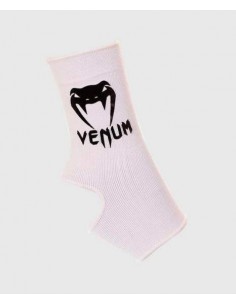
Ankle Guards and Ankle Supports for Muay Thai, Kickboxing and MMA
Ankle guards, also known as ankle supports or Muay Thai ankle wraps, are a familiar part of the training equipment used by many Muay Thai and kickboxing athletes. These elastic supports are pulled over the foot and ankle to provide light compression, warmth and a close-fitting layer around the joint.
At Vikingstore, you can find ankle guards for Muay Thai, kickboxing, K1 and MMA. Depending on the model, they are made from elastic cotton, polyester, elastane or a functional blend of materials. Some versions are thin and highly flexible, while others include light padding around the ankle.
An ankle guard is not a rigid brace and does not replace medical treatment. If you have pain, swelling or an unstable ankle, stop training and have the problem assessed by a qualified healthcare professional.
What is an ankle guard?
A traditional ankle guard is an elastic support designed for combat sports. It covers part of the foot and the area around the ankle joint. The heel and toes usually remain open.
The flexible construction allows the support to fit closely and move naturally with the foot. This makes ankle guards suitable for dynamic combat sports involving quick steps, pivoting, kicks and frequent changes of direction.
Ankle guards are commonly worn for:
- Muay Thai
- Kickboxing
- K1
- MMA
- Thai boxing
- Heavy bag training
- Pad work
- Technical partner drills
They may also be used in other barefoot martial arts, provided they are permitted by the gym or competition rules.
What does an ankle guard do?
An elastic ankle guard can provide light compression and help keep the ankle area warm during training. Many athletes find this close-fitting support comfortable, particularly during longer sessions.
Depending on the design, an ankle guard can offer several benefits:
- light compression around the ankle;
- a comfortable feeling of warmth;
- flexible support without rigid inserts;
- absorption of some moisture;
- reduced direct friction against the skin;
- a more comfortable feeling during pivots and quick footwork;
- protection against minor mat burns and abrasions.
The effect depends on the model, fit and personal preference. An elastic ankle support can accompany the natural movement of the joint, but it cannot fully stabilise the ankle or prevent every sprain.
Ankle guards for Muay Thai
Ankle guards are widely used as part of Muay Thai equipment. Muay Thai places considerable demands on the feet and ankles. Fast changes of direction, pivoting, kicks, knee strikes and clinch work all require mobility and controlled foot placement.
A close-fitting ankle guard can help keep the ankle area warm without significantly restricting the movement needed for Muay Thai. The open heel allows direct contact with the training surface, which is important for balance and controlled rotation.
Many fighters also wear ankle guards because they prefer the light compression or simply feel more comfortable training in them. They are not compulsory equipment. The important point is that you can move naturally and that the support does not slip, twist or restrict circulation.
Ankle supports for kickboxing and K1
Ankle guards can also be worn for kickboxing and K1, including technical training, pad work and sparring. Their elastic construction stays close to the foot and provides enough freedom for fast kicks, combinations and footwork.
During intensive sessions, an ankle support can also absorb some perspiration. This may improve comfort but does not replace a clean and dry training surface.
Before a competition, check whether ankle guards are permitted. Requirements can vary depending on the federation, discipline and individual event.
Are ankle guards suitable for MMA?
Ankle guards may also be worn during MMA training. Their close-fitting construction is usually less disruptive than a bulky brace with straps or hard components.
For grappling and ground training, the ankle guard must fit particularly well. A loose model can twist, form folds or be pulled out of position during transitions. Some gyms may also have their own rules regarding textile supports for hygiene or safety reasons.
An ankle guard for MMA should:
- fit closely without forming folds;
- contain no hard fasteners;
- remain sufficiently flexible;
- leave the heel and toes unrestricted;
- stay in position during ground movement.
A thin ankle guard does not provide reliable protection against joint pressure from leg locks, foot locks or other submission techniques.
Combining ankle guards with shin guards
Ankle guards can be worn underneath or together with shin guards and foot protection. Whether this combination feels comfortable depends on the shape of the shin guard and the thickness of the ankle support.
A thin ankle guard can usually be worn under the elastic section of a shin guard. It should not create thick folds or pressure points. Too much material beneath a tightly fitting foot protector can become uncomfortable during training.
Before sparring, check that:
- the shin guard still sits correctly;
- the foot protector has not become too tight;
- no seam presses against a sensitive area;
- the ankle can move naturally;
- the ankle guard does not slip when kicking.
Ankle guards and shin guards serve different purposes. An elastic ankle support does not replace padded protection against kicks or heavy impacts.
Padded or unpadded ankle guards
Traditional Muay Thai ankle guards usually have no substantial padding. Their primary functions are light compression, warmth and a close fit.
Padded models contain additional foam around the ankle bones. They can provide more comfort against light contact and friction. However, the extra padding makes them thicker, which means they may not fit comfortably underneath every shin guard.
An unpadded ankle guard is generally suitable when freedom of movement, close contact and a low-profile fit are most important.
A padded version may be useful if you want additional protection against light knocks and abrasions. Even padded ankle guards cannot reliably prevent serious injuries or stop the ankle from rolling.
How should an ankle guard fit?
An ankle guard should fit closely without interfering with circulation. It must not move excessively or form uncomfortable folds during training.
A suitable fit can be recognised by the following points:
- The material lies smoothly against the foot and ankle.
- The openings do not cut into the skin.
- The toes can move naturally.
- The heel sits centrally in the heel opening.
- The foot can flex and extend normally.
- There is no numbness, tingling or discolouration.
- The support remains in place during pivots and footwork.
A model that is too large can slide around and provide very little compression. An ankle guard that is too small can cause pressure points and restrict circulation.
Choosing the correct size
Sizing varies between brands and individual models. Some manufacturers base their sizes on shoe size, while others require the circumference above the ankle. Certain elastic ankle guards are only available in one size.
Always check the size guide for the specific product. If the manufacturer requires an ankle measurement, place the measuring tape closely around the indicated area without compressing the skin.
If your measurement falls between two sizes, the best choice depends on the level of compression you prefer. The smaller option normally feels tighter, while the larger size applies less pressure.
Never choose such a tight fit that your foot or toes begin to tingle, feel cold or change colour.
How to put on an ankle guard
Carefully pull the ankle guard over the foot and position the heel inside the opening. Adjust the material until it lies smoothly over the foot and around the ankle joint.
Avoid pulling aggressively on the top edge or on individual seams. This can overstretch the material and reduce the life of the support.
Before starting your session, check the following:
- Is the fabric smooth and free from folds?
- Is the heel opening positioned correctly?
- Can you move your foot naturally?
- Are there any uncomfortable pressure points?
- Does the support remain in place during a few test movements?
If you also wear shin guards, test the complete combination before starting partner drills or sparring.
Can an ankle guard prevent injuries?
An ankle guard can provide warmth, light compression and a comfortable feeling of support. It cannot reliably prevent injuries.
Most combat sports ankle guards are elastic textile products without rigid stabilising components. They should not be confused with a medical ankle brace or a professionally applied sports tape system.
If you have an acute injury, recurring sprains, persistent pain or noticeable instability, do not attempt to hide the problem by wearing an ankle guard. Have the cause assessed professionally and return to training gradually.
Correct technique, sensible training progression, strong foot and lower-leg muscles and a suitable training surface remain important even when an ankle support is worn.
Ankle guards and grip on the mat
The open heel and toe design of many ankle guards allows the bare skin to remain in contact with the floor. This can help maintain the direct surface contact needed for stance, balance and pivoting.
An ankle guard should not be used to compensate for a slippery or dirty training floor. Moisture, dust and unsuitable flooring can affect grip regardless of the equipment worn.
If the support moves under the foot or covers more of the sole than intended, stop and reposition it before continuing. A twisted ankle guard may interfere with foot placement and become a distraction during training.
How to clean ankle guards
Ankle guards are worn directly against the skin and absorb perspiration during training. They should therefore be cleaned regularly.
Always follow the care instructions supplied by the manufacturer. Depending on the material, hand washing or a gentle machine cycle may be suitable. A laundry bag can help protect the fabric and seams.
After washing, allow the ankle guards to dry completely in the air. Do not place them on a hot radiator or use a tumble dryer unless this is expressly permitted by the manufacturer.
Owning several pairs is practical if you train multiple times per week. Each pair can then dry completely before being worn again.
When should an ankle guard be replaced?
Elastic material gradually loses its tension. An ankle guard should be replaced when it no longer fits securely or shows clear signs of damage.
Common signs include:
- stretched cuffs;
- damaged or open seams;
- permanently distorted heel openings;
- heavily worn fabric;
- noticeably reduced compression;
- persistent odour despite correct cleaning;
- slipping or twisting during training.
A worn ankle guard can no longer provide the intended fit and may form distracting folds around the foot.
Are ankle guards permitted in competition?
Competition rules vary between federations and disciplines. Ankle guards may be permitted in one event and restricted in another. Some organisers specify approved colours, materials or equipment brands.
Ask your coach or the event organiser before competing. Do not assume that a support used in daily training will automatically be accepted at every tournament.
The official rules of the event always take priority over a general product description.
Buying Muay Thai ankle guards in Switzerland
Vikingstore offers ankle guards and ankle supports for Muay Thai, kickboxing, K1 and MMA. Choose from elastic, close-fitting and lightly padded models for technical training, pad work and sparring.
When selecting your ankle guards, consider the correct size, material and intended use. If you plan to wear them underneath shin guards, choose a model that fits closely and does not create folds. A lightly padded version may be suitable if you want additional comfort around the ankle bones.
Discover our complete range of protective equipment for boxing and martial arts. Order online with delivery throughout Switzerland or visit the Vikingstore shops in Bern and St. Gallen. We will be happy to help you choose the appropriate size and design for your training.