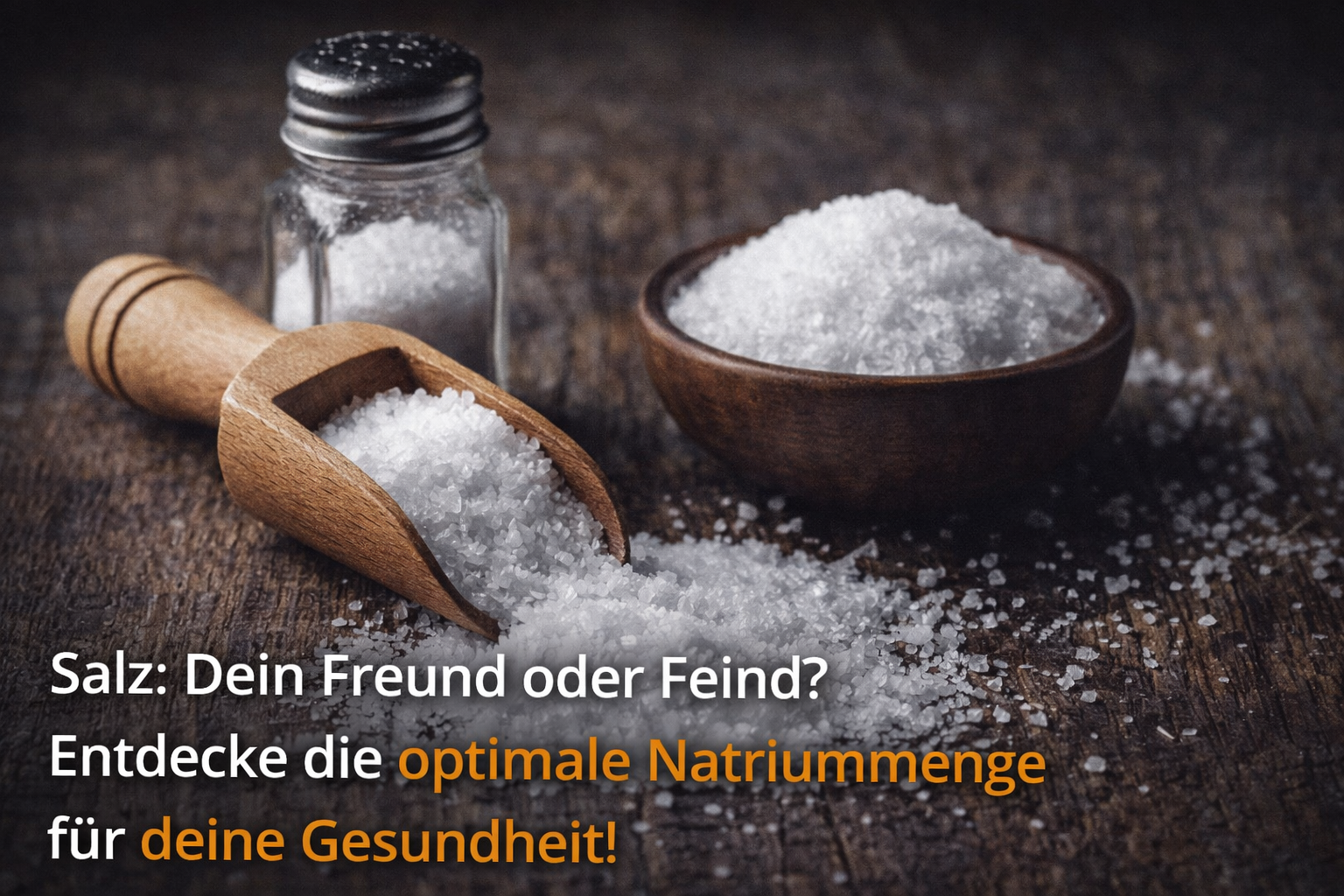
Salt: your friend or foe? Discover the optimal amount of sodium for your health!
SaltHas played an important role in our diet for thousands of years. It was used by the Egyptians in religious ceremonies and traded as a commodity. The Greeks used it to buy slaves, while the Romans used it to pay their soldiers (the English word "salary" is derived from the Roman word "salarium", which symbolised the salt ration). European plutocracies were based on salt and today it can be found in many foods.
Salt was once a valuable resource, but today it is regarded merely as a condiment - like life itself. Salt, the most important mineral in the history of mankind, has been downgraded to the status of a simple condiment. In our modern diet, salt is considered one of the most demonised nutrients. Health authorities have been warning about the supposed dangers of salt for decades, linking it to an increased risk of heart disease and strokes. However, new research challenges these claims and suggests that the harmful effects of salt may not be as serious as previously thought.
What is sodium?
Sodium is a mineral and is also known as an electrolyte, a substance which, when dissolved in a liquid, increases its electrical conductivity.
Electrolytes are essential for human life, as our body consists of trillions of cells that depend on electrical signals to function.
In order to reach their targets, these signals must be transmitted through liquids. These liquids require electrolytes to enable the transmission of these signals.
Sodium is one of the most important electrolytes in our body. It works together with potassium and operates a "pump", which is essential for maintaining the action potential of the cells.
This cellular pump remains active at all times and transports sodium ions out of the cell and potassium ions into it. This ensures that the cells contain relatively high amounts of potassium ions but low amounts of sodium ions.
The cell uses this pump to maintain a balance of sodium, potassium and fluid content in its walls
In addition, sodium helps to regulate blood volume and is involved in muscle and nerve activity.
Is salt and Sodium bad for you?
Our shared fear of salt began in the early 20th century when French doctors reported that six of their patients with high blood pressure were following a high salt diet.
These fears were heightened in the 1970s when Lewis Dahl of Brookhaven National Laboratory was able to induce high blood pressure in rats by feeding them a high-sodium diet.
Dahl also came to the conclusion that countries with a high-salt diet also had higher rates of high blood pressure and strokes.
However, his research results and the fear of sodium in general are slowly beginning to falter. Recent studies suggest that this fundamental compound is not as harmful as once thought.
The text begins by noting that an extensive review of the sodium literature was published in 2003. This review concluded that there is little evidence in favour of the benefits of long-term reduction in salt intake
(1). Eight years later, a meta-analysis of seven studies involving over 6,250 subjects supported these findings and found no evidence that reducing salt intake effectively reduces the risk of heart attack, stroke or death in people with normal or high blood pressure
(2). In 2015, further research was carried out which showed that lower salt consumption may even be associated with a higher risk of dying from heart disease (3).
The question arises: What is behind this?
Nowadays we know that genetic predisposition and cultural factors play a role. Some people are more sensitive to sodium than others. We also know that an insufficient intake of sodium can increase the risk of various diseases and dysfunctions. These include increased LDL cholesterol and triglyceride levels in the blood (5) and greater insulin resistance (7). Type 2 diabetes is also affected
When we talk about the effects of sodium on our health, we must also consider the ratio between sodium and potassium. Studies have shown that this ratio is extremely important.
Official bodies recommend a daily intake of 4.7 grams of potassium per day. However, the actual intake in the western world in 2010 was only 2.64 grams per day. This leads to a widespread lack of potassium in the western world.
Unsurprisingly, fruit and vegetables are the best sources of potassium - the very foods that many people avoid. This makes it all the more important to maintain a nutritious diet.
There are scientific studies that show that an imbalance between sodium and potassium is probably more harmful than high sodium intake alone. For example, research from the Center for Disease Control at Harvard University found that the risk of heart attack or death of any kind was twice as high in people with the highest sodium to potassium ratio compared to those with the lowest ratio (10).
When we talk about the effects of sodium on our health, we must also consider the ratio between sodium and potassium. Studies have shown that this ratio is extremely important.
Official bodies recommend a daily intake of 4.7 grams of potassium per day. However, the actual intake in the western world in 2010 was only 2.64 grams per day. This leads to a widespread lack of potassium in the western world.
It is not surprising that fruit and vegetables are the best sources ofPotassium are precisely the types of food that many people avoid. It is therefore all the more important to maintain a nutritious diet.
There are scientific studies that show that an imbalance between sodium and potassium is probably more harmful than high sodium intake alone. For example, research from the Center for Disease Control at Harvard University found that the risk of heart attack or death of any kind was twice as high in people with the highest sodium to potassium ratio compared to those with the lowest ratio (10).
To summarise, it can be said that
As long as you don't consume large amounts of convenience foods and highly processed foods, don't over-salt your meals and make sure you're getting enough potassium, you're unlikely to experience any sodium-related problems.
How much sodium should be consumed daily?
As with saturated fats, there used to be an assumption that sodium caused heart disease. However, we have now been proven wrong. Some even claim that both saturated fats and sodium can be safely consumed in large quantities without fear of negative health effects. Personally, however, I disagree.
As far as saturated fats are concerned, reputable nutrition and cardiology researchers continue to argue that high consumption of these fats is associated with an increased risk of heart disease and therefore we should adhere to the generally accepted guidelines on saturated fat intake (11, 12) - at least until further evidence is available.
The same applies to sodium consumption: until you know for sure whether a high intake will affect your blood pressure or not, it is advisable to stick to official recommendations for daily sodium intake (approx. 2.3 grams per day or 1.5 grams for African Americans and people with high blood pressure, diabetes or chronic renal insufficiency and people over 51 years of age).
However, it is important to note that people who sweat regularly may have a higher need for sodium (13) to compensate for the loss through sweat. In such cases, an intake of 3.5 to 4 grams of sodium may make sense.
Most people do not pay attention to their sodium intake and are not aware of the different sodium levels in food.
Let's start with salt - one teaspoon contains about 2.3 grams of sodium (so perhaps it's now clearer why many people consume more sodium than they should).
In addition, the following foods contain high levels of sodium (and are very popular in Western diets):
- Bread made from yeast dough
- Pizza
- Pasta dishes
- Cold cuts
If you want to know how much sodium you are consuming, various online nutrient calculators can be helpful. Don't forget the salt that you add to your meals.
How much sodium should be consumed daily during a weight loss diet?
It is known that the amount of sodium you consume can influence weight loss. This is because sodium draws water into the cells and can lead to water retention (14, 15). You've probably noticed how your body has retained more water the next morning after eating a large salty meal. However, if you limit your sodium intake, you can reduce this water retention. In contrast, potassium has the opposite effect on cellular fluid levels. While sodium draws water into the cell, potassium draws water out of the cell. Therefore, restrictions in potassium intake can lead to increased water retention (and increasing potassium intake can reduce it). So to avoid unexplained plateaus in weight loss during a diet, make sure you're keeping an eye on both your sodium and potassium intake."
How you can reduce your sodium consumption
Now that you have analysed your sodium intake, you have realised that you need to reduce it and increase your potassium intake at the same time. This goal is relatively easy to achieve.
1. Reduce your use of salt and certain spices
Many foods naturally contain small amounts of sodium, but the majority of the sodium in our diet comes from salt. Salt consists of about 40% sodium and about 60% chloride.
It is therefore advisable to use salt sparingly and to use a potassium-based substitute product if necessary.
You should also keep an eye on spice mixes such as chilli or pizza spices, as these can contain a considerable amount of salt.
2. Pay attention to the sodium content of tinned food and ready meals. .
A large number of tinned foods and ready meals contain excessive amounts of salt.
3. Avoid sausages and smoked meat products, as these usually contain a lot of salt.
4. Pay attention to the information on the food packaging labels.
5. Many foods now state the salt content per portion or 100 grams.
5. Be careful with sauces and dressings such as soya sauce, Worcestershire sauce and salad dressings as they can be high in sodium.
6. Even cheese can be a problem - even a small amount of 30 grams often contains 500 mg of sodium."
7. Supplement your diet with foods that are rich in potassium. Popular sources of potassium include:
- Pulses (2 to 3 grams of potassium per cup)
- Dark green leafy vegetables (500 to 1,500 mg potassium per cup)
- Bananas (400 to 500 mg of potassium per medium-sized banana)
- Potatoes (900 mg potassium per medium-sized potato)
- Pumpkin plants such as pumpkin (100 to 500 mg potassium per medium pumpkin)
- Yoghurt (250 to 400 mg potassium per cup)
- Salmon (100mg calcium in thirty grams)
- Avocado (grams of calcium per avocado)
- Mushrooms (300 g to 400 milligrams per cup)
If you don't feel like monitoring additional things about your diet, I can understand that. However, you don't have to constantly monitor your sodium and potassium intake.
Instead, I recommend temporarily monitoring your potassium and sodium intake and finding out what works best for you. Then you can use your common sense to maintain good habits and make progress.
(You could of course also supplement potassium, but be careful with the dosage, as too much potassium can have negative effects on your health)
And yes, all of this also means that your sodium and potassium intake will change and occasionally peak or trough - but that's perfectly fine.
The aim is not to achieve a perfect intake every day. It's more about getting it right more often than wrong.
Conclusion on the topic of "correct sodium intake"
When it comes to dieting, most "in the know" pay careful attention to their macronutrient intake, but don't really care about micronutrients like sodium, potassium and the many other things the body needs to function properly. Whilst this is better than complete nutritional ignorance, it still leaves a lot to be desired.
I used to be no different myself. However, once I had diversified my food choices and included significantly more fruit, vegetables and other superfoods in my diet, the differences were astonishing.
Whilst this didn't affect my body composition, it definitely improved my energy levels, mood and cognitive abilities.
I've also found that I need less sleep to function optimally, and my body seems to recover more quickly after training and other physical activities.
If you have only ever paid attention to your macronutrients, then you should try the following for a month and see what changes:
- Eat three cups of vegetables a day. You get bonus points for green leafy vegetables, red and orange vegetables and beans. If you want, you can also eat starchy vegetables such as potatoes or sweet potatoes.
- Eat two cups of fruit a day. Make sure you also eat colourful fruit such as berries, plums and cherries.
- Consume the majority of your carbohydrates that do not come from fruit and vegetables in the form of relatively unprocessed foods. These include wholemeal products, seeds, nuts and dairy products.
- Keep your sodium and potassium intake in acceptable ranges. You will be surprised how much better you will feel.
Source: https://legionathletics.com/how-much-sodium-per-day/
The text of the article is subject to the copyright of the author and may not be used by third parties!









Comments (0)