Effect of taurine on the human organism
Do you know what taurine is for? In this article you can get specific information about its effects and also find out whether you should use it as a dietary supplement.
In the past, when energy drinks became the centre of attention, you could hear a lot about taurine. Information came from everywhere: some said it was effective, while others thought the opposite was true. We didn't know exactly whether taurine was harmful or whether we should take more of it. We had no idea what it was good for, why it was in energy drinks or even what else it was found in? In this article you can find out why taurine is useful for the human organism, what effects it has on athletes and non-athletes and how much should be taken. The effects of taurine are still being researched, and it looks like you can benefit a lot by familiarising yourself with this amino acid, which is present in the body in not-so-small quantities and has many important functions.
What is taurine and what role does it play in the body?
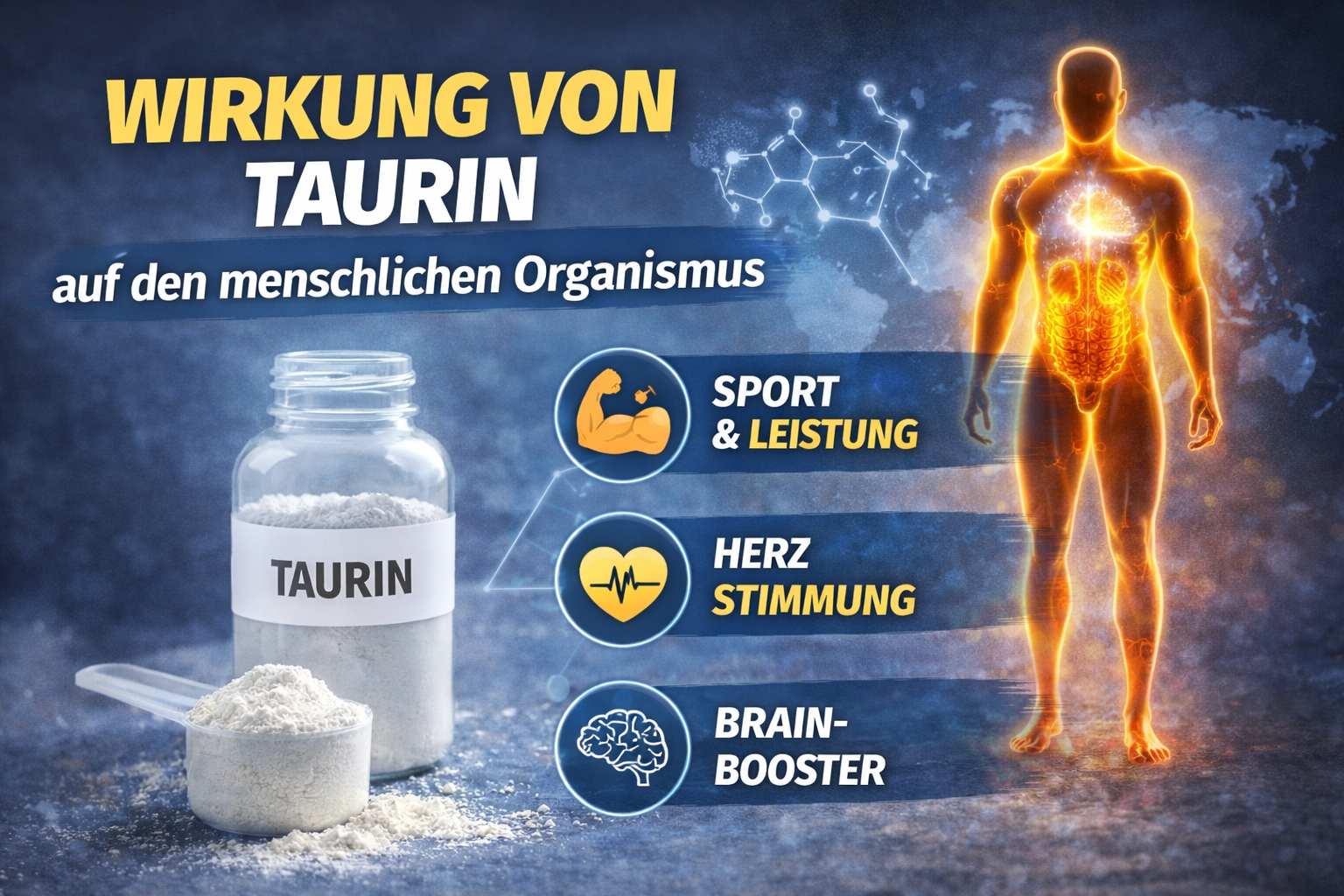
Taurine is an amino acid that occurs naturally in the body. It is often found in energy drinks alongside caffeine. Although it is not a stimulant, it has a stimulating effect on brain function.
Taurine is also useful for muscles in many ways. It contributes to heart health, as research shows that it lowers blood pressure, regulates calcium levels in the body and thus reduces the risk of atherosclerosis, which is associated with reducing the risk of a heart attack. It is also important to mention its effect on the nervous system. Taurine supports communication between nerve cells, protects the nerves and contributes to the maintenance of cell membranes in the body.
According to research, taurine and caffeine complement each other well in their effects by increasing both physical and mental performance. It is therefore no coincidence that they are both ingredients in energy drinks. In improving physical performance, taurine mainly helps to support the flow of glucose to the muscles, providing the primary source of energy for muscle function.
It is popular with bodybuilders as it promotes protein synthesis and thus contributes to the growth of muscle mass. Research emphasises its calming effect on the nervous system, which can help to overcome anxiety. Epileptics use taurine to reduce their symptoms.
Taurine-rich diet
Taurine is a sulphur-containing amino acid. Unlike other amino acids, however, it is not a component of protein. Instead, it is found freely in the intracellular fluid. Adults are able to produce taurine themselves from amino acids; infants receive taurine through breast milk. Many foods contain taurine, it is mainly found in foods with a high amino acid content - d.h. with a high protein content - such as fish. Mackerel has a particularly high taurine content, but meat is also considered an excellent source of taurine. Even birds and insects contain taurine, but it is abundant in beef liver, chicken or lamb. Whilst taurine is not found in vegetables grown in the ground, seaweed is a good source of taurine. It is also found in large quantities in mussels, crabs and seafood.
What is the right amount of taurine?
The average daily diet contains about 40 to 400 mg of taurine.
According to the general dosage, an additional 500 to 2000 mg of taurine should be taken daily. Athletes and anyone who performs heavy physical labour or lives under stress can increase this amount to 3000 mg.
According to research, the kidneys are not yet burdened by this amount. There are currently no studies that can provide information on the effects of use in larger quantities or long-term use. A daily dose of 3000 mg is also considered safe in the long term. According to research, the daily consumption of meat and fish does not cover the intake of this amount. So if you want to maximise the benefits of taurine consumption, you should consider increasing your intake with supplements.
With advancing age, the formation of taurine in the body is reduced, which should also be taken into account. A higher intake is particularly recommended for those who want to benefit even more from the positive effects of taurine consumption. So if you have high blood pressure or a lot of stress at work or follow a diet with little meat, you should increase your intake of taurine. Optimising the amount is also recommended for athletes, regardless of whether it is for endurance sports or workouts with the aim of increasing muscle mass. Taurine contributes to increasing endurance and muscle mass.
Effect of taurine as a dietary supplement
The intake of individual active ingredients in the form of food supplements is advantageous because they can be easily supplied in this way and there is no need for preparation and cooking. In addition, we can take the active ingredient in question without any other nutrients contained in the food or unnecessary nutrients. Although the body is able to produce taurine itself, sometimes the active ingredients required to produce it are not available in the body, which can lead to a taurine deficiency. For example, in the case of a strict diet. If there is a taurine deficiency in the body, inflammation and calcium deposits can be triggered more easily, which can lead to calcification. If you exercise at the same time, you may have problems with proper hydration or even experience seizures. As taurine is an antioxidant that supports vital functions, we must also expect the resulting problems in the event of a taurine deficiency. Poor eyesight can also be a consequence of taurine deficiency, as it plays an important role in the smooth functioning of the retina. Depression, nervousness, hearing loss, high blood pressure, weight gain and problems with regeneration can also indicate a lack of taurine.
There is no research on the excessive intake of taurine. When used correctly, research shows that 3000 mg per day is still safe.
Does taurine really prolong life?
Rumour has it that it is thanks to taurine that the Japanese are more likely to reach the age of 100. Research still shows that the secret lies in diet, as the Japanese consume a lot of fish and seaweed, all of which are rich in taurine. Research conducted in Japanese places where most people lived past the age of 100 showed a much lower risk of arteriosclerosis and stomach cancer and a lower risk of developing hormone-based cancers such as breast cancer or prostate cancer. Nutritional researchers have found that these people consume fish at least three times a week, plenty of wholemeal cereals and vegetables, as well as taurine-rich crab and polyps. Research has shown that the latter lower cholesterol levels and blood pressure. The study has shown that dietary habits can definitely be linked to longevity, but taurine is only one component that has a positive effect on health.
Taurine and alertness
When you think about why taurine is included in energy drinks, you might think obviously: because it keeps you alert. Unfortunately, this is a misconception.
Taurine improves sleep quality. If you find yourself on a mental merry-go-round or nervous before going to bed, the calming effect of taurine can help you.
Its effect is due to the fact that taurine increases the amount of GABA, which has a calming effect on the nervous system. Taurine contributes to the reduction of stress hormones. As it is easily excreted from the body during stress or intense workouts, a taurine deficiency can quickly occur, especially if you don't consume meat. The energising effect attributed to energy drinks occurs when taurine is combined with caffeine in such a way that the amount of taurine is less than or equal to that of caffeine. In this case, it has a sleep-inhibiting effect. However, its calming effect unfolds in larger quantities. If you have sleep problems, you should take 2000 to 3000 mg of taurine before going to bed.
To summarise, taurine is an excellent choice if you are
are looking for an antioxidant with all its health benefits
Have circulatory problems
are fighting obesity
want to increase your performance
Are afraid of stimulants like caffeine
follow a vegetarian diet
have a stressful life
exercise intensively.
In this case, you should consider whether it would make sense to protect your nervous and circulatory system with this versatile antioxidant. Taurine is available in many forms as a dietary supplement, both in powder and capsule form. This means you can take it easily and take it with you wherever you go. It is excellent for training - even combined with coffee!






Comments (0)