Fit with a vegan diet
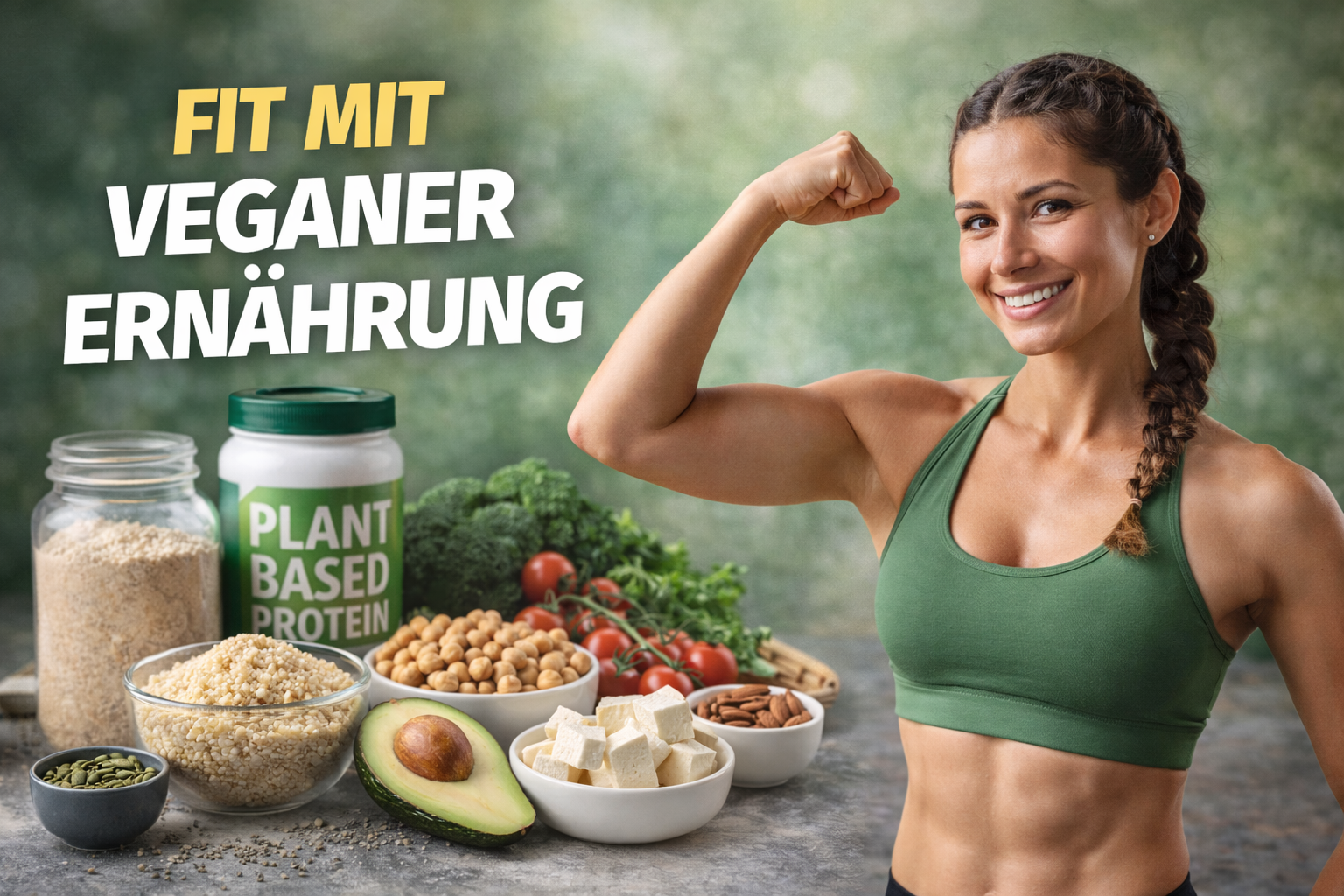
A vegan diet has numerous benefits if you eat a balanced diet. In our article, we help you to achieve your goal, whether you want to lose weight or build muscle.
People think that a vegetarian diet means that no meat is eaten. However, vegetarianism has several forms. Semi-vegetarians abstain from red meat. Lacto-vegetarians eat dairy products on a plant-based diet, ovo-vegetarians eat eggs and lacto-ovo vegetarians eat both dairy products and eggs. The strictest form is the vegan diet, in which only foods of plant origin can be consumed. People who go vegan most often choose a vegan lifestyle because of environmental and animal welfare concerns. The decision in favour of a vegan diet is often made for health reasons. More and more athletes are switching to a plant-based diet, especially in endurance sports. The biggest fear of athletes is that they will not be able to build muscle on a vegan diet, that they will lose muscle or possibly gain weight, or that veganism is harmful to their health due to the unbalanced diet
In addition to countless health benefits, a purely plant-based, vegan diet also helps to increase mental freshness and energy. By combining the right ingredients, a vegan diet can be a complete diet.
The biggest problem is that many people leave out animal products and consume bread, pasta, rice in large quantities and only a few vegetables. This is how fears come true. Even if you are vegan, you can eat a healthy diet and provide your body with all the amino acids, proteins and micronutrients it needs, all you need is a carefully put together diet plan.
Advantages of a vegan diet
Let's take a look at the most popular goals and how they can be realised with a vegan diet.
1. Weight loss, reduction of the body fat percentage
When it comes to losing weight, in addition to following the rules of the vegan diet, we should also try not to overdo the consumption of simple sugars and grains and always have a wholesome dish on our plate. Fortunately, vegans are not "afraid" of vegetables. To reduce the amount of fat, we should eat more vegetables and pulses in the evening. Eating fruit in large quantities is not recommended due to its high sugar content.
2. Muscle building
Now comes one of the most controversial topics: the question of proteins.
Vegetable protein sources are not complete proteins, d.h. they do not contain all the essential amino acids. By combining proteins correctly, plant proteins can also provide the complete protein spectrum.
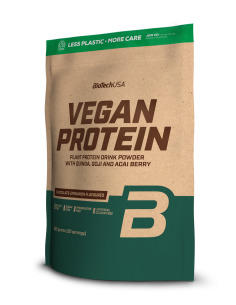
The limiting amino acid in cereals is lysine, in pulses, oilseeds and nuts Methionine and tryptophan in the case of maize. The simplest principle to remember is that the main meals should contain cereals, pulses and oilseeds at the same time. And legumes should be planned alongside maize dishes. Various calorie calculators are available to determine the protein intake required by the body, but when building muscle we can also start from the principle of "2 g per kg of body weight". For a person with a body weight of 70 kg, this means 140 g of protein per day. If it is difficult for an athlete to consume enough protein, there are also plant protein preparations such as rice protein powder, also known as vegan protein.
In addition to quantities, regularity, recovery and proper workouts are of course also very important.
3. Increase endurance
Increasing endurance is often associated with a plant-based diet. A diet based on vegetables and fruit provides the body with many more vitamins and minerals, which also helps the metabolism to function more smoothly. If you consume high-quality, unrefined carbohydrates, you avoid fluctuations in blood sugar levels and the resulting deterioration in performance and concentration problems. If you supplement your vegan diet plan with the missing minerals and vitamins, you complete the amino acids and ensure your body receives a complete diet. In addition to the intake of the required nutrients, you should not forget the correct fluid intake and the replacement of electrolytes, Na, Ca and Mg - especially during extreme exercise and heavy sweating.
Tips for a vegan diet
1. Pay attention to your calorie intake to provide your body with enough fuel
It is still common for vegan athletes to lose weight in conjunction with muscle loss. You can use a calorie calculator to calculate your exact calorie, protein, fat and carbohydrate requirements.
2. Correct proportion of essential fats
Attitudes towards fats are still quite contradictory today. According to surveys it is a common problem that too much omega-6 and too little omega-3 fatty acids are consumed. According to the WHO recommendation, the correct proportion is 1:10 for omega-3 fatty acids, which can easily be achieved by consuming the following seeds:
Seeds and oils with omega-6 fatty acids: sunflower, maize germ oil, wheat germ oil, nuts, almonds, pecan nuts, pumpkin seeds, pine nuts, poppy seeds, sesame seeds
Rich in omega-3 fatty acids: Chia seeds, linseed
3. Flavour and variety
A vegan diet is not simply about giving up meat and eating side dishes. With the advent of the vegan diet, a completely new cuisine was born. It is worth attending vegan events and cookery courses and looking for ideas for a varied diet. Get to know the world of spices and gain an insight into Indian cuisine. Anyone who loves the flavour of honey should try agave and rice syrup. You can consume plant-based milk instead of dairy milk and the shop shelves are also full of high-quality plant-based yoghurts and cheese products.
4. Fructose intake
No insulin is required to break down fructose, which is why it is recommended as a sweetener in the diet of diabetics, but is also used in numerous dishes in the form of corn syrup. Fructose helps to replenish the liver's glycogen stores, but unfortunately it is stored in fat if consumed in excess. With a vegetarian diet, we tend to eat too much fruit, which increases the absorption of fructose and can quickly lead to weight gain. Therefore, increased attention is required, just as with the use of agave syrup.
5. With awareness against lack of time
A pillar of healthy eating is using the right ingredients and eating home-cooked food prepared in a controlled way. This is often difficult to achieve as it is not easy to put varied and fresh dishes on the table every day. It only works with planning, which means you need to know in advance what you want to prepare and you need to consciously put together your shopping list.
Some things, such as cereals or vegetables, can also be prepared in advance and used for several dishes. And a nutritious shake made from a variety of ingredients is also a good choice for snacks or breakfast.

With a vegan diet, you should also take the following micronutrients!!!
The human body needs a number of vitamins and minerals that are difficult or impossible to absorb on a vegan diet. For this reason, they should be taken in the form of food supplements. Let's take a look at what these vitamins and minerals are:
Iron: It plays a key role in the formation of red blood cells and the transport of oxygen. Iron deficiency usually manifests itself in tiredness, headaches and weakness. Iron of animal origin is haem-bonded and can therefore be more easily absorbed by the body. The absorption of iron of plant origin can be improved by combining it with vitamin C. Iron-rich foods include wheat bran, pumpkin seeds, sesame seeds, pulses, linseed, pistachios, millet, quinoa and amaranth.
Vitamin B12: It is very important for the proper functioning of the nervous system. It cannot be provided to the body in sufficient quantities by a purely plant-based diet. It should be replaced by food supplements.
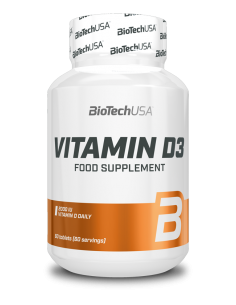
In addition to these key elements, attention should also be paid to the intake of omega-3, calcium and vitamin D. Deficiency diseases can be prevented through a balanced diet and the use of nutritional supplements.
Meal ideas for a balanced day
Let's take a look at which dish variations are recommended for the individual meals.
Breakfast with a vegan diet:
Breakfast can be a little higher in carbohydrates to energise the body at the start of the day and replenish glycogen stores.
Porridge with fruit: can be prepared with spelt, oats, millet and rice. Vegetable milk, cinnamon, hemp seeds, goji berries, chia seeds, linseed and fruit make it versatile.
Spicy bean cream with rye bread and sauerkraut
Plant-based yoghurt with amaranth, buckwheat flakes and roasted almonds
Snack in the morning:
Fruit should be consumed in the first part of the day, so it is a good choice to put fruit on your plate in the morning.
Green shake variations
Homemade muesli bar with dried apricots, blueberries and pistachios
Muesli bar with dried plums and walnuts
Lunch:
Lunch should be a complete meal with sufficient energy content so that you don't get ravenously hungry in the afternoon and evening. You can also choose raw foods for lunch, as these also have a higher vitamin and fibre content.
Millet with sun-dried tomatoes, vegetables and pine nuts
Chickpea meatball served with bulgur salad with cashew nuts and vegetables
Wrap with beetroot, grilled vegetables and tahini sauce
Snack in the afternoon
Wholemeal bread roll with roasted peppers
Hummus dip with carrots, cucumber and celeriac strips
Rocket salad with walnuts served with lentil patties
Dinner with a vegan diet:
You should eat something warm for dinner so that the food is digested more easily. If your goal is to reduce your body fat percentage, you should try to eat more vegetables and fewer grains.
Roasted carrots with lentil salad with sesame seeds and quinoa
Aubergine stuffed with buckwheat
Tortilla rolls with avocado and bean cream
Snacks and sweets
Rice pudding with strawberry jam or fresh fruit
Ice cream with cashew nuts and bananas, varied with any fruit. You can use frozen banana slices, for example, to create a creamy ice cream.
After training or even for snacks - when we don't have the time or opportunity to prepare something else - a plant-based protein shake like Vegan Protein is a great help. It can also be made thicker so you can enjoy a delicious pudding-like dessert.
5 key elements of a vegan diet
Let's now summarise the 5 essential points that are crucial in the case of a vegan diet for achieving and maintaining an optimal fitness level:
1. Pay attention to your nutrient intake!
Use a calorie and nutrient calculator to check your calorie and nutrient requirements according to your goals. Create your nutrition plan based on these results.
2. Replace missing micronutrients!
When eating a plant-based diet, pay attention to your intake of vitamin B12, C, vitamin D, iron, zinc and omega-3 fatty acids.
3. Make sure you complete your diet with amino acids to prevent muscle breakdown and promote muscle building!
The simplest principle to remember is that your main meals should contain cereals, pulses and oilseeds at the same time. Consume pulses as well as maize dishes.
4. It doesn't work without planning
Plan in advance what you will buy, prepare and take with you.
5. Diversity
It is very important to eat a varied diet to maintain good health. Get to know new flavours, attend cookery courses and try out new recipes.




Comments (0)