Belt levels in Jiu-Jitsu: A guide to BJJ belts and ranking systems
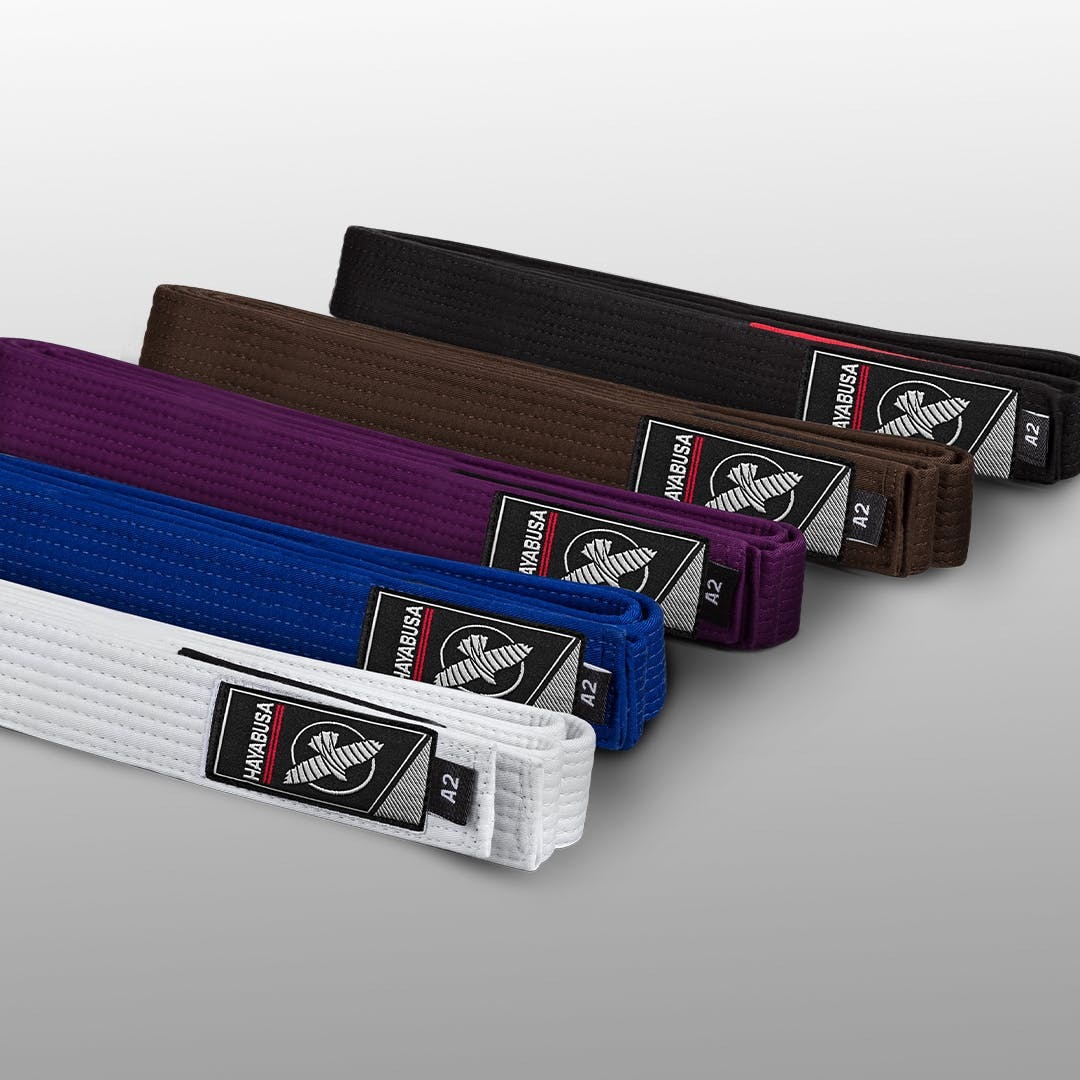
In the Jiu-Jitsu the belt system is an important sign of a person's mastery of the sport, with each belt colour indicating a student's progress in their studies. And if you've ever wondered how many BJJ belts there are in Jiu-Jitsu, a student progresses through five colour levels:
1. White
2. Blue
3. Purple
4. Brown
5. Black
But the importance of your Jiu-Jitsu belt and the method for progressing through the levels is a little more complicated. Within each ranking of belt colours, lower levels are marked by the addition of white stripes which must be accumulated before the practitioner progresses to a higher belt.
So, what are the different Jiu-Jitsu belt ranks and what do they mean?
White belt
The first belt you wear as a Jiu-Jitsu student is the white belt. The colour shows your newness to the martial art as well as your desire to one day master the movements, techniques and philosophies that guide Jiu-Jitsu.
There are no age requirements for the white belt. Children aged five or six can wear it, as can adults who are just starting out.
White Belt timeline and state of knowledge
You must practise as a white belt for at least two years before you can move up to a higher belt. Students who are not yet 16 years old remain in this belt ranking until they are old enough to move up.
There are four stripes that a jiu-jitsu practitioner must earn as a white belt before moving on to the next level, but the qualifications for these stripes will likely depend on where they are studying.
As a white belt, you will learn the basics of jiu-jitsu. This includes training and competition etiquette as well as a few basic movements. White belts try to master:
- Basic escape movements
- Basic attitudes
- Basic promotion positions
Blue belt
The blue-coloured belt represents the intermediate level of Jiu-Jitsu study. To wear this belt, you must be at least 16 years old and have completed at least two years of training at white belt level.
A blue jiu-jitsu belt with a knot
Blue Belt timeline and state of knowledge
You have two years to complete your studies at blue belt level. During this time you will continue to learn movements for escaping, holding and advancing and how to use them in combination. You will also begin to experiment with:
- Settings
- Bait
Achievement
To achieve the blue belt, you must acquire four stripes and wait six months for each.
Purple belt
The purple belt indicates that you are an advanced Jiu-Jitsu student. It means that you have mastered the skills required to build a good technique and perform smoothly on the mat.
A purple jiu-jitsu belt with a knot
Purple Belt timeline and state of knowledge
As a purple belt, you will continue to prove yourself as a competent and controlled Jiu-Jitsu fighter. Your rolls will be relaxed and you will execute attack manoeuvres with grace and precision. You will also improve your combinations and set-ups.
Finally, those who wear the purple belt are more confident fighters who are able to recognise their limitations and work on getting better. They will do this work for about a year and a half and collect four stripes.
Brown belt
The brown belt is the first expert level that you achieve as a Jiu-Jitsu student. It is only awarded to students who are at least seventeen years old.
A brown jiu-jitsu belt with a knot
Brown Belt timeline and state of knowledge
At this stage, you can perform attacks in long, consecutive series and carry out complicated set-ups. You have acquired extensive knowledge and know most of the moves for:
- Attack
- Defence
Achievement
Four stripes are required for the brown belt level. You must practice as a brown belt for at least one year before you can advance to the next belt rank. However, this is a best-case scenario, and most likely it will take longer than a year to learn and master brown belt level skills.
Black belt
As a belt that indicates the most advanced status, many people think that wearing a black belt means you've gone as far as you can with jiu-jitsu. But the truth is that even older black belts are still learning and improving their skills.
A black jiu-jitsu belt with a knot
Black Belt timeline and state of knowledge
You must be 18 years old to achieve black belt. When you reach it, you will have thirty-one years to fully master the skills. At this point, you will have learnt almost all the Jiu-Jitsu moves and techniques and will be able to perform them at the highest level.
The black belt level contains six stripes. They are acquired over the years, usually according to the following scheme:
- Three years each for the first, second and third strips
- Five years each for the fourth, fifth and sixth strips
After black belt
Jiu-jitsu practitioners study for decades at black belt rank before making a further promotion to belt. During this time, they become true masters of the sport and are well-versed in every aspect of jiu-jitsu. They teach others, compete against each other and train endlessly to improve.
In very rare cases, black belt fighters are promoted to red belt status, the highest belt in the jiu-jitsu belt ranks. Those who achieve this belt ranking have dedicated their lives to jiu-jitsu and in some cases have worn the black belt for 45 years or more. These belts are usually custom made.








Comments (0)