

Shopping Cart
There are no more items in your cart
- Vivien Rolf
- Supplements
- 0 likes
- 2559 views
- 0 comments
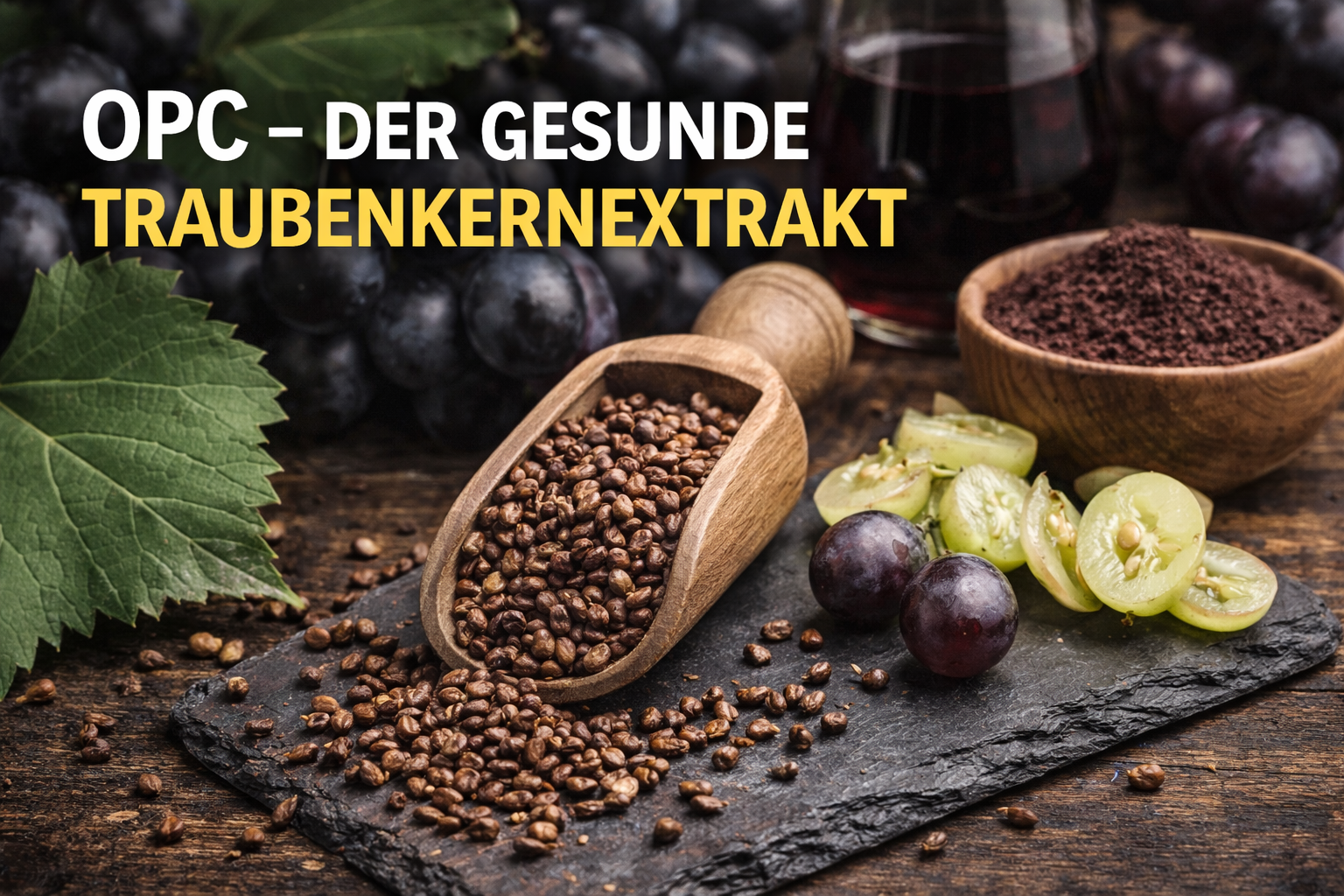
OPC - the healthy grape seed extract
With OPC, nature gives us a vital substance that can positively influence our health, vitality and even our appearance. This is why more and more doctors and nutritionists are recommending taking OPC grape seed extract to stay young, beautiful and healthy. OPC is also known as cosmetics from within because it increases the skin's collagen and elastin production.
OPCs, an abbreviation for oligomeric proanthocyanidins, are natural active ingredients found in plants that belong to the flavanol group, a subgroup of polyphenols.
Proanthocyanidins are found in many different fruits, nuts and plants such as z.B. Green tea and have a broad spectrum of activity in the body.
What is OPC?
OPCs (oligomeric procyanidins) are a class of polyphenols. They are generally found in grape seeds, berries and other plants. Many doctors and nutritionists say that polyphenols are among the most important vital substances the body needs.
Why? Medical scientists continue to provide evidence that polyphenols are responsible for the antioxidant properties of OPC, which flush out free radicals.
1. Antioxidant effect
These polyphenols are believed to be effective in neutralising singlet oxygen radicals that contribute to inflammation in the body. They also help to improve vitamin C activity and protect against bacteria, viruses and various chronic diseases.
2. Reduced risk of arteriosclerosis
Although this is not supported by all health organisations, the famous "French paradox" claims that French people are protected from heart disease because they drink wine.
However, the flavonoids (the most common group of polyphenols) in grapes are the ingredients that have a positive effect on the body and not the alcohol content of the wine. Flavonoids are believed to lower bad cholesterol in the body.
3. Blood pressure control
There is a growing body of research on the medicinal properties of OPCs, and scientists are finding ways to control high blood pressure. Studies have shown that the relatively high concentration of oligmeric procyanidins (a class of flavonoids) in OPC causes the arteries and blood vessels to relax, which can help control blood pressure.
4. Reduction of oedema
OPC apparently helps to reduce swelling (oedema) caused by injuries and operations. Studies have shown that patients taking OPC after surgery showed very few signs of swelling.
Scientists also found a link between OPC and the suppression of tumour growth.
5. Help with other illnesses
There are other benefits of OPCs. OPC is extremely effective for diabetes. It is said to help control blood sugar levels. It can also be helpful for haemorrhoids and other conditions.
6. Improves the elasticity of the skin
Polyphenols are also known as an excellent binding agent for collagen fibres, which strengthens the connective tissue and generally helps to maintain the elasticity of the skin, as well as strengthening the connective tissue, joints, arteries and other tissue forms. 21
7. Promotion of wound healing
The alpha-hydroxy acid in OPC improves the moisture barrier of the skin cells. This maintains moisture for a fresh and radiant appearance. Consequently, applying a skin cream with OPC ensures faster wound healing and a reduction in the size of scars. 22
8. Anti-inflammatory, antibacterial and anti-mycotic properties
The seeds also contain an active ingredient called resveratrol. 23 Resveratrol is praised for its anti-inflammatory properties, making OPC very helpful in reducing dermatitis, infections, cuts and overexposure to sunlight. The seeds also have antibacterial and antifungal properties.
Effect of OPC grape seed extract
The polyphenols in OPC grape seed extract, especially proanthocyanidin, have been shown to have a number of health-promoting effects. By increasing antioxidants in the bloodstream and in the body, OPC helps to counteract the harmful effects of free radicals.
Proanthocyanidin is a very effective antioxidant that protects against free radicals such as reactive oxygen species by protecting the body from free radical damage such as sun exposure, pollution and stress. Standardised OPC has also been shown to have beneficial effects in the treatment of a range of health problems associated with free radical damage.
Studies have shown that OPC has the following health-promoting effects:
It protects the heart tissue and the cardiovascular system.
It combats the harmful effects of diabetes.
It prevents bacterial and viral infections.
It reduces the development of various tumours.
It protects against the harmful effects of UV radiation.
It reduces signs of ageing of the skin by protecting collagen and elastin.
It reduces inflammation.
It improves cholesterol levels.
It accelerates the fat metabolism.
It protects against tooth decay.
It protects nerve cells.
It can be used to treat hypertension (high blood pressure).
Clinical studies show the effect of OPC
There are numerous clinical studies on OPC with a wide range of study designs. The following are examples of the benefits shown in the following areas:
Cardiovascular
A study has shown that active components in OPCs help to relax blood vessels. Scientists concluded that these compounds in OPCs "either individually or in the form of wine, juices or dietary supplements are beneficial in preventing or treating cardiovascular disease."
Other studies have found that OPC helps to relax the circulatory system and regulate blood pressure. Further studies have shown that OPC can protect heart tissue from toxins and even lead exposure.
The antioxidant properties of OPCs are also known to exert a protective effect on the heart and protect against the harmful effects of various heart diseases. According to one study, "Grape seed polyphenols may protect against cardiac cell apoptosis by supplying endogenous antioxidant enzymes."
Diabetes
In one study, OPC was shown to mitigate certain forms of heart damage in animals with diabetes. The study "could lead to a new appreciation of natural medicine in the treatment of diabetic cardiomyopathy." In fact, by reducing oxidative damage to the entire cardiovascular system, OPCs may offer benefits to all people (especially those with high blood sugar levels).
Fat and cholesterol
OPC has been shown to help reduce stored fat (increase lipolysis) and food intake. One study showed that OPC was able to reduce food intake by four per cent in overweight people. 9
The study leaders concluded that "grape seeds reduce 24-hour food intake in normal to overweight individuals without dietary restrictions and may therefore play a significant role in body weight control."
An animal study showed that procyanidins from grape seeds lowered plasma triglycerides, free fatty acids, apolipoprotein B (apoB), LDL cholesterol and other types of cholesterol, while slightly raising HDL cholesterol.
Another study also showed that "oral intake of grape seed procyanidin extract dramatically reduced plasma levels of triglycerides and apolipoprotein B." Another personal study concluded that in people with high cholesterol levels, "a combination of chromium and OPC can significantly lower total cholesterol and LDL levels".
Inflammation
Another study was carried out with OPC to test the effect on inflammatory markers in rats on a high-fat diet.
The results showed that the procyanidins in grape seeds have a beneficial effect on low-inflammatory diseases by suppressing certain pro-inflammatory proteins and promoting the production of anti-inflammatory cytokines.
Another study also showed the anti-inflammatory properties of grape seed procyanidins and concluded that they have potential health-promoting properties in certain inflammatory diseases.
Oral hygiene
Harmful bacteria in the mouth can cause tooth decay and various oral diseases. Toxins can also enter the bloodstream, possibly even damaging the cardiovascular system.
One study showed that OPC reduces the damage caused by these bacterial toxins and indicated that proanthocyanidins from grape seeds "have strong antioxidant properties that should be considered as a potential agent in the prevention of periodontal disease."
Injuries
Cutaneous application of OPC has been shown to help injuries heal faster and more completely, including through improved cell density and numerous other mechanisms that accelerate wound contraction and closure.
Overall, "the study provides strong evidence that the cutaneous application of grape seed proanthycyanidin extract is a feasible and productive method for supporting the healing process of skin injuries."
Melasma (Chloasma)
A study conducted in Japan shows that the oral intake of OPC "is effective in reducing hyperpigmentation in women with chloasma." The positive effect can be seen after six months of intake. The study also showed that "OPC intake for five months could prevent chloasma from worsening before the summer period."
Protection against sun exposure and light-induced skin ageing
OPC has been shown to combat oxidative stress and protect the body's important natural antioxidants.
It was shown that the development of tumours was significantly reduced in mice exposed to UVB light after they were given a supplement containing OPC.
The study leader concludes that OPC inhibits the process of skin ageing and light-induced skin ageing. Dr Katiyar says: "The light-induced skin ageing component is responsible for the development of wrinkles, blotchy hyperpigmentation and depigmentation in sun-exposed areas, as well as coarser, rougher skin, less elasticity and a tendency to bruise.
Polyphenols (including the polyphenols in OPCs) have anti-inflammatory and antioxidant properties. Due to these characteristics, polyphenols have been shown to prevent, reverse or slow down the risk of UV-induced skin cancer development."
A study in the "Journal of Medicinal Food" summarises the numerous health-promoting effects of OPC that have been investigated to date.
In general, OPC is an extremely effective antioxidant with properties that have been shown to protect the body against disease and premature ageing. Scientists summarise the remarkable effectiveness and properties of OPC as follows: "Scientific studies have shown that the antioxidant effect of proanthocyanidins is 20 times greater than that of vitamin E and 50 times greater than that of vitamin C.
Extensive research shows that OPC is beneficial in many areas of health due to its antioxidant ability to bind with collagen, supporting youthful skin, healthy cells, resilience and flexibility.
Other studies have shown that proanthocyanidins help to protect the body from sun damage, improve vision, improve the flexibility of joints, arteries and connective tissue (such as that of the heart) and optimise blood circulation by strengthening capillaries, arteries and veins."
In another study, oligomeric proanthocyanidins (OPCs) from grape seeds were shown to be potent antioxidants that effectively protect skin cells from oxidative stress; using a number of different mechanisms, the scientists demonstrated that OPCs have the potential to protect human melanocytes from UV radiation and inhibit skin damage and melanogenesis.
Immunosuppression caused by ultraviolet radiation was found to be associated with the risk of developing skin cancer. In this study, the administration of grape seed proanthocyanidins significantly inhibited the development of UV radiation-induced skin cancer and caused less immunosuppression.
Scientists conclude that this finding "has important implications for the administration of OPC as a dietary supplement for chemoprevention of immunosuppression caused by ultraviolet radiation as well as photocarcinogenesis."
The results of another study indicate that "grape seed proanthocyanidins may be beneficial in alleviating human skin diseases caused by ultraviolet radiation and oxidative stress."
Further research shows that OPC reduces the formation of sunburn cells of the skin and shows that OPC "may be a potential chemo-preventive agent to reduce oxidative stress and apoptosis caused by multiple doses of UVB on the skin."
In addition, the results of another study "clearly indicate that oral administration of grape seed proanthocyanidins inhibits photocarcinogenesis in mice by suppressing UVB-induced inflammation and the mediators of inflammation."
Comments (0)