Vitamin E - An antioxidant for health and well-being
Vitamin E is an essential fat-soluble vitamin that plays an important role as an antioxidant in the body. It protects cells from oxidative stress and supports numerous bodily functions. In this article, you will learn all about the effects of vitamin E, foods rich in vitamin E and its health benefits.
What is vitamin E?
Vitamin E is a group of fat-soluble compounds known as tocopherols and tocotrienols. The best-known form is alpha-tocopherol, the most active and most abundant vitamin E in the human body. Vitamin E cannot be produced by the body itself, so it must be obtained from the diet.
The health benefits of vitamin E
1. Antioxidant effect
One of the main functions of vitamin E is to act as a Antioxidant to work. It protects the cells from damage caused by free radicals, which can be caused by environmental influences, stress and an unhealthy diet. Vitamin E therefore makes a decisive contribution to the prevention of chronic diseases and premature ageing.
2. Support for the immune system
Vitamin E plays an important role in strengthening the immune system. It helps to activate immune cells and protects against infections. Higher levels of vitamin E have been associated with an improved immune response, especially in older people.
3. Improvement of skin health
Vitamin E is often used in Skin care products as it moisturises the skin and protects it from UV rays. It can help to improve skin elasticity and reduce the appearance of scars and wrinkles.
4. Support for heart health
Adequate levels of vitamin E can contribute to the health of the cardiovascular system. It can help regulate blood lipid levels and reduce the risk of heart disease by protecting the arteries from oxidative stress.
5. Promotion of eye health
Vitamin E can also play a protective role for the eyes. It can help reduce the risk of age-related macular degeneration and cataracts by protecting the eyes from oxidative damage.
Foods rich in vitamin E
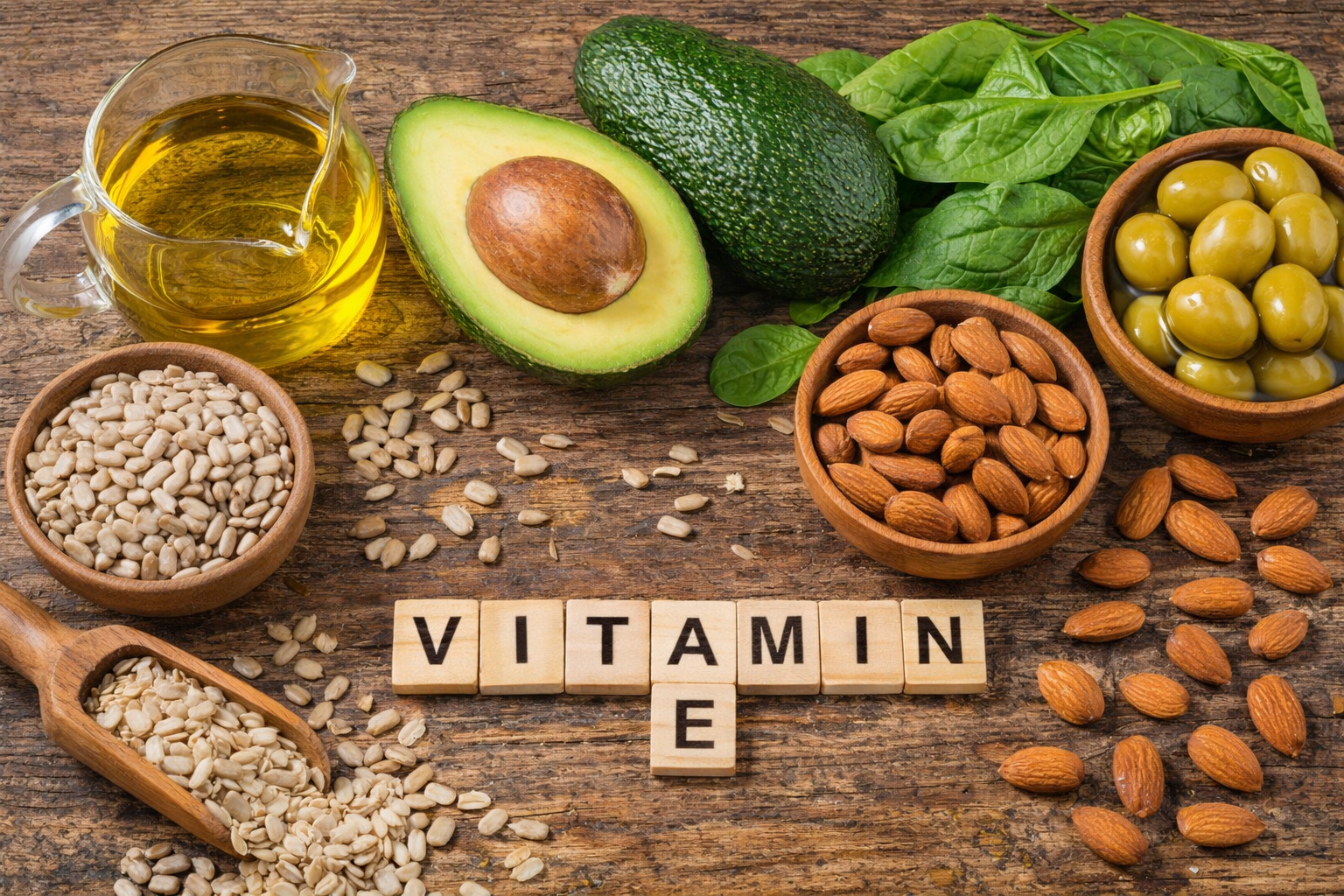
To make sure you get enough vitamin E, include the following foods in your diet:
Nuts and seeds: Almonds, hazelnuts, sunflower seeds
Vegetable oils: Wheat germ oil, sunflower oil, olive oil
Green leafy vegetables: Spinach, broccoli, kale
Fruit: avocado, kiwis, mangoes
Wholemeal products: Oatmeal, wholemeal bread
Application and dosage of vitamin E
The recommended daily intake of vitamin E varies according to age and gender, but is around 15 mg (22.4 IU) per day for adults. You can get enough vitamin E from a balanced diet. In some cases, supplementation may be advisable, particularly in the case of certain illnesses or inadequate food intake.
Viking tips for ingestion:
Consume with fatsAs vitamin E is fat-soluble, it is best taken together with a fat source to improve absorption.
AdditionsIf necessary, vitamin E supplements in the form of capsules can be considered, but always after consulting a doctor.
Possible side effects
Vitamin E is generally safe when taken in the recommended doses. However, excessive intake can lead to side effects such as nausea, diarrhoea or, in the worst case, an increased risk of bleeding. It is important to follow the dosage recommendations and seek medical advice if you have any health problems.
Conclusion
Vitamin E is an essential antioxidant that offers numerous health benefits. From supporting the immune system to improving skin health and heart health, it is essential for overall wellbeing. Be sure to include vitamin E-rich foods in your diet or consider using vitamin E supplements to ensure you're getting enough of this important vitamin.
Discover the benefits of vitamin E and find high-quality products in the Vikingstore to support your health!







Comments (0)