MMA - Mixed Martial Arts - Training, competition and equipment
An MMA competition is exciting to watch, but how do you actually become a professional fighter? The answer to this question is simple: through hard training.
In the following article, we would like to present what such training looks like, which techniques are used and which rules apply.
MMA equipment
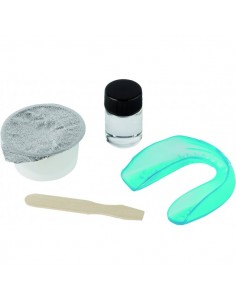
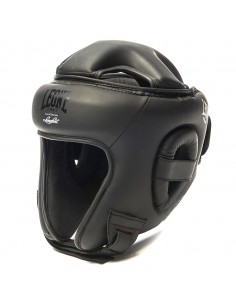
Every martial artist needs good equipment. This also applies to mixed martial arts. However, as many different martial arts are mixed together in this full-contact combat sport, there is no standardised clothing. At the beginning, the outfit usually consists of Shorts, a Rashguard or a tight T-shirt together. Also a Tooth guard is recommended.
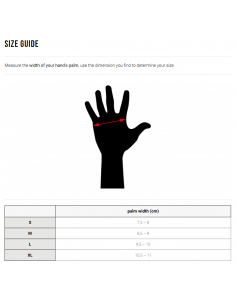
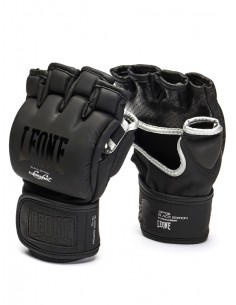
Important are the Gloves, that protect your opponent as well as your own limbs from serious injury. Different pairs of gloves are often required, as you are not only training one-on-one with a partner, but also learning other martial arts - including Boxing, Muay Thai, Kickboxing and Jiu Jitsu. Each of these martial arts has its own type of gloves.
Graduations in MMA
Mixed martial arts is a mixture of several martial arts, so there is no standardised grading system or special belt colours. However, it is possible that internal grading levels are common at different schools so that the progress of the students can be better compared with each other. Ultimately, MMA is about the competitions won and victories over other professionals.
MMA techniques
Mixed martial arts is still a relatively young sport. It combines all fighting distances, punching, kicking, clinching, ground fighting and throwing, with the aim of minimising restrictions through rules.
The aim of MMA is to defeat your opponent in a fight until he either gives up by tapping out, the referee ends the match or the opponent k.o. goes down, i.e. passes out. In contrast to traditional wrestling, in MMA it is not necessary to pin the opponent to the ground with both shoulders. It is still possible to defeat your opponent from a supine position.
In competitions, the fighters are divided into several weight classes. Unlike traditional karate and kung fu styles, for example, there are no techniques or forms in mixed martial arts that cannot be used directly in combat. Due to the competitive nature of the sport, no pure self-defence techniques are taught, i.e. no nerve pressure, weapon or disarming techniques. Finger thrusts or hand strikes are also not taught.
Known techniques in MMA
In principle, all techniques from any martial art can be used in mixed martial arts, as long as they comply with the rules. However, as they are very successful in competition, some techniques from certain martial arts have crystallised over time. In the first distance, stand-up fighting, kicks and punches from martial arts such as Thai boxing, karate, taekwondo, boxing and kickboxing are used. In the second distance, close combat (clinch fights), the chops and throws from judo, sambo and wrestling are used. In the third distance, i.e. ground fighting (grappling), leverage techniques and holds from martial arts such as judo, wrestling, Brazilian jiu jitsu, luta livre and sambo are used in particular.
As the techniques are very extensive, no fighter can master them all equally well. Accordingly, the outcome of mixed martial arts competitions is also very unpredictable, which thrills spectators at professional fights.
Rules in MMA
It is not uncommon for opponents of MMA to criticise that there are no rules in this full-contact sport. But this is not correct. Although there are only a few rules, they do exist:
- Each fight must be supervised by a referee.
- The fights are organised in weight classes.
- There are fouls - 31 in total in Germany.
- The fight is terminated if the fighter signals his surrender by tapping when a participant k.o. or if the match is cancelled by the referee.
- Should none of the last events materialise, a victory on points is possible.










Comments (0)