Creatine for muscle building
What is creatine?
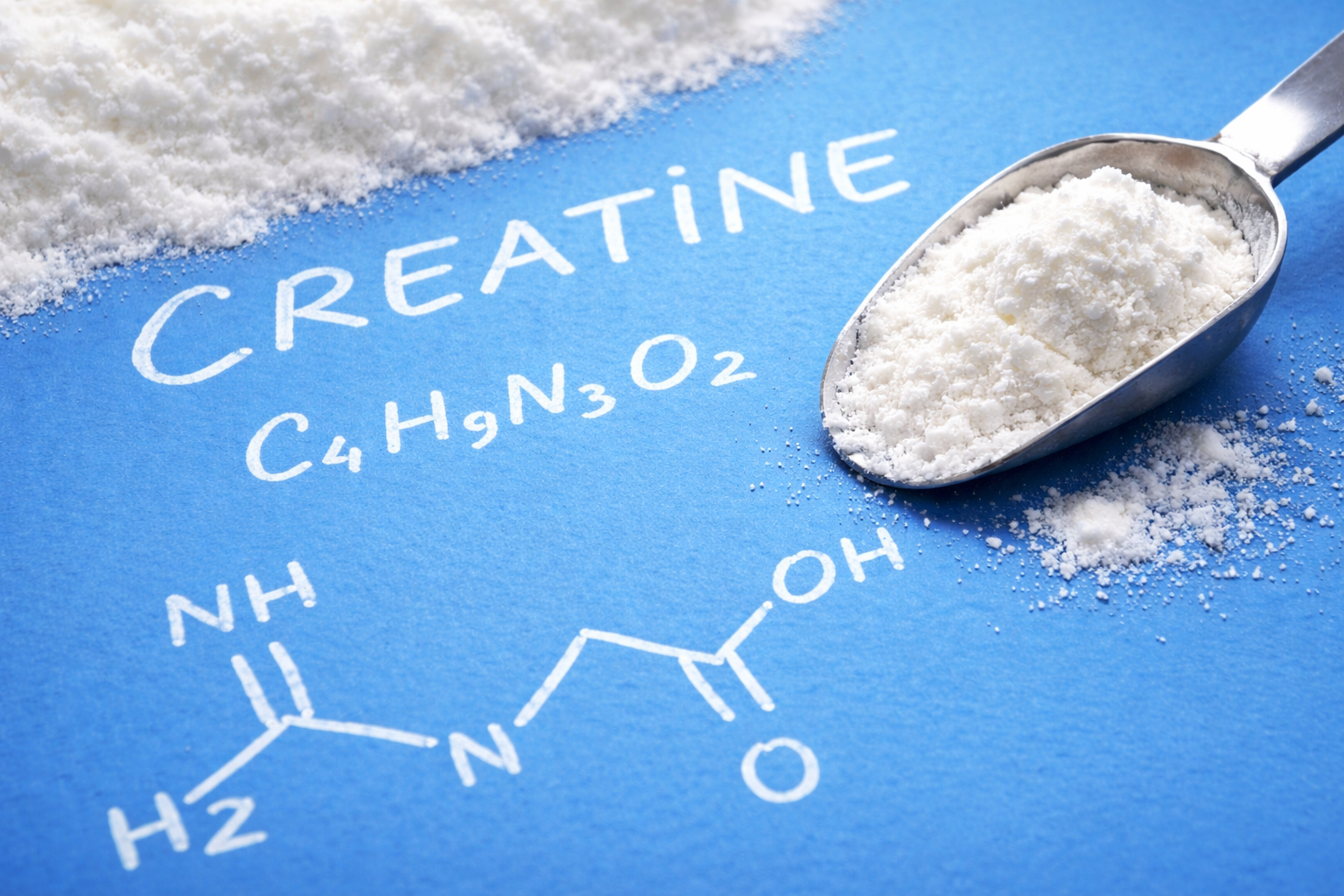
For many athletes, creatine is part of the muscle building process. Everyone has creatine in their body: creatine is an endogenous acid that is primarily found in muscle cells.
It is produced in the liver, kidneys and pancreas. Its basic building blocks are the 3 amino acids arginine, glycine and methionine.
2. Creatine and muscle building: Effect
Creatine is primarily responsible for increasing strength during training, which also improves muscle building. By taking creatine, you can increase your athletic performance by 10-15%.
However, a balanced, healthy diet and regular training are the basis without which creatine will not work.
Creatine helps you to bridge performance plateaus, increase your weight during training and thus optimise your muscle building.
How long it takes to build muscle varies from person to person and depends on factors such as gender, age, level of training, etc.
First and foremost, your training (at least 3 sessions a week) and a calorie surplus are important so that your body has enough energy to put into building muscle.
3. Correct creatine intake for muscle building
We recommend a permanent intake of creatine. However, this does not mean "forever". We recommend initially using creatine daily for approx. 3 to 6 months to increase performance and build muscle.
However, you should record your strength values and your initial weight in advance so that you can compare them after taking creatine.
After 3-6 months of taking creatine, you can measure your level again. How have you improved? Do you have more strength, is your training more intense or have you built up mass? Compare this level with your previous level.
Accordingly, you can see how your training now proceeds without creatine and whether it remains as intense or whether you reach a performance plateau again.
When taking creatine, it is advisable to take 3 g of creatine daily. A loading phase is often recommended for muscle building with creatine. However, this is not necessary, as studies now show that a loading phase with an initial 20 g of creatine daily has no demonstrably increased effect.1
Do you prefer creatine in powder form? No problem. You can simply dissolve our creatine powder in water or fruit juice. Grape juice is particularly suitable because it contains glucose, which ensures that the creatine can be transported and absorbed more quickly by releasing insulin in the body.
This is the best way to consume creatine:
Creatine is best absorbed with fruit juices - for example apple juice or grape juice. These transport the active ingredient more quickly into the muscle fibres. It is important to drink enough fluids, preferably water. This way you can avoid dehydration. Caffeine and alcohol reduce the effectiveness of creatine, so avoid them as much as possible.
When is the best time to take creatine?
A daily creatine intake of 3 g is therefore recommended to optimise your muscle building and increase your athletic performance. The optimal intake is either directly before training or after waking up. It does not necessarily have to be taken at exactly the same time every day.
4. Does creatine have side effects?
A daily intake of 3 g creatine during muscle building is harmless. However, if you take creatine over a certain period of time (from z.B. 2 weeks), for example, you may experience undesirable side effects such as abdominal pain or diarrhoea.
Weight gain can also be expected, as increased creatine intake can lead to water retention. Whether and how much water is retained varies from person to person.
The higher the creatine intake, the higher the likelihood of water retention.
Creatine and the effect on the kidneys:
With the additional intake of creatine, the creatine content in the blood increases. For doctors, this increased creatine blood level is an indicator of impaired kidney function.
In the event of a medical examination, the doctor should be informed in advance about the creatine intake. Otherwise a misdiagnosis may occur. Actual damage to kidney function due to a low creatine intake is not known.
5. Conclusion
Creatine can optimise muscle building.
It is an endogenous acid that is mainly present in muscle cells.
Creatine can increase athletic performance.
We recommend 3 g of creatine a day for muscle building, preferably taken with juice.
Caffeine and alcohol reduce the effect of creatine and the desired results do not materialise.






Comments (0)