
Shopping Cart
There are no more items in your cart
- Vivien Rolf
- Nutrition
- 0 likes
- 2494 views
- 0 comments
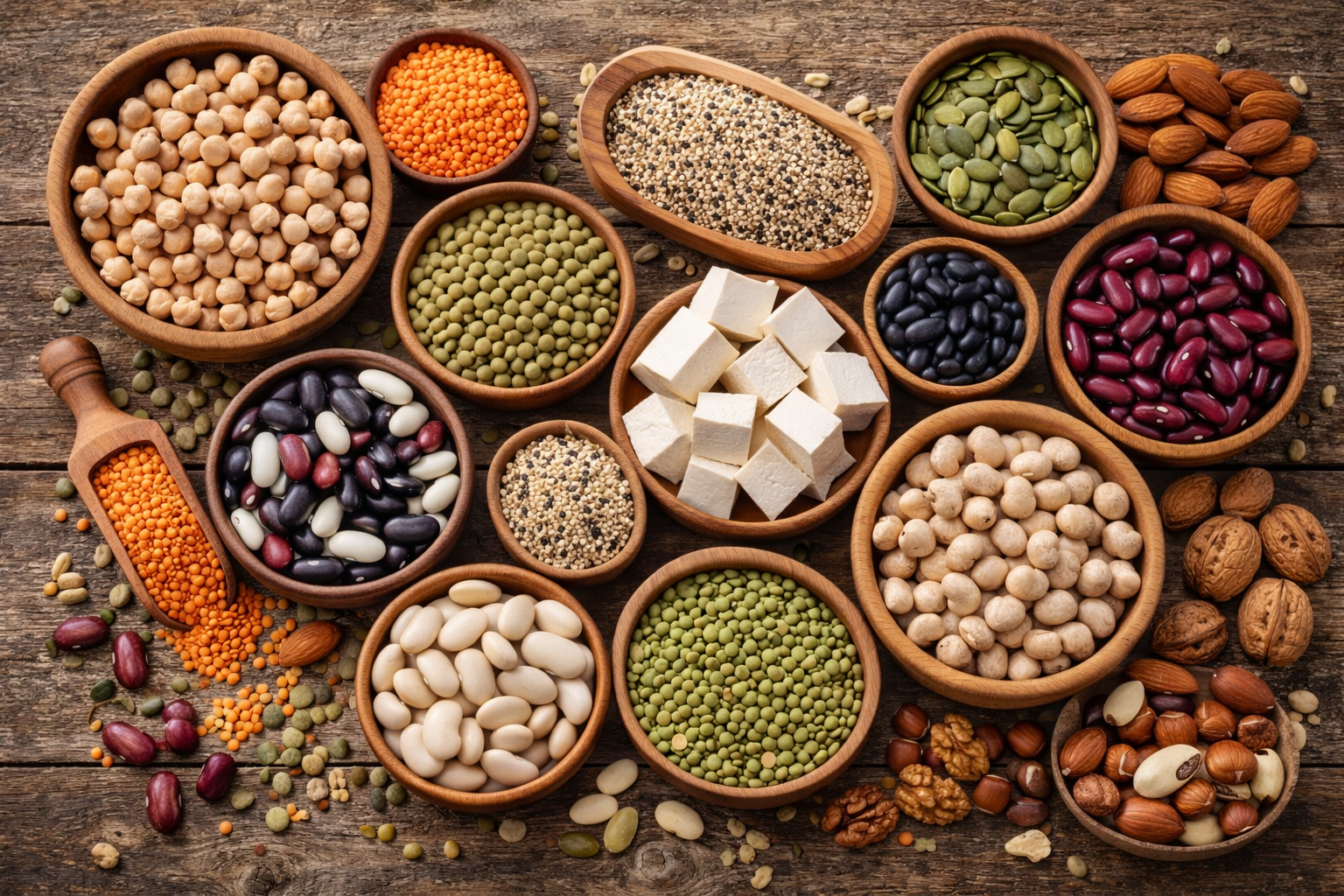
10 foods full of plant-based protein
Bodybuilder Karl Ess, Germany's strongest man Patrick Baboumian, boxer Mike Tyson, Formula I driver Lewis Hamilton and professional tennis player Novak Djokovic all show how it's done: You don't need animal protein to have a fit, athletic and, above all, powerful body. They all have one thing in common: they eat a vegan diet, which means they don't just avoid meat and fish like vegetarians, but animal products of all kinds. So how do they cover their increased protein requirements as athletes? Easy: With these 10 vegan protein sources!
Biological value: Is plant protein "worse" than animal protein?
One nutritional myth that is still ingrained in many people's minds is that plant proteins are worse for your body and muscles than animal proteins. After all, many bodybuilders eat eggs, whey protein shakes, low-fat quark, tuna and steak without end every day to cover their protein requirements. But this is not necessary at all! It is true that the biological value of animal products tends to be higher than that of plant-based products, but by skilfully combining different vegan protein sources, you can easily cover your needs and provide your body with all the essential amino acids it requires.
You have to imagine it like this: Food A, let's say beans, contains little of the amino acid methionine, so its biological value is limited. Food B, let's take maize, has a lot of it - if you combine the two now, you can easily increase the biological value.
Another advantage is that they generally have significantly fewer calories and almost no fat, but lots of healthy and filling fibre as well as vitamins, minerals and phytochemicals - making vegan protein sources interesting for non-vegans too.
Also interesting: Vegetarian diet and sport and protein deficiency.
1. Vegan source of protein: beans in abundance
The variety of these pulses is huge: beans come in all colours and shapes, from mung beans and kidney beans to green beans or the lesser-known field beans. Depending on the variety, they have a really high protein content of 22 g per 100 g.
Whether in chilli sin carne, salads, wraps, burritos or even sweet in brownies - you can use beans in a variety of ways. In addition to valuable vegetable protein, they provide many complex carbohydrates and essential minerals. Compared to their volume, they contain relatively few calories. Beans are also very high in fibre and contain a lot of iron. In combination with maize, their biological value increases from 51 to 110!
100 g kidney beans have approx. 105 kcal | E: 9 g | K: 16 g | F: 0.6 g
Even though the protein content of tinned kidney beans is significantly lower than that of fresh kidney beans, the percentage of total calories remains roughly the same. So if you don't have the time or don't fancy the long cooking time, you can use tinned beans without a guilty conscience.
2. Vegan source of protein: the classic tofu
Tofu is the epitome of a vegan protein source. Tofu is curdled soya milk and provides 10-20 g of protein per 100 g as well as iron, vitamin B6, calcium and folic acid. It contains little fat, hardly any carbohydrates and is available in numerous flavours. Tofu tastes great with salad, pulses and vegetables. However, the health effects of soya products are controversial. The phytoestrogens they contain are similar to the human sex hormone oestrogen. According to the current state of science, however, moderate soya consumption is unproblematic. As long as you don't eat two fat tofu schnitzels a day, you're in the safe zone!
100 g of tofu have approx. 76 kcal | E: 8 g | K: 2 g | F: 5 g
3. Vegan protein source: quinoa and amaranth
Quinoa and amaranth, also known as "Inca rice" and "Inca wheat", are not grains, but plants. They are therefore also known as pseudo-cereals.
With 16 g of protein, amaranth is the "grain" richest in protein. Quinoa can do even more: it contains all the essential amino acids and is therefore a complete source of protein - which is by no means a matter of course for vegan protein sources. In addition, both are extremely rich in calcium, magnesium and iron. As they are "pseudo-cereals", they do not contain gluten. And: they have a low glycaemic index, the carbohydrates can be easily processed by the body and the blood sugar level rises slowly. A perfect, healthy source of carbs, even for a low carb diet!
Quinoa and amaranth can be eaten in many ways. Whether as a side dish, as a salad with vegetables or sweet with fruit. Both are also available in puffed form for your morning muesli.
100 g quinoa have approx. 368 kcal | E: 14 g | K: 64 g | F: 6 g
100 g amaranth have approx. 402 kcal | E: 16 g | K: 57 g | F: 9 g
4. Vegan protein source: build muscle with chickpeas
One fifth of chickpeas consist of protein. They are rich in digestive fibre and contain minerals such as magnesium, zinc and iron as well as some vitamins. At around 6 mg per 100 g, iron in particular is present in relatively large quantities. Chickpeas also have a low glycaemic index, which helps prevent cravings. Chickpeas have a slightly nutty flavour and are used in stews or as a side dish. Falafel or hummus can also be easily prepared from chickpea mash. The disadvantage, however, is that they require a soaking time of approx. 12 hours. They then need to be simmered for 1 to 2 hours on a medium heat until they are soft and edible. Alternatively, they are also available in tins.
100 g chickpeas have approx. 364 kcal | E: 19 g | K: 61 g | F: 6 g
5. Vegan protein source: low carb nuts
Nuts are great sources of protein and also provide a high level of essential fatty acids.
Botanically speaking, peanuts are not a nut but a legume, but with 26 g protein per 100 g they have the highest protein content. However, as 100 g also have a very high energy content of 560 kcal, you should only eat them in moderation. Also be careful with salted or roasted nuts as a snack.
If you don't like eating nuts on their own, you can also try nut butter - it's really addictive!
By the way, my favourite recipes with nuts are vegan protein bars and these delicious energy balls.
100 g peanuts have approx. 567 kcal | E: 26 g | K: 16 g | F: 49 g
100 g almonds have approx. 576 kcal | E: 21 g | K: 22 g | F: 49 g
100 g pistachios have approx. 562 kcal | E: 20 g | K: 28 g | F: 45 g
Incidentally, fats also play a role in the pegan diet. You can find everything you need to know about variations of the vegan diet here!
6. Vegan protein source: buckwheat
Buckwheat is also a pseudocereal and, like amaranth and quinoa, is packed with protein, unsaturated fatty acids and minerals such as potassium, iron, calcium and magnesium. Cooked as a side dish, crushed in muesli or in ground form as flour - definitely worth a try.
100 g buckwheat has approx. 343 kcal | E: 13 g | K: 72 g | F: 3 g
7. Vegan source of protein: fitness food broccoli
Broccoli as a vegan source of protein? Absolutely! Although the vegetable only contains 2.8 g of protein per 100 g, it only contains 34 calories. If you now calculate with 100 calories, it looks completely different - 100 calories from broccoli provide you with almost 10 g of protein! That beats even some types of meat.
In addition to its high water content, broccoli is full of fibre, namely 3 g per 100 g. It also contains many vital and health-promoting ingredients. Beta carotene, which is important for regulating cell growth, is particularly important for you as an athlete. Broccoli is also considered to be anti-cancer, as it is said to curb the growth of malignant tumour cells. Although broccoli only makes you feel full for a short time, it doesn't put a strain on your stomach due to its virtually zero fat content and you can get back to training quickly after eating it.
100 g of broccoli have approx. 34 kcal | E: 2.8 g | K: 7 g | F: 0.4 g
8. Vegan protein source: Lentils
Like beans, lentils belong to the legume family. They contain a high proportion of high-quality proteins, carbohydrates and zinc. They can contain up to 20 per cent protein. Their high fibre content stimulates intestinal activity. The best-known preparation is probably lentil soup, but other options include stews, salads or simply as a side dish. Vegans and vegetarians also like to use the little red protein bombs as a vegan Bolognese.
100 g lentils have approx. 309 kcal | E: 23 g | K: 49.2 g | F: 1.43 g
9. Vegan protein source: potatoes for strong gains
Although the potato consists of only 2% protein, the content of essential amino acids is so perfect that potatoes have a very high proportion of utilisable protein. Potatoes have a very high vitamin C content and contain important fibre. You can also get them quite cheaply all year round and there are seemingly endless ways to prepare them.
100 g potatoes have approx. 77 kcal | E: 2 g | K: 17 g | F: 0.1 g
10. Vegan protein source: building muscle with vegan protein powder
There is also a good selection of food supplements for vegans, for example protein powder made from plant-based protein sources. The most common plant-based protein sources include soya protein, pea protein, hemp protein and rice protein.
These protein powders are not only suitable for vegans, but also for anyone who reacts to whey protein with problems such as blemished skin, stomach pain or digestive problems. The basic flavours such as natural, chocolate and vanilla are available from various manufacturers.
100 g hemp protein have approx. 354 kcal | E: 47 g | K: 23 g | F: 11 g
As you have seen, a protein-rich diet does not have to be based on animal products, the plant world also has a few protein bombs up its sleeve. Pulses in particular are ideal sources and should be a regular part of a vegan's diet.
But even if you eat animal protein, you should still reach for the plant-based foods - the mixture of the two is unbeatable!
Comments (0)