

Shopping Cart
There are no more items in your cart
- Vivien Rolf
- Supplements
- 0 likes
- 1598 views
- 0 comments
Amino acids: the building blocks of life in detail
Amino acids are the indispensable building blocks of life that play a central role in every living organism. They are not only crucial for the formation of proteins, but also for numerous processes in our body that influence our health and performance. In this article, we will dive deep into the fascinating world of amino acids and explore their diverse functions as well as their importance for athletes and fitness enthusiasts. Learn how you can support your athletic goals with a targeted intake of amino acids and why they are essential for your body. Let's discover together how these small molecules can achieve great things!
What are amino acids?
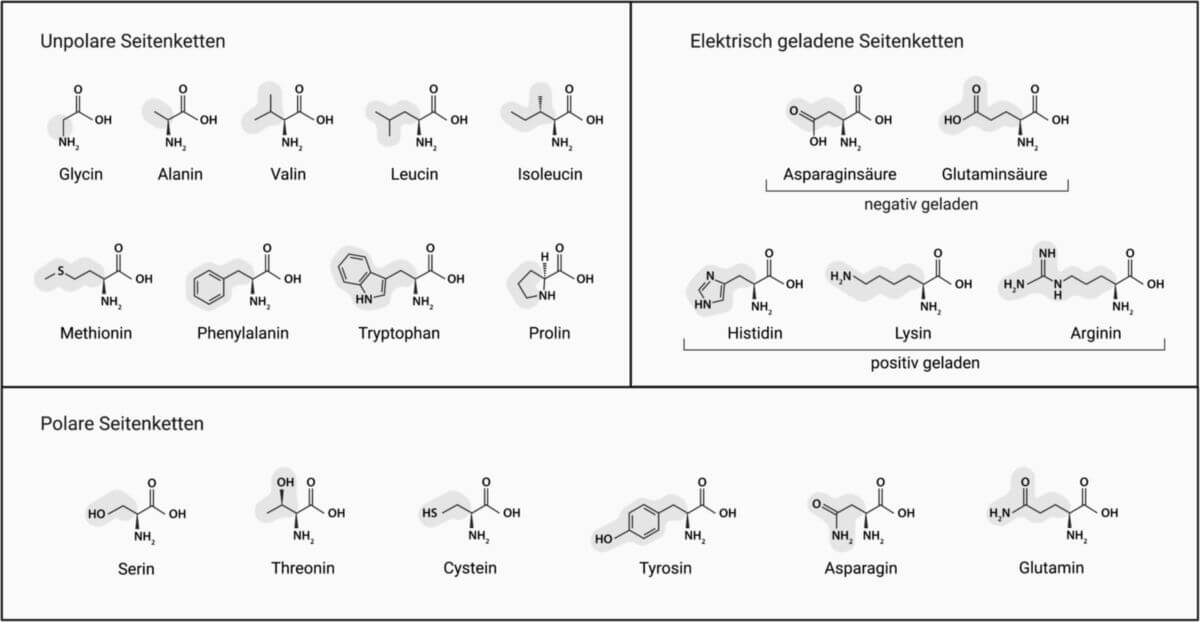
Amino acids are organic molecules that act as the basic building blocks of proteins. They contain an amino group (-NH2), a carboxyl group (-COOH) and a variable side chain (R group) that determines the specific properties of each amino acid. There are 20 different amino acids that must be produced synthetically by our body or ingested through food.
Classification of amino acids
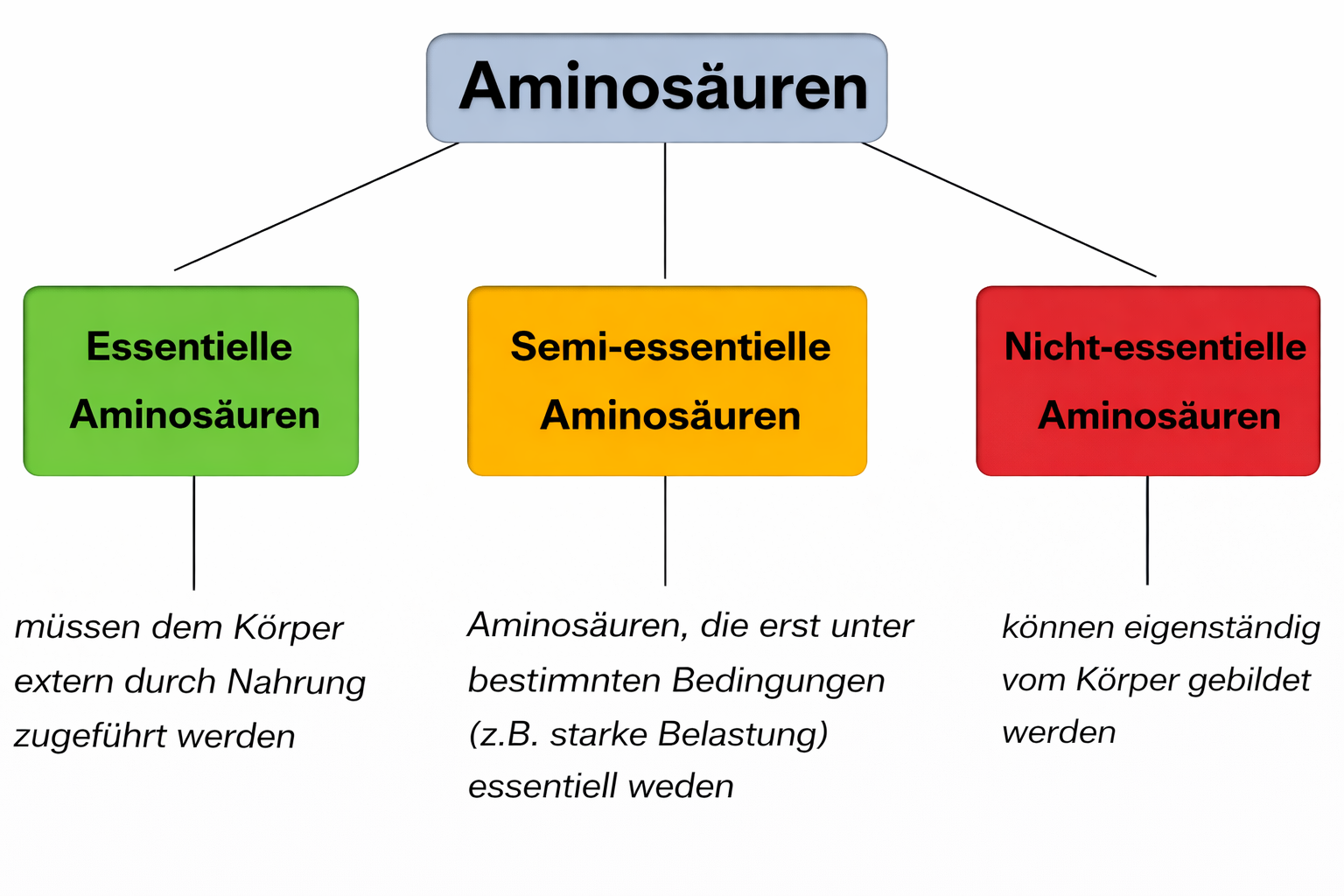
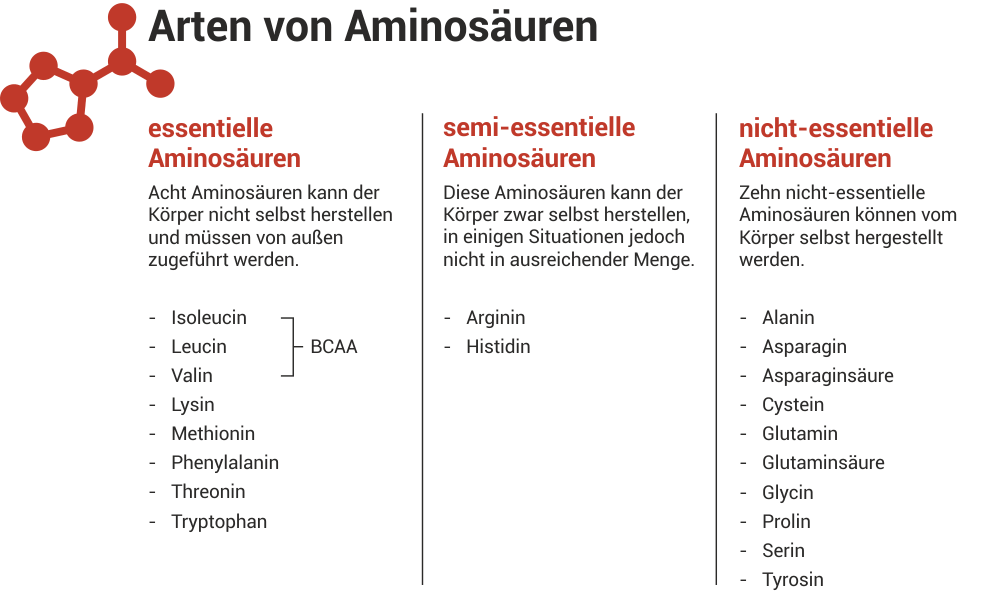
Amino acids are divided into three categories:essential, non-essential and conditionally essential amino acids.
1. Essential amino acids
Essential amino acids cannot be produced by the body and must be obtained from food. Here they are in detail:
1. Essential amino acids
Essential amino acids cannot be produced by the body and must be obtained from food. Here they are in detail:
Leucine
Function: Leucine supports muscle protein synthesis, has an anabolic effect and helps build muscle.
Food sources: Meat, fish, eggs, dairy products, pulses.
Isoleucine
Function: Isoleucine plays a role in energy metabolism and immune function, supports the repair of muscle tissue.
Food sources: Poultry, fish, eggs, nuts, beans.
Lysine
Function: Lysine is important for protein synthesis, the production of hormones and enzymes and the absorption of calcium.
Food sources: Meat, fish, eggs, dairy products, quinoa.
Methionine
Function: Is a precursor of cysteine and plays a role in metabolism and detoxification.
Food sources: Meat, fish, nuts, seeds, eggs.
Phenylalanine
Function: Serves as a precursor for the synthesis of important neurotransmitters such as dopamine, norepinephrine and adrenaline.
Food sources: Meat, fish, soya, dairy products, nuts.
Threonine
Function: Plays a role in the synthesis of proteins, antibodies and in the regulation of nerve impulses.
Food sources: Meat, dairy products, eggs, green leafy vegetables.
Tryptophan
Function: Precursor of serotonin, which regulates mood and influences sleep.
Food sources: Meat, eggs, dairy products, nuts, bananas.
Valine
Function: Valine supports the supply of energy, promotes muscle growth and repair.
Food sources: Meat, fish, pulses, wholemeal products.
2. Non-essential amino acids
Non-essential amino acids can be synthesised by the body from other compounds:
Alanine
Function: Alanine is important for energy metabolism and glucose production, plays a role in the immune system.
Food sources: Meat, poultry, fish, eggs, dairy products.
Asparagine
Function: Plays a role in the synthesis of proteins and the transmission of chemical information in nerve cells.
Food sources: Meat, fish, dairy products, beans.
Aspartate
Function: Supports the synthesis of nucleotides and plays a role in energy metabolism.
Food sources: Meat, fish, poultry, nuts.
Glutamine
Function: Glutamine is involved in protein synthesis and plays an important role in immune function.
Food sources: Meat, fish, eggs, dairy products, pulses.
Glutamate
Function: An important neurotransmitter in the brain, involved in signal transmission.
Food sources: Soya, tomatoes, cheese, mushrooms.
Glycine
Function: Glycine has a role in protein synthesis, brain function and supporting antioxidant abilities.
Food sources: Meat, fish, dairy products.
Proline
Function: Supports collagen production and has an important role in wound healing.
Food sources: Meat, eggs, dairy products.
Serine
Function: Important for the metabolism of fats and fatty acids, plays a role in the immune system.
Food sources: Soya, meat, fish, eggs.
Tyrosine
Function: Tyrosine is the precursor of neurotransmitters such as dopamine and noradrenaline, has an influence on mood.
Food sources: Dairy products, meat, fish, eggs.
3. Conditionally essential amino acids
Conditionally essential amino acids are not normally necessary, but can become essential in certain situations (e.g. illness, stress, intensive training):
Arginine
Function: Arginine supports blood circulation, wound healing and the immune system, important for the production of nitric oxide.
Food sources: Nuts, seeds, pulses, meat.
Cysteine
Function: Cysteine has antioxidant properties and plays a role in detoxification and the synthesis of proteins.
Food sources: Meat, fish, dairy products, garlic.
Glutamine
Function: Glutamine supports the intestines and the immune system, important during physical stress.
Food sources: Meat, fish, eggs, dairy products, pulses.
Glycine
Function: Glycine supports muscle building and plays a role in the synthesis of creatine.
Food sources: Meat, fish, dairy products.
Serine
Function: Important for metabolism and brain function, also plays a role in the immune system.
Food sources: Soya beans, meat, dairy products.
Tyrosine
Function: Tyrosine is important for the production of important neurotransmitters, plays a role in mood.
Food sources: Fish, meat, dairy products, nuts.
Conclusion
Amino acids are essential for many physiological functions in the body. A balanced diet rich in high-quality protein sources can ensure that you get all the amino acids you need. For special dietary requirements or intensive training phases, targeted supplementation can be helpful. It's best to speak to a nutritionist, coach or specialist to find out your individual needs.
If you would like to find out more about the benefits of amino acids or have any questions, please don't hesitate to contact us. We are happy to support you on your way to your fitness goals!
The text of the article is subject to the copyright of the author and may not be used by third parties!

Comments (0)