

Shopping Cart
There are no more items in your cart
- Vivien Rolf
- Training & Technique
- 0 likes
- 10419 views
- 0 comments
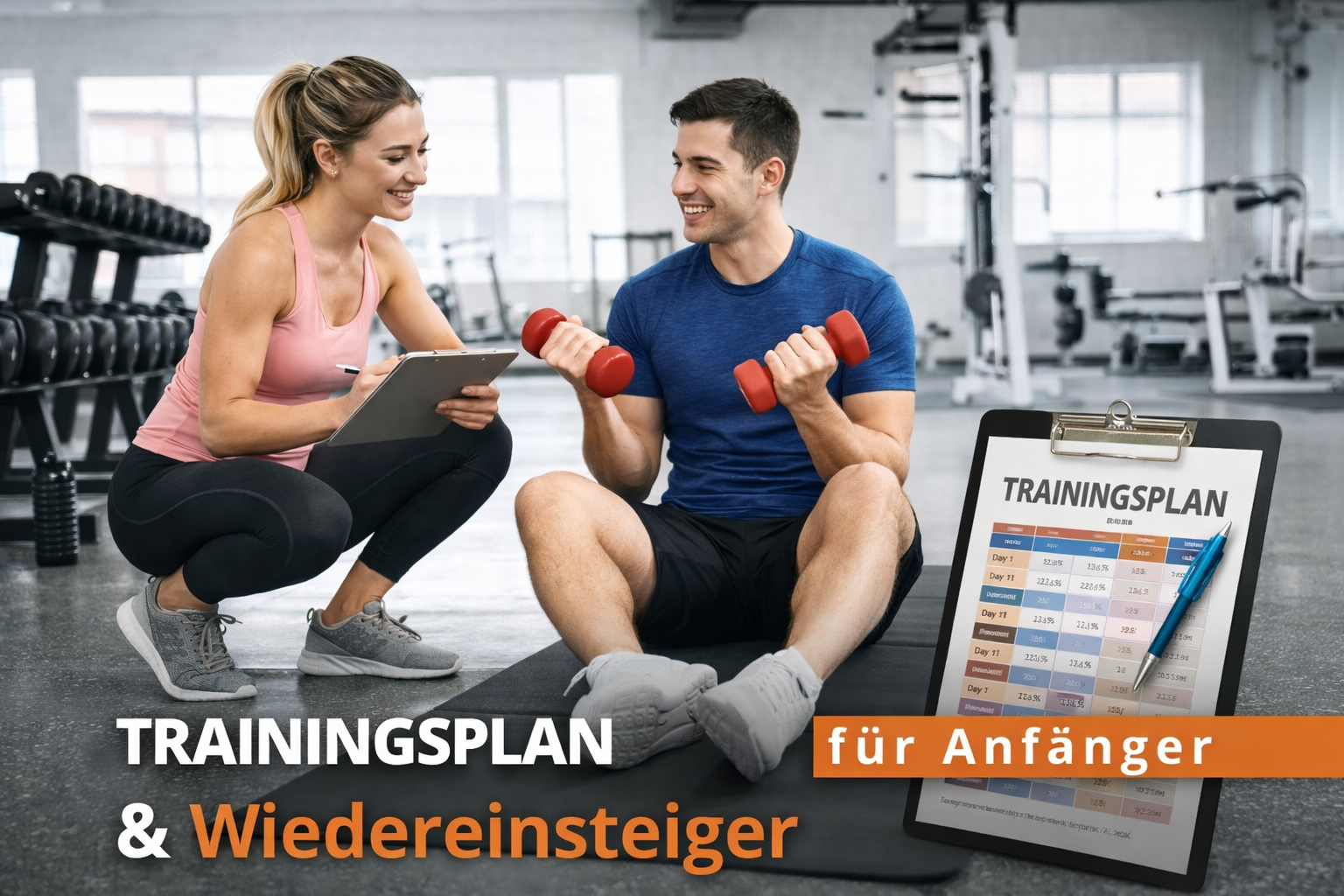
Corona has forced one or two of us to take a break. And of course our fitness has suffered as a result and we've also put on a few kilos. Now that the gyms are open again, it's time to overcome our inner bastard and get started again..
Anyone starting strength training should do a full-body workout for the first few weeks to get their body and muscles used to it.
You should also be careful not to do more than two to a maximum of three workouts per week. If you put your body through too much at the beginning, you will soon realise that you won't get very far. Overtraining can quickly lead to a rapid loss of muscle mass, strength and other unpleasant "side effects" that overtraining can bring.
A light warm-up programme should always be carried out before the actual strength training so as not to injure yourself. Cycling, cross-trainers or the treadmill are ideal for this. A duration of 5 - 10 minutes with low to medium intensity is completely sufficient for warming up.
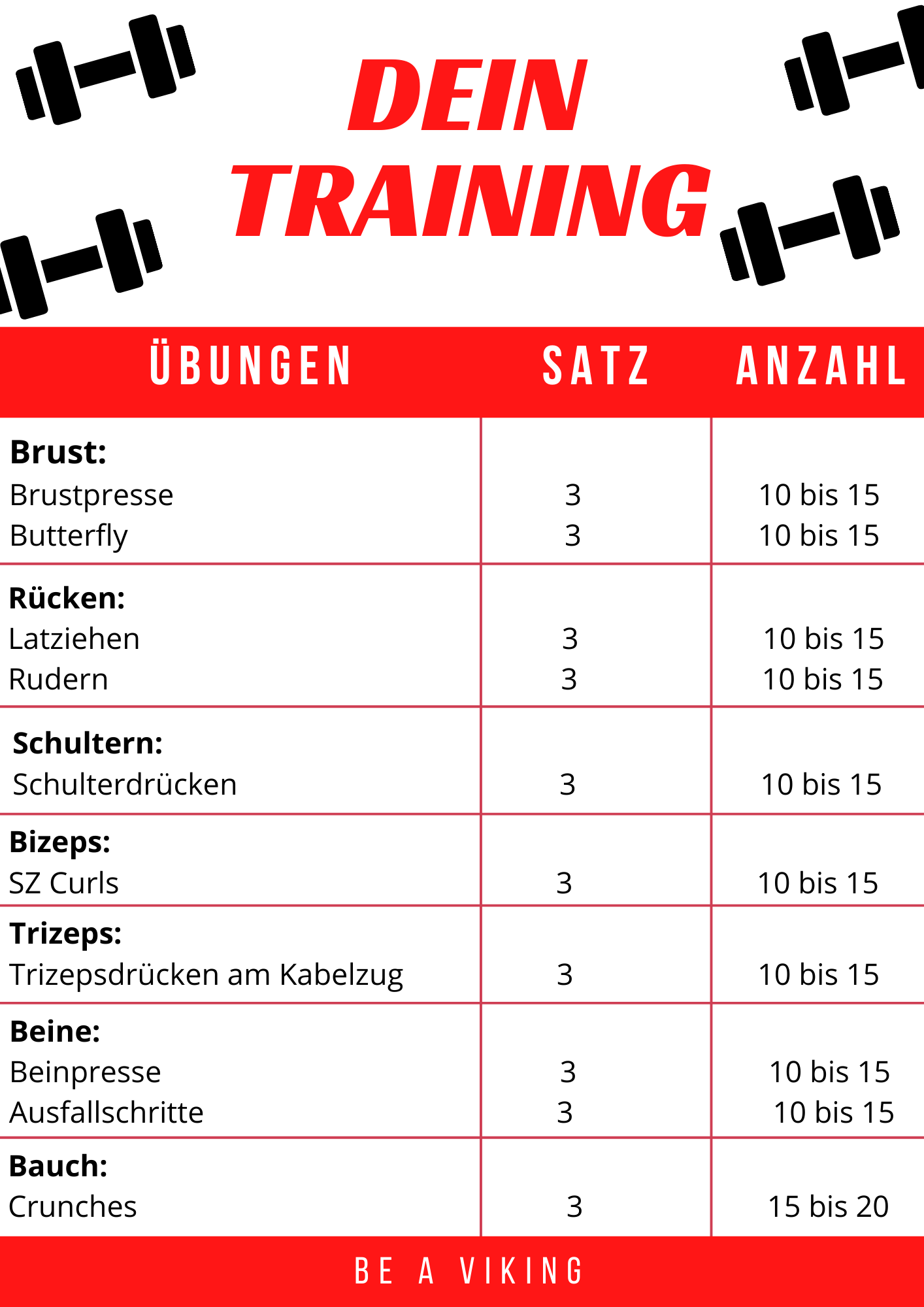
Intensity: Slowly increase weights and intensity during training
The training intensity and weights should be increased slowly. There are no fixed parameters for the increase; listen to your body and how you feel. Pay particular attention to the correct execution of the exercises. Ask your trainer to show you the exercises and equipment.
When choosing a gym, beginners should make sure that there are enough qualified staff. In low-cost chains such as MC Fit, Basefit etc., the staff are unfortunately often busy with other things and often have too little time and are not well trained.
What happens now?
Now that you have gained 8-12 weeks of experience with the full-body training plan and your musculoskeletal system (muscles, tendons, ligaments, joints) has become accustomed to the new load, we now start the next training level, progressive basic training.
The right diet for building muscle
What needs to be considered?
Make sure you eat a high-quality, protein-rich diet. Good protein is THE building block for muscle building and muscle recovery. Good, high-quality sources of protein include low-fat dairy products, protein powder, pulses, eggs, meat and fish. You should make sure that you consume at least 2g of protein per day per kg of body weight, ideally spread over 4-5 smaller meals. For example, if you weigh 80kg, you should consume around 160g of protein per day. In addition to a balanced diet, our protein shakes can of course help you to achieve your daily protein intake.

Viking tip
When you have finished your workout, you should provide your muscles with protein as quickly as possible.
After training, we therefore recommend a post-workout shake with a good whey protein (or lactose-free isolate) and fast carbohydrates such as maltodextrin, Vitargo or Carbox. You can find a large selection of good protein shakes in our store or online. A ready-made post-workout shake contains EVERYTHING your muscles need for growth and regeneration.
Comments (0)