Pads and punch pads for your boxing training
Training is essential in martial arts, just like in all other sports! This is the only way to improve your performance and win competitions. In boxing and martial arts, there are various punching bags as well as punch pads. In this article, we explain exactly how these punch pads work, what types there are and what you should look out for when buying boxing pads.
Boxing pads are an effective training aid and allow the boxer to improve coordination, fighting distance and correct timing.
Depending on the type of martial arts practised, there are various models available, which we will present in this article along with some tips on buying claws.
We also go into the advantages of training on a punching bag and explain why punching pads and punch cushions are a useful addition to training on a punching bag or with a sparring partner.
Training approach with claws and impact pads
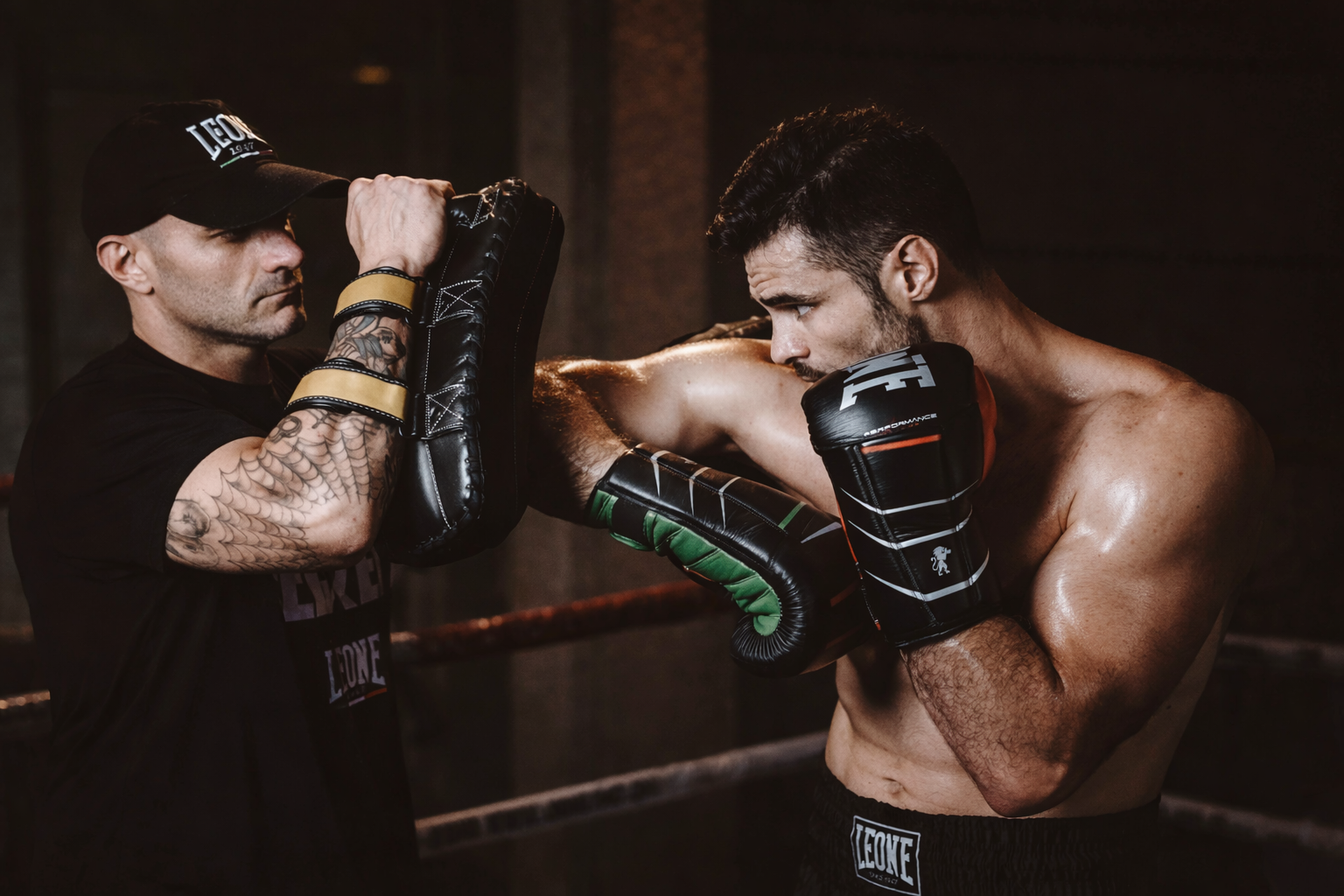
Boxing claws make a sparring partner superfluous. However, the correct posture is essential for training with boxing claws to work.
The position must be individually adapted to the boxer, as claws must not be held too low or too high.
To train straight punches or hooks, the punch pads are best positioned at the boxer's head height. If the punch targets are in the centre of the body, the pads should be held accordingly.
Pads help the boxer to realise his full potential. However, this also means that he does all the work, which is why it is not expedient to press the punch pads extremely hard against the boxing gloves.
A little resistance is sufficient for the training, for this purpose the boxing claws are moved slightly forwards.
The same applies to the distance, as claws are used to help a boxer find his personal fighting distance and balance it with an outstretched arm.
Endurance and rhythm training
In order to train a feeling for the right timing, you can agree on a command in advance when you want to hit the pads. However, an experienced martial artist will know how to interpret the lifting of the punch pads, as an opponent in the ring does not announce the current state of his cover.
Boxing claws are a touchstone for the endurance and strength of the athlete. On the one hand, the training aid allows the boxer to set a rhythm that he inevitably has to keep up with, but at the same time gives him the opportunity to determine the speed of his punches himself.
This training is intensified when the holder of the claws moves continuously and simulates an opponent. This can range from a defensive opponent to a sparring partner who applies pressure and delivers punches and hooks.
Pratzen are also ideal for explaining the finer points to a boxing beginner.
Preparing for competitions with claws
Boxing pads are preferable to punching bags when it comes to training reflexes. Punch training can also be organised much more flexibly.
However, the holder of the punching aid should have a certain amount of experience, as not only does the claw have to be held appropriately, but mistakes when punching also need to be corrected competently. The movements of the punch holder force the boxer to constantly adapt, allowing him to develop a feel not only for distance, but also for angles and punch combinations.
Training with a claw is also much more interesting than just a standing session on a punching bag. Boxing claws therefore play a major role in competition preparation and it is advisable to train with them directly in the ring.
Different types of impact pads
Claws not only play a role in boxing, but also in many other martial arts such as Muay Thai, K1 and kickboxing.
Because the respective martial arts are not just about punches, but can also use the legs and feet, the punch pads or punch cushions differ in their design.
In total, there are three main groups, which we would now like to introduce:
Claw for punches
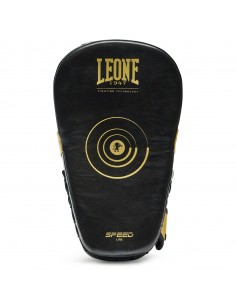
Classic boxing pads for punches are available in straight and curved versions, the choice depends on personal taste.
This type of claw is usually the size of a plate and is held in one hand by the training partner.
The training partner reaches from behind into the recesses, which are shaped like a glove, and closes the Velcro fastener on the wrist.
Thanks to their compact size, they can be moved quickly and thus promote the boxer's ability to react and aim.
The picture on the right shows the approximate size of the claws and how training with them works.
Punch cushion for punches and kicks
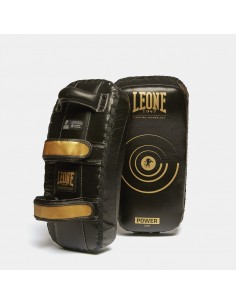
Punch pads or Muay Thai pads are suitable for training kicks and kicks aimed at the upper body.
Due to the force of the kicks, these punching pads are much more heavily padded than normal punching pads.
In addition, they are not worn in one hand, but over the entire forearm.
As a result, they offer enough surface area for slightly less accurate kicks, which are generally more difficult to place than straight punches.
The picture on the right also shows a boxer with a training partner who is holding the larger punching pads with his hand and has them fixed to his forearm.
Impact pad for low kicks
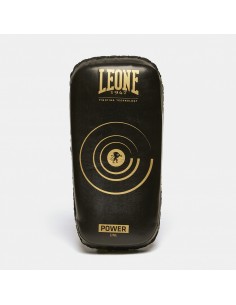
To train low kicks like in Muay Thai boxing, so-called punch pads are used, which are up to one metre long and cushion the kicks even better.
The shape and size of these are very reminiscent of shields from Roman times or the Middle Ages and are also worn in a similar way.
The foam in this version is significantly thicker than in the pre-ordered claws because a lot of energy is released from the fighter's turning movement, especially in the area of the low kicks.
In this case, the picture shows how the training partner intercepts a low kick with a large and thick punch pad.
Which type of claw you should ultimately buy depends on the sport you are practising. For classic boxing, claw pads in the first category are of course the most sensible, as the focus here is much more on accurate punching with fists.
Buying a claw - what you should look out for!
Above all, a claw must fit well in the hand, so it is essential that the finger slips are worked out precisely. This is the only way the training partner can fend off hard punches and, depending on the sport, kicks.
It is particularly important that not only the grip surface is solidly made, but also the holder for the forearms is of high quality, especially in the case of impact pads with large dimensions, i.e. categories two and three. The brackets should be sufficiently wide, otherwise they will cut off uncomfortably and press into the flesh
The upper material can be either leather or high-quality synthetic materials such as polyurethane. Even if real leather is a little more expensive, in our experience it pays off in boxing; this also applies to punching bags and boxing gloves!
Most boxing pads have a foam filling or a foam core that absorbs impacts well. Several layers of filling material ensure high stability and a longer service life for the boxing pads.
In order to be able to train effectively for a long time, the impact pad must fit well in the hand and be made of high-quality material with solid padding.
Boxing pads not only make training more varied, but also more challenging - for beginners and professionals alike. Especially if you want to improve your technique, there's no getting round the use of crampons.
You can find our selection of claws and punch pads here:Clamps and impact pads
Our recommendation for impact cushions
It is very easy to make a recommendation, because there are basically 3 different types of impact cushion.
However, because it is primarily about boxing, we recommend boxing pads at this point, i.e. a model that can be used primarily for punch training.
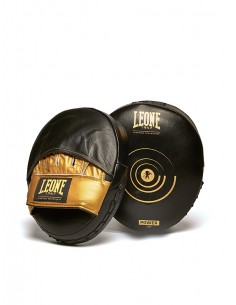
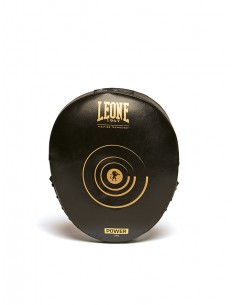
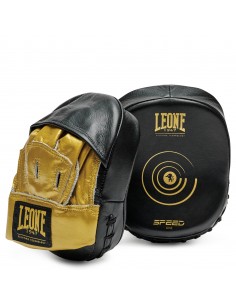
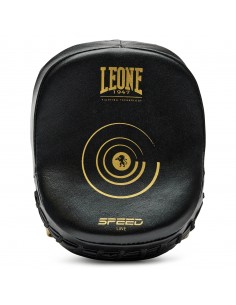
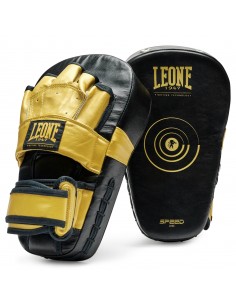
Our choice falls on the curved claws from Leone1947 Power Line. Compared to the other hand claws, not only the quality but also the price-performance ratio is convincing.




Comments (0)