Pratzentraining: how to do it right
Especially in martial arts such as kickboxing, it is common practice to train with claws. However, in many martial arts, such as Wing Chun, claw training has a shadowy existence - wrongly in my opinion.
Training with the claw
Prat training is always a partner exercise - so prats are only used when training in pairs. If you train alone, you have to switch to things like punching bags, punching balls and punching balls, which train similar but not exactly the same skills as claw training.
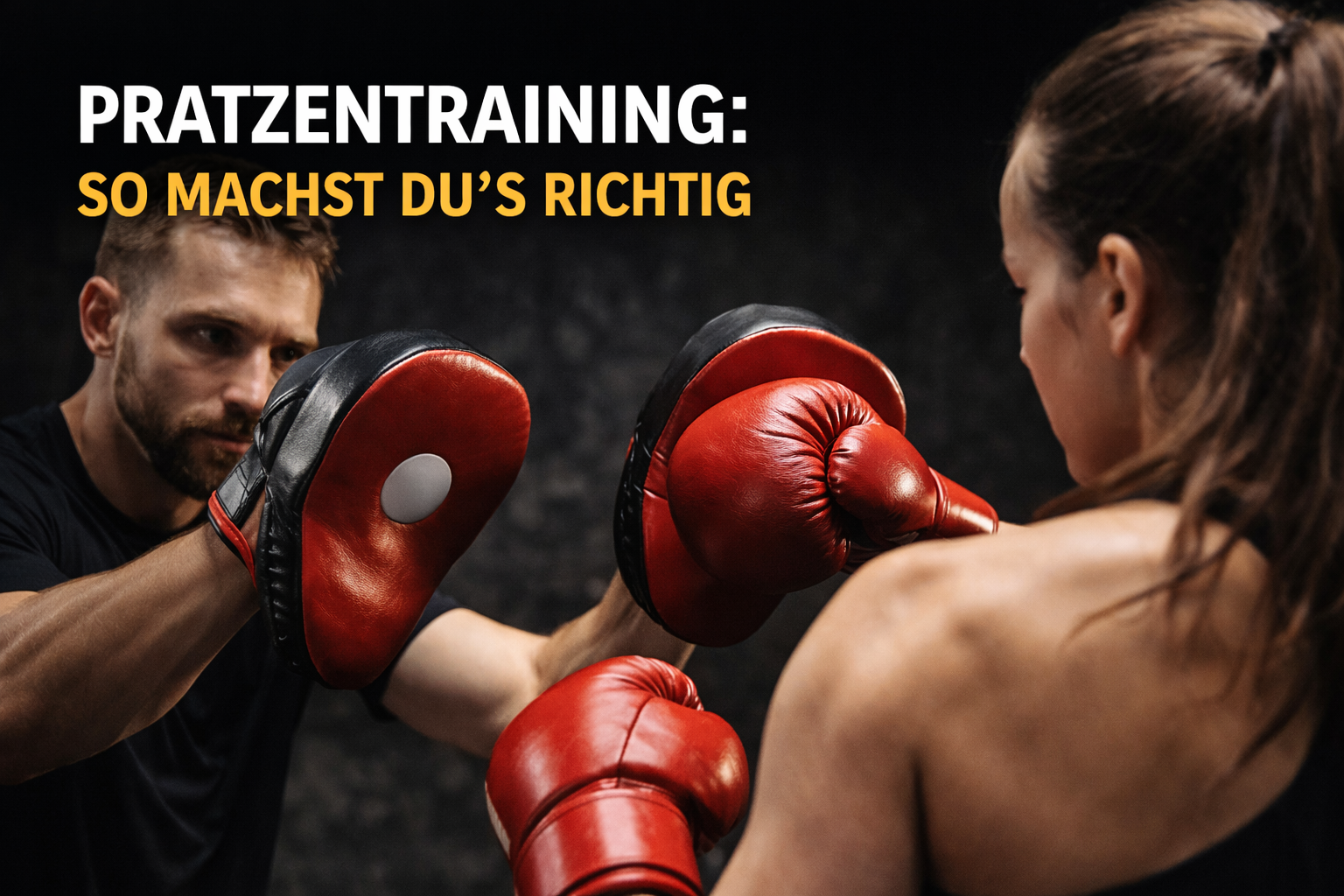
Training with the claw usually involves the training partner holding the claw while the practitioner trains punches. You can practise a wide variety of punches and combinations of punches, including straight punches, hooks, jabs, etc. You can also practise hand edge strikes such as the Fak Sao in Wing Chun.
Kicks are rarely practised with claws, as it is not possible to kick with full force without risking injury to the training partner. However, this is also conceivable as part of reaction training (and is also practised in this way in some martial arts such as Jeet Kune Do)
However, if you want to concentrate specifically on kicking training, then punching pads or so-called Thai pads are often used instead of claws, as you can kick harder without risking serious injury.
Another option is not to hit the claws, but to hit WITH the claws - so that the person holding the claws attacks the practitioner. This primarily trains visual and tactile reflexes.
Different versions
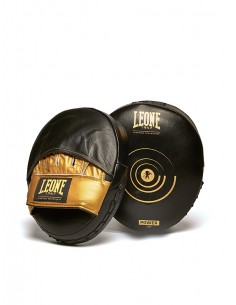
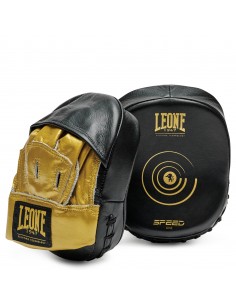
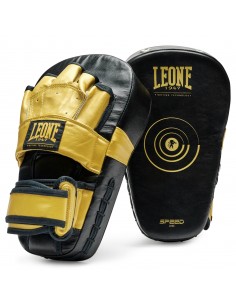
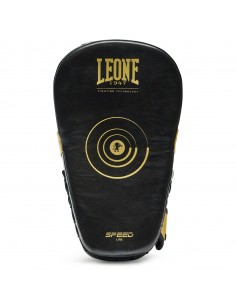
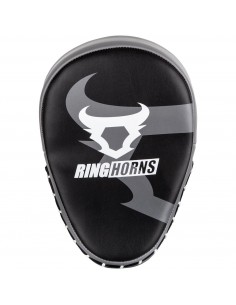
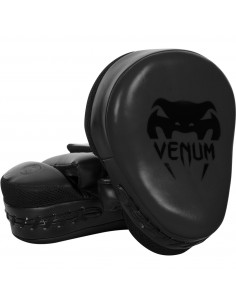
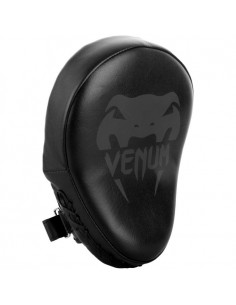
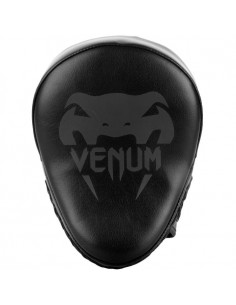
Different claws (straight/curved; from soft to hard)
There are big differences in the quality and design of claws. If you are serious about training, you should prioritise robust materials and clean workmanship.
In most cases, curved / bent claws are also more suitable for training than straight ones (at least I personally prefer the curved ones as they are easier to hold on to).
As far as the degree of cushioning is concerned, it depends on what you want to train:
If it is more about impact power, then harder claws should be chosen.
If the focus of the training is more on reactions and avoidance movements, then they should be better padded so that the practitioner can attack a little faster from time to time without risking injury.
The benefits of Pratzentraining
The benefits of prat training are very diverse and range from improved precision and the reduction of stroke inhibitions to increased fitness:
Wide range of training options
Punching, kicking, stepping and avoidance techniques can be trained with claws. And depending on your focus, you can use them to train your technique, your ability to react or your punching power.
Compared to punching bag training, this also gives you significantly more varied training options.
Reduction of impact inhibitions
Another particular advantage of prat training is that you can follow through with your strokes. This also makes it ideal for reducing inhibitions.
And beginners in particular almost always have stroke inhibitions.
My tip therefore:
If you want to get rid of your stroke inhibitions as quickly as possible, then you should try prat training.
How to hold the claws correctly
A lot of responsibility lies with the training partner when it comes to claw training. If he/she holds the claws incorrectly, the whole training effect is ruined.
Keep the claws close to your body
Here are some rules for the training partner:
The claws should not be held too far away from the body. Unfortunately, beginners in particular often make this mistake as they are afraid of being hit by the force of the punch. The problem with this is that you can't train seriously like this.
The claws should not be held completely straight but at a slight angle (with the fingers slightly further forward than the ball of the hand).
During reaction impact training, it is better to place the claws on the chest instead of constantly putting them down completely.
Perhaps the most important tip for punch training, however, is to always push back a little when you hit your fist so that the practitioner doesn't constantly have the feeling of hitting nothing.














Comments (0)