Magnesium - a valuable and essential mineral
At a glance:
❖ In terms of quantity, this essential mineral is the second most important element in a cell after potassium and contributes to the normal functioning of our muscles and nervous system, among other things.
❖ Magnesium is mainly absorbed in the upper sections of the small intestine and depends on the body's current supply situation. On average, around 30 to 50 per cent is absorbed from food in the small intestine.
❖ Possible deficiency symptoms of magnesium can occur, for example, due to insufficient intake with food, an increased requirement or due to interactions with nutrients or medication.
❖ If there is a deficiency, it can be helpful to improve your eating habits, include more magnesium-rich foods in your daily diet or take suitable magnesium supplements after consulting a doctor.
What is magnesium
Magnesium is a essential mineral, which our body cannot produce itself and which must therefore be supplied in sufficient quantities with the daily diet or supplements. Within the group of Minerals it is counted among the bulk elements. Due to their electrical conductivity in aqueous solution, bulk elements such as magnesium, sodium, calcium, potassium, phosphate and chloride are also known as electrolytes, which are the basic building blocks of living cells and define the body's water balance.[1]
In the Body of an adult contains about 25 grams of magnesium, of which approx. 95 per cent stored inside the cells of bones, muscles and nerves are. Magnesium is therefore the fourth most common electrolyte in the human organism and, after potassium, the second most important electrolyte in terms of quantity second most important mineral within a cell.[2] The remaining five per cent of the electrolyte is contained in the extracellular space, i.e. outside the cells. Less than one per cent of this is found in the blood serum. As the magnesium supply of our body cells is reduced to about 60 per cent in the bones and the rest is largely localised in the muscles (approx. 30 percent) and in the nervous tissue, magnesium is also called the Bone and muscle mineral called.
In nature, magnesium does not occur in elemental form due to its reactivity, but occurs as a mineral or positively charged ion (cation) predominantly in the form of compounds with other substances (e.g. magnesium chloride).[3] By the way, magnesium is is also an essential nutrient for plants, this is because plants need the mineral absorbed from the soil via the roots to form the green leaf pigment chlorophyll.
What is magnesium good for?
As an important component of body cells and fluids, magnesium fulfils a variety of tasks in the human organism. For example, the valuable mineral is involved as a co-factor in numerous enzyme functions, influences muscle activity and nerve impulse conduction and is also required for the mineralisation of bones and teeth.
The most important properties of magnesium at a glance:
Magnesium carries..
helps to reduce tiredness and fatigue.
contributes to the electrolyte balance.
contributes to a normal energy metabolism.
contributes to the normal functioning of the nervous system.
contributes to normal muscle function.
contributes to normal protein synthesis.
contributes to normal psychological function.
contributes to the maintenance of normal bones.
contributes to the maintenance of normal teeth.
plays a role in the process of cell division.
Demand
The German Nutrition Society (DGNB) specifies a daily magnesium requirement of 300-400 mg for adolescents aged 16 and over and adults. It should be noted that men need slightly more than women due to their larger skeletal mass. For children up to 4 years 80 mg and up to 15 years 120-300 mg are recommended.
Pregnant women should take around 350 mg and breastfeeding mothers around 390 mg daily. In the final months of pregnancy, magnesium is often prescribed by gynaecologists to inhibit premature contractions. The following groups of people may also have an additional need for magnesium: Athletes, who lose a lot of magnesium through sweat; diabetics, who excrete more magnesium in their urine; alcoholics; and older people, who often do not drink enough. Furthermore, the intake of some medicines can be a reason for an increased magnesium requirement. The following medicines are mentioned as examples: Aminoglycosides, Ciclosporin, oral contraceptives, laxatives, glucocorticoids, diuretics u.a. In addition, people with heart disease may have an increased need for magnesium, but people with heart disease should always consult their doctor before taking additional magnesium supplements. It is assumed that the daily requirement of magnesium should be roughly covered by a normal diet. Magnesium is much better absorbed by the body in organic compounds (such as z.B. magnesium citrate, aspartate and glutamate) than in inorganic compounds (magnesium carbonate, magnesium oxide). Short-term shortages in magnesium intake are bridged by the magnesium reserves in the bones. However, deficiencies can occur in the event of illness, malnutrition or frequently in older people.
Demand in sport
Although it is known that a deficiency of this mineral, which severely impairs physical performance, occurs quite frequently, many athletes still take in too little magnesium. Studies on competitive athletes have shown that only a sufficient supply of magnesium in the body enables effective training. Athletes certainly have a higher magnesium requirement than normal people. If you also consider that a magnesium deficiency is fairly widespread in the population, it becomes clear that competitive athletes in particular can benefit from a magnesium supplement. The likelihood of a deficiency in athletes is further increased by the loss of magnesium through sweat. Accordingly, two studies have shown that magnesium supplementation has a positive effect on both untrained and trained individuals. A recommended daily dose of magnesium is 6mg per kilo of body weight, i.e. approx. 500mg of a magnesium supplement for an athlete weighing 80kg.
Areas of application & mode of action of magnesium
Magnesium against cramps and tension
As the mineral contributes to normal muscle function, among other things, it is not surprising that muscle cramps are one of the best-known symptoms of magnesium deficiency. This is why stretching exercises and magnesium are used in particular to combat calf cramps. Muscle cramps triggered or intensified by a magnesium deficiency can often occur in the shoulder and neck area.
Magnesium for sore muscles
Muscle soreness is a pain that occurs after physical exertion - especially when the muscles are subjected to high levels of strain. In connection with magnesium, we can state that although the mineral influences muscle activity, it cannot prevent muscle soreness. However, provided that magnesium is regularly absorbed by the body, the mineral can prevent muscle soreness.[8] Magnesium is particularly important for athletes. If you do a lot of sport regularly, you should always make sure that your body has a sufficient supply of the necessary nutrients.
Magnesium for migraine
Some people suffer from regular headaches, which can have a significant impact on everyday life. Migraine sufferers could also be triggered by an inadequate supply of the mineral. As the bulk element contributes to the normal functioning of the nervous system, the supply of magnesium can balance out the excitability of the nerves and, on the other hand, the contribution of magnesium to normal muscle function makes it possible to reduce painful tension, which can also lead to headaches, through a good supply of magnesium.
Magnesium for premature labour
This essential mineral is also very important during pregnancy. (Nocturnal) calf cramps in particular are attributed to an insufficient supply of magnesium during pregnancy and can occur as early as the second week of pregnancy due to muscular hyperexcitability. Magnesium is also said to help against premature labour.[9][10] For this reason, magnesium is often taken orally if labour starts too early, on the assumption that it has a contraceptive effect.
Magnesium against fatigue
There can be many different reasons for tiredness. The most common cause is probably not getting enough sleep at night. The optimum daily amount of sleep for people aged between 26 and 64 is seven to nine hours. A few people only need six or even ten hours of sleep. A poor diet, lack of exercise or constant stress can also affect the quality of sleep. However, a lack of vitamins and minerals can also be a reason for tiredness. As magnesium contributes to the reduction of tiredness and fatigue, among other things, a sufficient supply of this essential mineral is a good remedy against tiredness.
Magnesium for stress
In stressful situations, the need for magnesium is increased, as the human organism releases more hormones such as adrenaline or cortisol under stress, which in turn increase the excretion of the electrolyte via various metabolic pathways. You should therefore make sure that you eat a balanced diet rich in magnesium, especially during this time.
Foods with magnesium
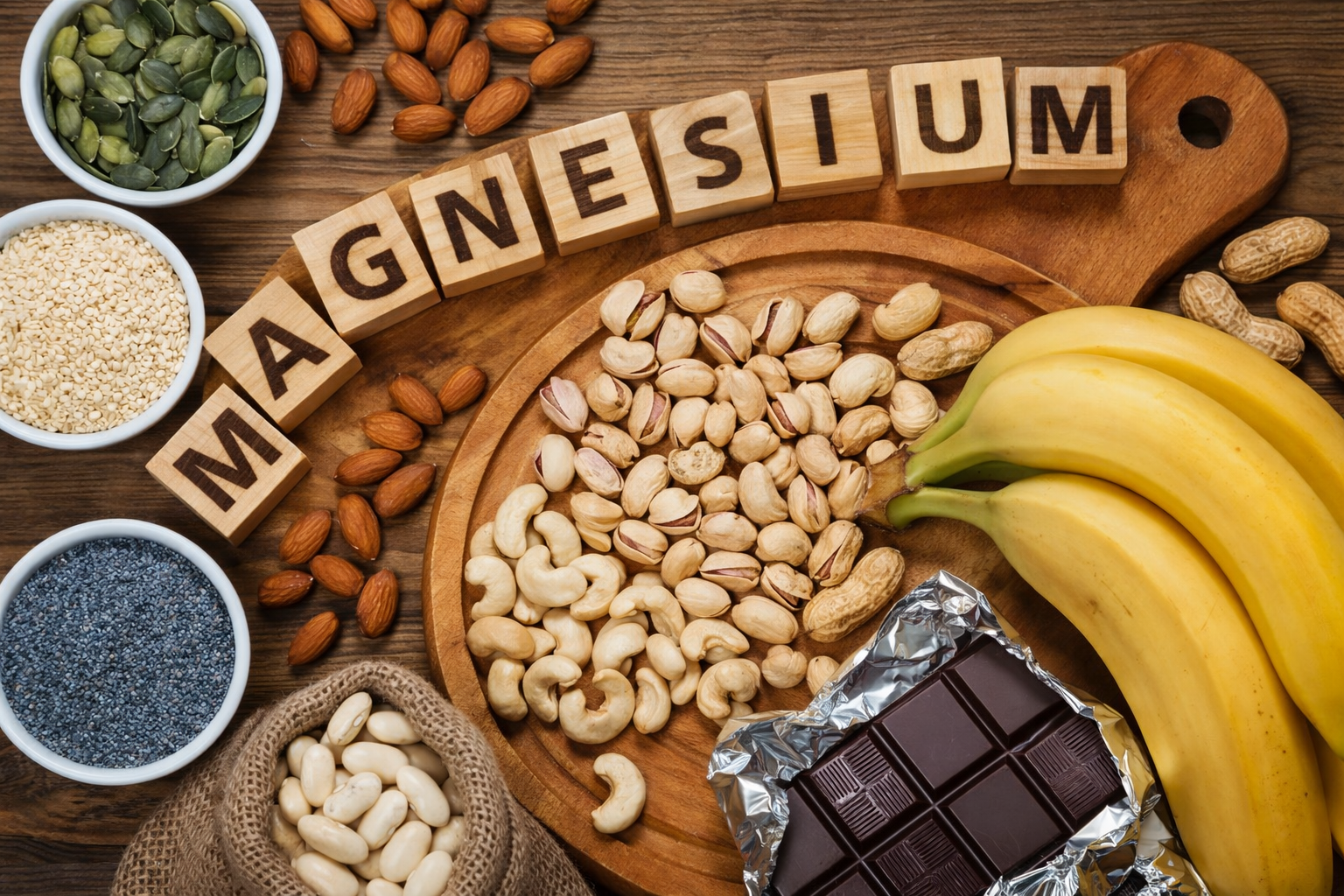
Top 15 magnesium foods
A healthy diet is essential for your physical and mental well-being. In our list you will therefore find the top 15 magnesium suppliers. So you always know how to replenish your magnesium stores.
TOP 15 magnesium foods
|
|
mg per 100 g
|
|
Edible bran
|
590
|
|
Sunflower seeds
|
429
|
|
Chia seeds
|
306
|
|
Soya beans
|
220
|
|
Cashew nuts
|
267
|
|
Almonds
|
252
|
|
Millet
|
170
|
|
Dark chocolate
|
149
|
|
Oat flakes
|
137
|
|
Walnuts
|
129
|
|
Lenses
|
129
|
|
Dried bananas
|
110
|
|
Shrimp
|
76
|
|
Wholemeal pasta
|
62
|
|
Spinach
|
58
|
Our conclusion
Magnesium is vital for body and mind. The mineral plays a particularly important role in muscle relaxation. As magnesium can only be absorbed through food, it is important that you consume enough foods containing magnesium. If you cannot fully cover your additional requirements through your diet during intensive and regular training, we recommend taking magnesium tablets or capsules as a supplement. This will prevent a deficiency and ensure that your muscles can relax again after an intensive training session.










Comments (0)