1. What exactly is Brazilian Jiu-Jitsu (BJJ)?
Brazilian Jiu-Jitsu is a martial art that specialises in ground fighting. You learn to effectively control or submit your opponent using holds, levers and chokes - even if you are physically weaker or smaller.
2. Is BJJ suitable for beginners with no previous experience?
Absolutely! With BJJ, everyone starts with the basics. You don't need any martial arts experience because everything is explained to you step by step.
3. Does BJJ really help me with self-defence?
Definitely! Brazilian Jiu-Jitsu is considered one of the most effective martial arts for self-defence. You learn to master dangerous situations in a controlled manner without having to use punches or kicks.
4. How high is the risk of injury in BJJ?
Brazilian Jiu-Jitsu has a rather low risk of injury compared to other martial arts, as punches and kicks are excluded. If performed correctly and trained with caution, you can greatly reduce injuries.
5. What equipment do I need to start?
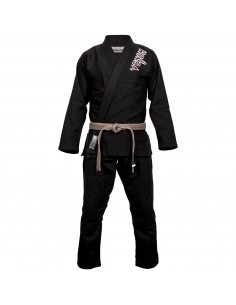
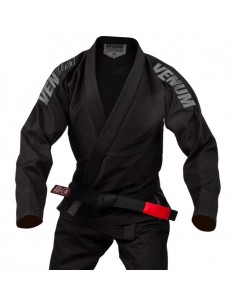
To get started, you only need a BJJ gi (combat suit) and a suitable belt. I also recommend a mouthguard and a rashguard (tight-fitting sports shirt) for more comfort and safety. Of course you can get everything at the Vikingstore in Bern or St. Gallen!
6. How long does it take to get a black belt?
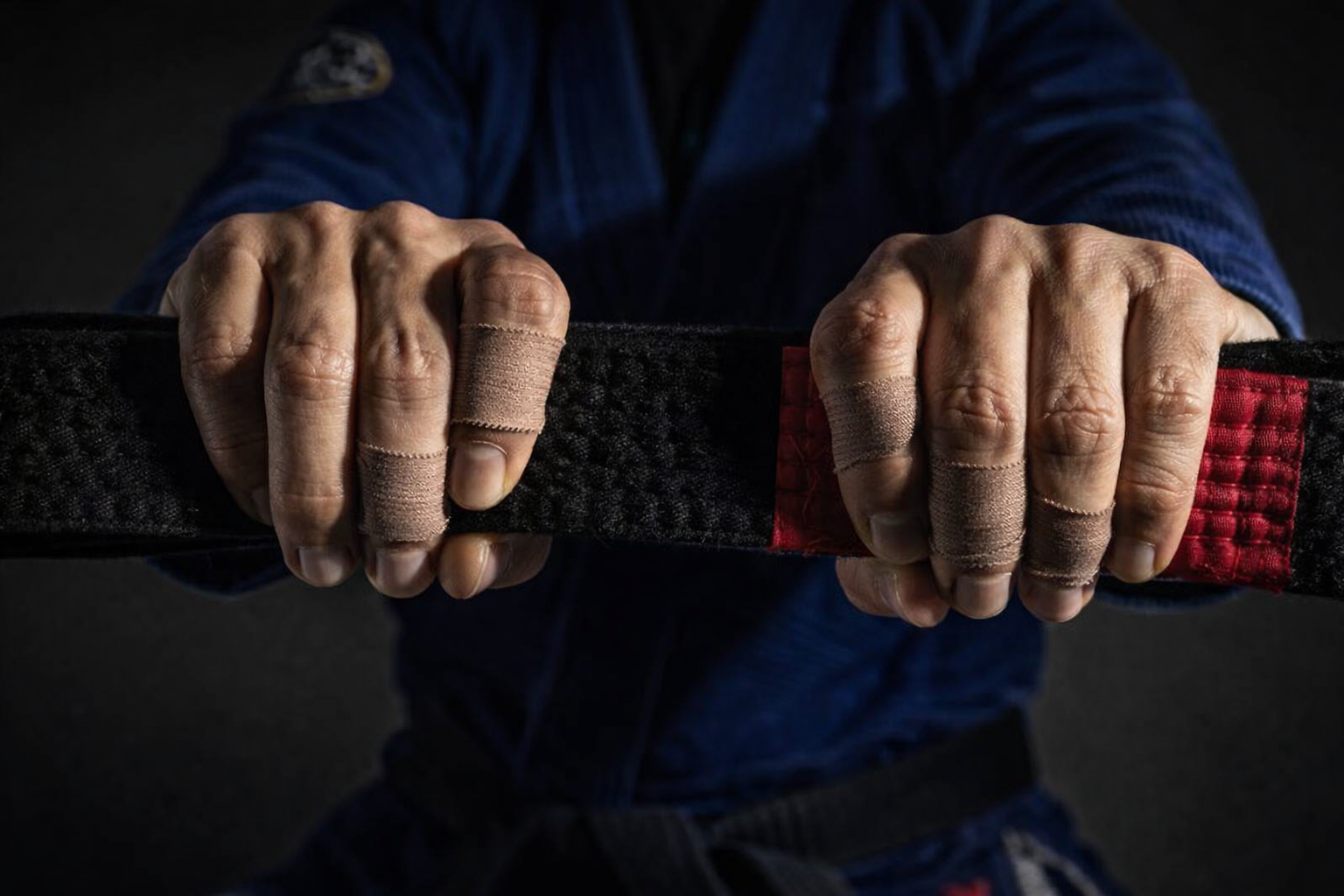
The black belt is an award for years of dedication. Expect 8 to 12 years of regular training. However, the most important thing is that you keep having fun with BJJ and stay on the ball. You can find out more about the individual belt levels here: Belt levels in Jiu-Jitsu: A guide to BJJ belts and ranking systems
7. Do I need to be fit to start BJJ?
No, not at all. You automatically get fitter the more often you train. Brazilian Jiu-Jitsu naturally improves your fitness, strength and flexibility.
8. Can I do BJJ if I am small or weak?
Yes, absolutely! BJJ was developed precisely to teach smaller or physically weaker people techniques with which they can defeat larger opponents.
9. What distinguishes BJJ from traditional Jiu-Jitsu?
While traditional Jiu-Jitsu includes punches, kicks and weapon defence, BJJ focuses exclusively on ground fighting, submission techniques and grappling. It is a modern and competition-orientated development.
10. How often should I train per week?
To make noticeable progress, I recommend at least 2 to 3 sessions per week. Regularity is the key to success and fun in BJJ.
Start your Brazilian Jiu-Jitsu adventure now and discover your potential on the mat! Drop by my Vikingstore in Bern or St. Gallen - you'll find everything you need to get started.








Comments (0)