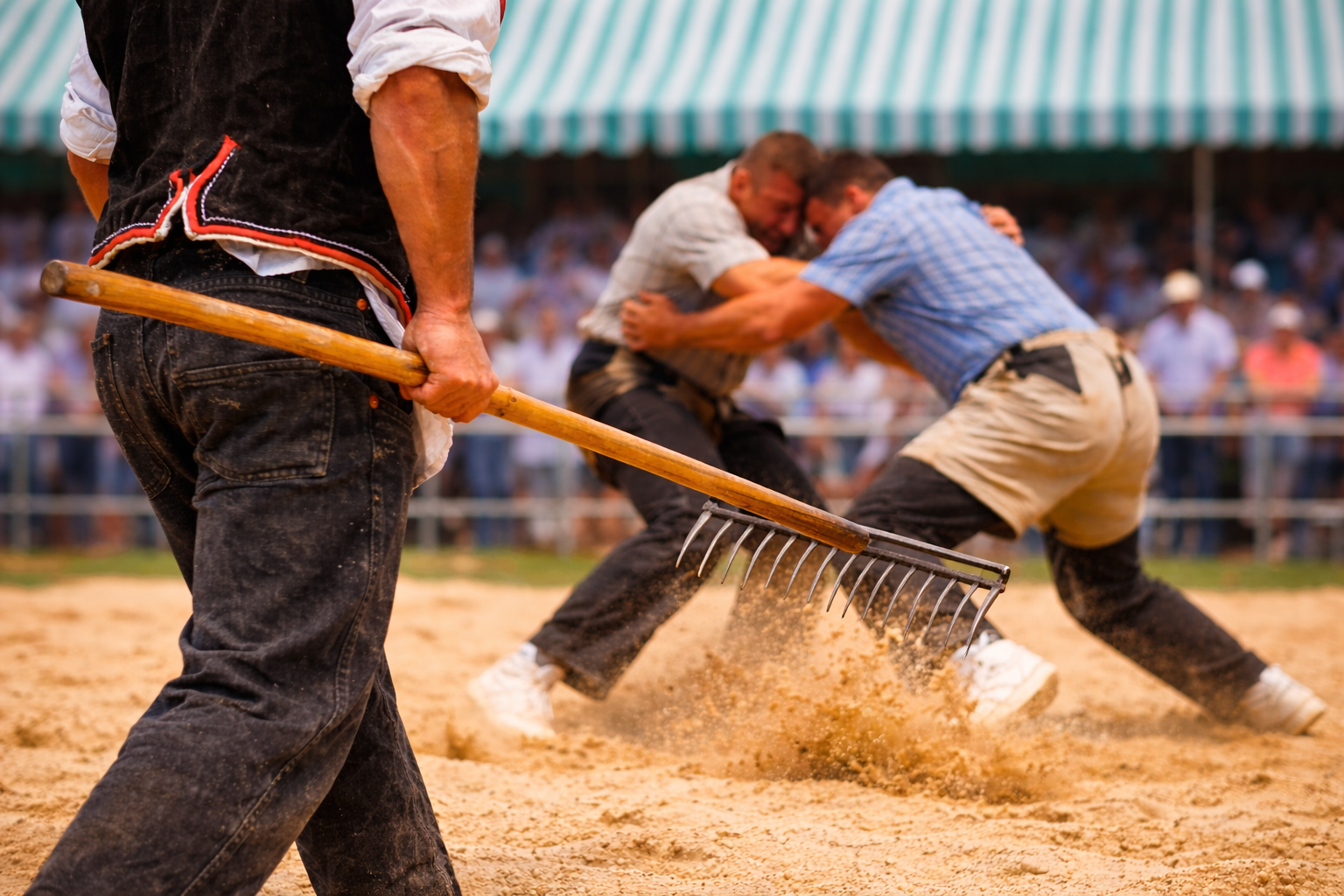
Swiss wrestling, or Schwingen, is not only a contest of muscles – it is also a battle of the mind. To succeed in the sawdust ring, athletes need mental toughness, nerves of steel and the ability to stay calm and focused under pressure. While strength and technique are visible in training, mental preparation often happens behind the scenes – yet it frequently decides victory or defeat.
Why Mental Strength Matters in Schwingen
A Schwingfest can last for hours, with enormous pressure and expectations. Even a moment of distraction or inner nervousness can ruin a move. That’s why mental resilience is essential:
- Staying focused: Every bout demands full concentration.
- Handling pressure: Thousands of spectators and the weight of the moment can overwhelm unprepared athletes.
- Overcoming setbacks: Losing one bout does not mean losing the day. Mental strength helps athletes reset quickly.
- Confidence: Believing in one’s own abilities is the foundation of peak performance.
Methods for Training the Mind
Visualization
Many Schwingers use mental imagery. They rehearse the bout in their minds, step by step, building routine and confidence.
- Example: Visualizing the perfect Hüfter throw – from the first grip to the opponent hitting the ground.
Breathing Techniques
Controlled breathing directly affects the nervous system. Deep, steady breaths before a bout lower stress and sharpen focus.
- Effect: Clearer thinking, less physical tension.
Routines and Rituals
Repeating the same warm-up, putting on gear in a fixed order, or using short self-talk – rituals provide security and mental stability.
Mental Coaching
More athletes now work with sport psychologists or mental coaches to improve focus, confidence and resilience under pressure.
Dealing with Defeat
No Schwinger wins every bout. Mental strength shows in how athletes react after a loss:
- Analyzing mistakes without self-destruction
- Viewing setbacks as opportunities to learn
- Entering the next bout with full energy and confidence
Mental Training Tips for Everyday Athletes
You don’t need to be a professional Schwinger to benefit from mental techniques. Hobby athletes and fitness enthusiasts can use them too:
- Set clear goals – to stay motivated and measure progress
- Positive self-talk – replace doubt with empowering words
- Visualization – imagine yourself completing a lift or exercise successfully
- Mindfulness – short focus breaks help you stay present and avoid stress
Conclusion
In Schwingen, success depends not only on strength and technique, but also on the mind. Mental toughness means staying focused, handling pressure, overcoming setbacks and trusting in your abilities. Athletes who train both body and mind are the ones who dominate in the sawdust ring.
Image Notice:
The images used in this article were created with the help of artificial intelligence (AI). The people shown are entirely fictional and do not represent real athletes.
Of course, we would prefer to show real fighters and athletes. However, professional sports photos often come with very high licensing costs and can quickly reach several hundred Swiss francs per image. In order to keep our content freely accessible, we occasionally use AI-generated illustrations.















Comments (0)