What is aminospiking?
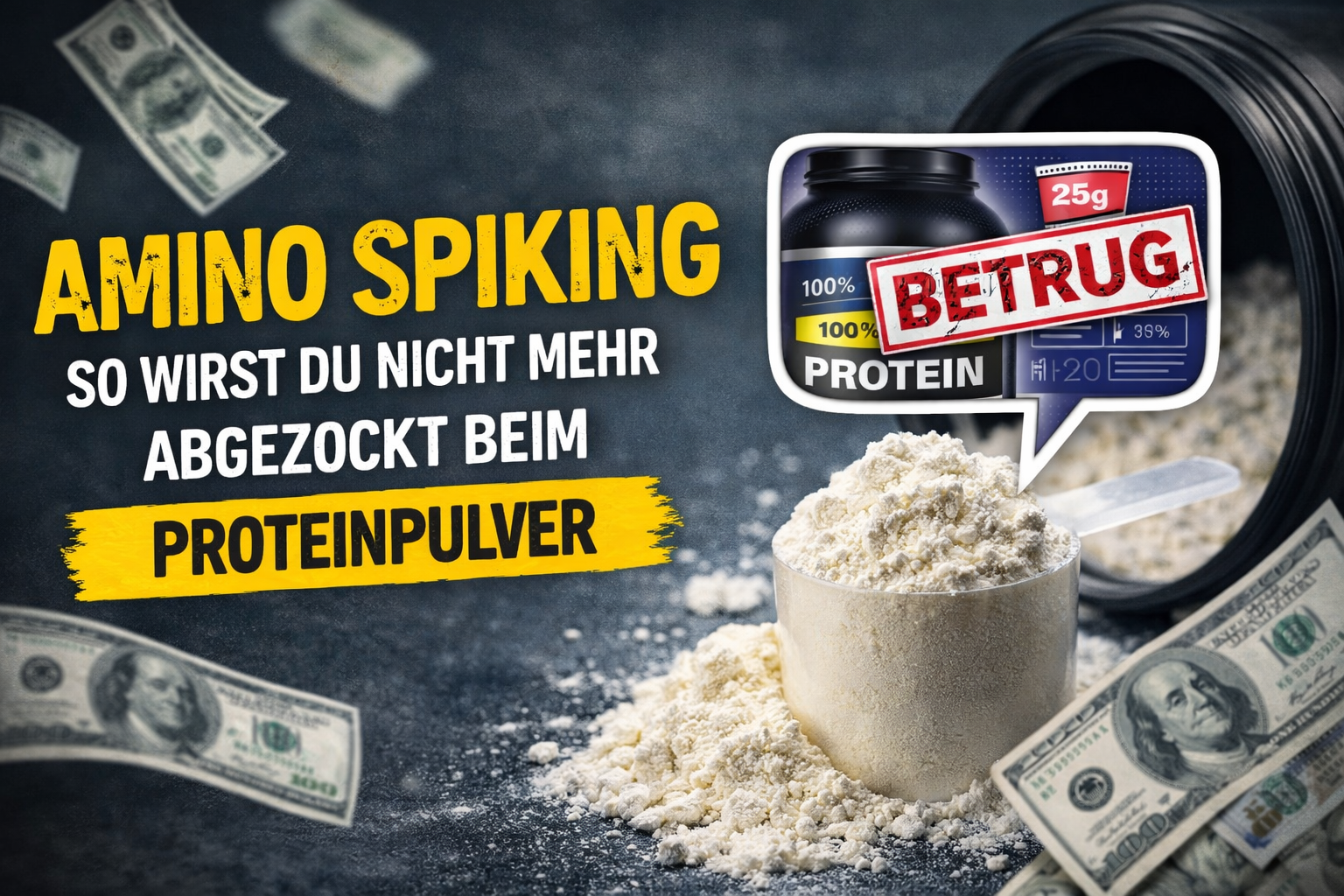
You buy a protein powder with 22 g protein per portion - at least according to the label. Sounds good, doesn't it?
But what many people don't realise: Some manufacturers pimp their products with cheap single amino acids to artificially inflate the protein content. This is called Aminospiking.
Instead of real, complete protein, you get additives such as Glycine, , Taurine, , GlutamineOr Creatine- Amino acids, which contain nitrogen but do not have the same biological value as real protein. The measurement methods react to nitrogen - and some companies take advantage of this.
Why do manufacturers do this?
The answer is simple: save costs - at your expense.
Protein is expensive to produce. If cheap single amino acids are used instead, the production costs are massively reduced. The result is a product that delivers good laboratory values but is of little practical use.
You pay for 100 %, but you may only get 60 % real protein.
Is that even allowed?
Yes - but only if it is declared.
Legally, spiking is permitted in many countries as long as all ingredients are clearly listed on the packaging. The problem is: Not everyone looks closely. And not every brand is transparent enough to give you the information you need.
How you can recognise aminospiking
If you want to buy a protein product, pay attention to the following points:
1. List of ingredients
The ingredients are sorted by quantity. So if creatine, glycine or taurine appear in first or second place, this is a clear warning signal.
2. Amino acid profile
A trustworthy manufacturer will show you exactly which amino acids are contained - and how much of them. If this is missing or only refers to the raw material (not the end product), you should be critical.
3. Certifications
Seals such as GMP, HACCP or IFS show that the product has been produced in a tested environment. Although this is no guarantee against spiking, it is a good sign.
4. Differences in flavours
Did you know that flavours such as chocolate often contain slightly less protein? The reason is the higher cocoa content - this is normal and not cheating, but important when comparing flavours.
5. Note product type
Aminospiking is particularly suitable for "pure" whey products problematic. Mixtures such as All-in-one shakes or mass gainers deliberately contain different ingredients - the addition of creatine is a good idea not automatically a problem.
Viking Tip: If a protein powder is offered at an extremely favourable price, you should take a close look. In the past, there have been repeated discussions about inferior raw materials and dubious declarations for discount brands. That's why we deliberately only offer products that are transparently declared, analysed and approved for the Swiss market.
We focus on quality rather than quantity - which is why we only stock manufacturers that we would trust ourselves.
What you want to avoid
- Powder without aminogram
- Brands with aggressive dumping prices
- Products with "additional aminos" at the top of the list
- Manufacturers who do not disclose origin or analysis
Which protein powders you can buy without hesitation
If you want to make sure that your protein does not contain amino spiking and that you are really giving your body what it needs for muscle building, recovery and performance, we recommend the following products:
1. All Stars Whey
A classic with an honest label.
- Made in Germany
- Fully declared amino acid profile
- Without cheap additional aminos
- Ideal for beginners and advanced users
This whey impresses with its clear focus on quality. No unnecessary gimmicks, no hidden ingredients. What it says on the tin is what it contains - perfect for anyone who likes things simple, clean and effective.
2. Viking Whey from Gods Rage
A product that has strength in more than just its name.
- Premium brand with uncompromising quality standards
- Full disclosure of all ingredients
- Manufactured in Germany under strict standards
- Free from spiking, artificial brighteners and marketing rubbish
Viking Whey was developed for real athletes, not for advertising flyers. No dazzling protein claims - just honest performance. Particularly popular with strength athletes who value an honest amino acid profile and very good tolerability.
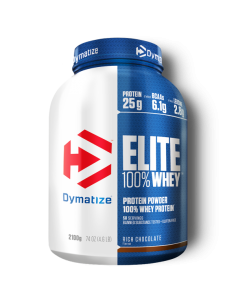
3. Dymatize ISO100 or Elite Whey
The US bestseller - tested and approved in Europe.
- Micro- and cross-flow filtered
- Very high protein content with top bioavailability
- Each batch tested for purity
- Ideal for low-carb diets and definition phases
Dymatize is internationally recognised for transparency and quality. ISO100 in particular is extremely pure, ideal for sensitive digestion and contains no unnecessary amino fillers.
Conclusion: Informed is protected
Aminospiking is legal, but not fair. Don't be fooled by high protein claims - take a close look at what's really inside. With a little background knowledge, you'll recognise the tricks straight away. And if you're unsure: write to us. We'll analyse your product or advise you on your choice.
You want results? Then you need honest protein.












Comments (0)