Boxing for children: at what age does it make sense?
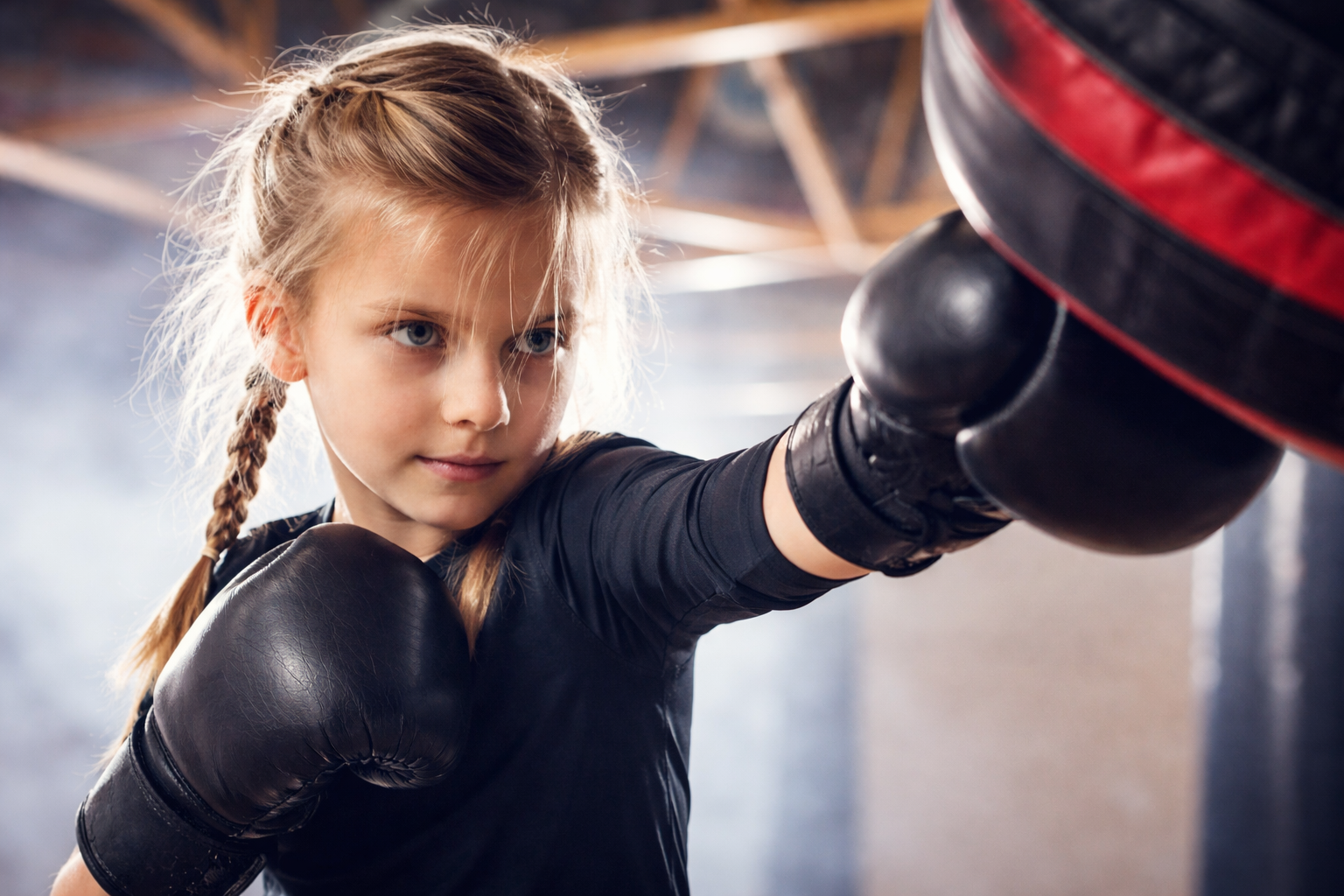
Boxing for children is not exactly an everyday hobby. However, not every child is enthusiastic about football or volleyball. So why not take them to the martial arts centre?
In our blog article, we tell you from what age boxing training for children makes sense, how the training works and what costs you should expect.
1. Boxing for children - a controversial sport
Not everyone understands when parents take their children to schoolBoxing send. Admittedly, anyone who has watched a boxing match or two on television can quickly get the idea that it is more of a fight than an actual sport.
However, this is precisely where the decisive difference between children's training and targeted preparation for full-contact competitions in the youth or adult sector becomes apparent.
First and foremost, boxing for children is about improving general fitness. The training, which is also suitable for beginners, is designed to give children a feel for their bodies.
Even some schools now offer their own boxing club, as boxing is no longer seen as a fringe sport, but above all as an effective full-body workout.
When is children's boxing suitable?
In principle, children can join a boxing club from the age of 5 to 7. Martial arts for children generally has no specific requirements. From our experience, we recommend a minimum age of 6 years. Ask the club what regulations apply there.
In children's boxing you only need the equipment, such as boxing gloves, helmet, bandages and mouthguard. The children learn to box in a sports club. They also learn basic boxing techniques and values from this classic sport. However, it is recommended that children start boxing from the age of around 12, because as soon as it comes to sparring, children need to understand that they can hurt the other person if they don't follow the rules.
2. The fascination of boxing - children become strong and self-confident
Both physical and psychological aspects play an important role in martial arts for children.
As more and more children suffer from obesity and lack of exercise, motor deficits are also on the rise. Alarmingly, many primary school children are barely able to walk across a narrow beam or hop safely on one leg.
Children who learn boxing don't need to worry about their coordination skills. The following aspects are at the centre of children's training:
Coordination:
Firstly, the little ones have to learn to stand securely and move smoothly. All of this requires a high level of attention. Numerous training sessions are required to optimise striking and dodging movements.
Power:
The development of strength initially plays a rather subordinate role, as it is primarily the technique and reaction speed that must be right. Nevertheless, children build up muscles in their entire body when boxing. This contributes to an upright posture in everyday life.
Endurance:
Even though a round of boxing only lasts 3 minutes, it requires a lot of stamina. Every dodging movement and every punch requires a lot of energy, not to mention the fact that it is already exhausting to keep your guard up.
Speed:
Reaction and observation of the opponent play a decisive role in boxing. Children learn to be attentive and to react quickly to a punch.
At the same time, it is important to discover weak points so that you can launch a targeted attack yourself.
At the same time, boxing for children also promotes self-confidence and helps children to develop more willpower and assertiveness at school, without violence of course. The general ability to use the sport for self-defence in an emergency should not be underestimated.
3. TheProtective equipment boxing for children
Every child visiting a boxing club for the first time should be given the opportunity to have a look around and take their first few punches on the punching bag.
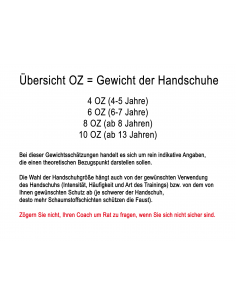
When it comes to registering for the boxing club, children first need GlovesAnd Boxing bandages, to protect the hands during boxing. As sparring only follows later, this is usually sufficient for the beginning.
If a child takes a liking to this sport and the first attempts at practising in the ring are imminent, children need quite comprehensive protective equipment. This includes
- one Head protection,
- one Groin guard(for boys) or a Chest protector (for girls),
- and a Mouthguard (for the teeth).
The punches are comparatively harmless and the children have good protection thanks to the initially quite thick boxing gloves.
4. Accessories - you need this equipment for boxing
As a rule, every club has sufficient Punching bags, , ClampsAnd Boxing pearsAnd SpeedballsReady for training.
Sooner or later, however, most children and young people will want a Punching bagOr a Boxing pearFor the home. Even your own Clamps are required for training with a partner.
Don't go for cheap quality at this point. Otherwise you will quickly end up buying twice. However, good equipment is affordable and will last a very long time.
5. The prices for boxing vary considerably
Generally speaking, you don't have to spend a fortune if you want to send your children to boxing. However, it will be more expensive than the local football club simply because most boxing clubs are privately organised.
The available premises must therefore be financed.
Depending on the amount of training and your individual wishes, you can initially expect to pay around CHF 30 to 50 per month. However, this only applies to group training, which is often favoured at the beginning. If you have competition ambitions, however, you will not be able to avoid more expensive individual training.
Competitions require professional training and discipline.
6. Important questions and answers
When can children start taking part in competitions?
If you have professional ambitions, you shouldn't wait too long to start training. According to the competition regulations of the Swiss Boxing Association, children are allowed to take part in amateur fights from the age of 10.
Do different safety regulations apply to boxing for children?
Both the lap time and the number of laps are age-appropriate. Extensive protective equipment is also required. In particular the Head protectionPlays an important role here.
Is kickboxing suitable for children as an alternative to boxing?
In contrast to boxing, the rules of kickboxing include kicks as well as punches. This requires a slightly different approach to training.
Agility in particular is of crucial importance. Kickboxing also involves less direct fighting in most clubs.
Boxing for children is sport
If your child is interested in boxing, they will spend less time in front of the computer, TV or smartphone. They will develop their coordination and fitness skills and learn fundamental values from sport. They will also get to know other children from their group, with whom they can make friends outside of school. Healthy sport becomes a way of life. The child gains additional motivation by setting goals and pursuing them with discipline. Every success in the sport strengthens self-confidence, which also has a positive effect on the child's everyday life.
Not every child has to like football. Let your children try out different sports. Boxing for kids is definitely an option. Give them the opportunity to have fun with sports.






Comments (0)