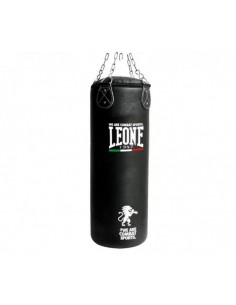
A punching bag is one of the most effective training tools for boxing, kickboxing, Muay Thai and many other combat sports. Before you can start training, however, one important question needs to be answered: Where should you mount your punching bag?
Whether you choose the ceiling, a wall or a wooden beam, each mounting option has its own advantages and disadvantages. The right choice depends on your building structure, the weight of the punching bag and, above all, safety.
In this guide, you'll learn which mounting method is best for your home gym and what you should consider before installation.
Mounting a Punching Bag to the Ceiling
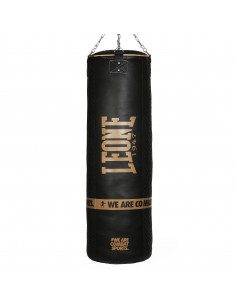
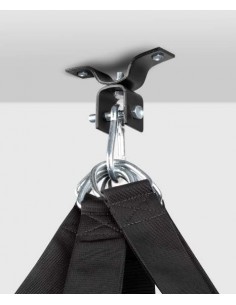
For many martial artists, ceiling mounting is the preferred solution. When attached to a solid concrete ceiling, the punching bag can swing freely, creating a realistic training experience.
This setup is especially suitable for boxing, kickboxing and Muay Thai, allowing natural movement, combinations and footwork.
Benefits
- Natural swinging movement
- Realistic training experience
- Plenty of space to move
- Ideal for intensive training
- Lower sideways stress compared to wall brackets
Drawbacks
- Requires a solid load-bearing ceiling
- Installation can be more complex
- Often not permitted in rental properties
Mounting a Punching Bag to the Wall
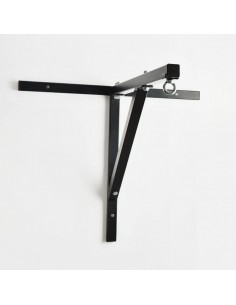
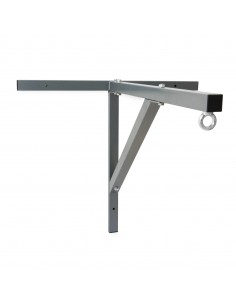
If ceiling mounting is not possible, a heavy-duty wall bracket is an excellent alternative.
The wall must be made of solid concrete or masonry. Drywall or lightweight partition walls are not suitable.
Benefits
- Excellent alternative to ceiling mounting
- Easy to access
- Ideal for garages and basements
- No drilling into the ceiling
Drawbacks
- The punching bag swings less freely
- Higher stress on the wall
- Not every wall is suitable
Mounting to a Wooden Beam
If your training area has exposed structural wooden beams, these may also be suitable for mounting a punching bag.
However, extra care is required. Not every wooden beam is designed to withstand the dynamic forces created during boxing training. Besides the actual weight of the punching bag, punches and kicks generate significant additional forces.
Always use high-quality mounting hardware specifically designed for wooden beams.
Which Surfaces Are Suitable?
Suitable mounting surfaces include:
- Reinforced concrete ceilings
- Solid concrete ceilings
- Load-bearing wooden beams
- Concrete walls
- Solid brick walls
- Sand-lime brick walls
Not suitable are:
- Plasterboard ceilings
- Suspended ceilings
- Decorative wooden ceiling panels
- Drywall partitions
- Thin interior walls
- Damaged or weak masonry
Safety Comes First
A punching bag places much greater stress on its mounting point than its actual weight suggests. Every punch, kick and swing creates significant dynamic loads on the mounting system.
Always use high-quality brackets, anchors and screws that are suitable for the specific building material.
If you are unsure whether your ceiling, wall or wooden beam can safely support the load, consult a structural engineer or another qualified professional before installation. This is especially important in older buildings, timber structures or where the construction is unknown.
Professional installation not only improves safety but also helps prevent damage to the building.
How Much Space Do You Need?
Many people underestimate the amount of space required for a punching bag.
Leave at least one metre (approximately 3 feet) of free space around the bag. For kickboxing or Muay Thai, even more room is recommended to allow unrestricted kicks and movement.
Also ensure that the bag cannot swing into walls, furniture or other obstacles.
Common Installation Mistakes
Many problems are caused by incorrect installation rather than the punching bag itself.
Common mistakes include:
- Mounting to an unsuitable ceiling
- Installing on drywall or lightweight walls
- Using incorrect anchors or screws
- Insufficient distance from the wall
- Choosing a bracket with insufficient load capacity
- Failing to inspect and tighten mounting hardware regularly
Proper installation greatly improves both safety and durability.
Free-Standing Punching Bags – A Good Alternative?
A free-standing punching bag can be a practical solution when drilling into the building is not possible, such as in many rental properties.
Budget models may be suitable for occasional fitness boxing. However, anyone training seriously in boxing, kickboxing or Muay Thai should be aware that high-quality free-standing punching bags are significantly more expensive than many people expect.
Cheaper models often:
- Slide during heavy training
- Rock or tip over more easily
- Provide a less realistic striking feel
- Wear out more quickly
For serious technique, power and combination training, a high-quality hanging punching bag generally provides the better training experience.
If you choose a free-standing model for intensive training, investing in a premium-quality product is highly recommended.
Our Recommendation
If you have access to a solid concrete ceiling, ceiling mounting is generally the best option.
If ceiling installation is not possible, a heavy-duty wall bracket mounted to a solid wall is an excellent alternative.
Structural wooden beams may also be suitable, provided their load-bearing capacity has been verified.
Regardless of the mounting method, safety should always come first. If there is any doubt about the strength of the structure, consult a structural engineer or another qualified professional before installation.
Conclusion
Whether you mount your punching bag to the ceiling, wall or a wooden beam, each option can work well when installed correctly.
For dedicated martial artists, a properly mounted hanging punching bag usually offers the most realistic and effective training experience. By choosing the correct mounting method, using high-quality hardware and ensuring sufficient space, you can enjoy many years of safe and productive training.















Comments (0)