Creatine – For Strength Training, Fitness & Sports
Creatine is one of the best-known supplements in strength training, bodybuilding and fitness. It has been used in sports nutrition for many years and is particularly relevant to sports involving short, high-intensity efforts.
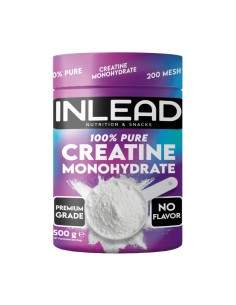
At Vikingstore, you’ll find various creatine products in powder, capsule and tablet form, as well as different types of creatine. These include classic creatine monohydrate and Creapure®, pH-stable or buffered creatine products and other creatine forms.
Which product is right for you should not depend on which name sounds the most impressive. The type of creatine, actual amount per serving, additional ingredients and product format are more important.
What Is Creatine?
Creatine is a substance naturally produced by the human body and stored mainly in skeletal muscle.
The body can produce creatine itself. It is also obtained from certain foods, particularly meat and fish.
In the body, creatine plays an important role in the rapid supply of energy. The phosphocreatine system is particularly relevant here.
As a dietary supplement, creatine is available in several forms. The best-known and most extensively researched form is creatine monohydrate.
How Does Creatine Work in the Body?
Muscle contractions require energy in the form of ATP – adenosine triphosphate.
However, the amount of ATP immediately available in muscle is limited.
Creatine can be stored in muscle as phosphocreatine and is involved in the system that rapidly regenerates ATP during short, intense efforts.
This is one reason why creatine is particularly associated with strength training, sprinting and explosive exercise.
What Does Creatine Do for Training?
Creatine has an authorised health claim in Europe:
Creatine increases physical performance in successive bursts of short-term, high-intensity exercise.
The beneficial effect is obtained with a daily intake of 3 g of creatine.
This is much more precise than simply saying that “creatine makes you stronger” or “creatine builds muscle”.
Creatine for Muscle Gain – What Is Actually True?
Creatine is frequently described as a muscle-building supplement.
However, it is important to distinguish between its direct effects and the wider context of muscle growth.
Creatine is not a structural building block for muscle in the same way that dietary protein provides amino acids. Its established performance benefit relates to successive bursts of short-term, high-intensity exercise.
This can obviously be relevant to strength training.
Building muscle, however, still depends on several factors, including:
- appropriate resistance training,
- sufficient energy intake,
- adequate protein intake,
- consistent training,
- sufficient recovery.
Creatine does not replace any of these fundamentals.
What Types of Creatine Are Available?
Creatine is now available in many different forms.
Some of the best-known include:
Creatine Monohydrate
The classic and most extensively researched form of creatine.
Creapure®
A branded form of creatine monohydrate.
pH-stable or buffered creatine products
This category includes products marketed under names such as Kre-Alkalyn.
Other creatine forms
Depending on the manufacturer, various creatine compounds and combinations are available.
An exotic or more expensive form of creatine is not automatically better than traditional creatine monohydrate.
Creatine Monohydrate – The Classic
Creatine monohydrate is the best-known and most extensively researched form of creatine.
If you are looking into creatine for the first time, you will therefore quickly come across monohydrate.
Products can differ in terms of:
- purity,
- raw material,
- powder structure,
- serving size,
- additional ingredients,
- package size,
- price per serving.
More expensive does not automatically mean better.
At Vikingstore, you’ll find a dedicated category for Creatine Monohydrate & Creapure®.
What Is Creapure®?
Creapure® is not a completely different type of creatine. It is a branded form of creatine monohydrate.
This distinction is important.
When comparing “creatine monohydrate vs. Creapure®”, you are not comparing two fundamentally different types of creatine.
Both provide creatine monohydrate.
If the origin of the raw material and a specific branded ingredient are important to you, Creapure® can be one factor in your choice.
Creatine Monohydrate or Creapure®?
Both provide creatine monohydrate.
You should therefore not assume that Creapure® represents a completely different type of creatine.
Instead, compare factors such as raw material, formulation, serving size, package size and price.
What Does Micronised Creatine Mean?
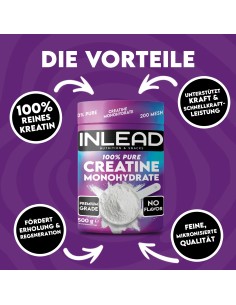
With micronised creatine, the particle size of the powder has been reduced.
This may affect characteristics such as how the powder behaves when mixed.
“Micronised” therefore describes a physical property of the powder rather than a completely different form of creatine.
If the ingredient list says creatine monohydrate, it is still creatine monohydrate.
What Is pH-Stable or Buffered Creatine?
In addition to traditional monohydrate, you will also find buffered or pH-stable creatine products.
These include products sold under names such as Kre-Alkalyn.
The marketing of such products can sometimes suggest that they are automatically superior to conventional monohydrate.
That should be considered critically.
Alternative or buffered creatine forms have not generally been shown to be superior to creatine monohydrate for increasing muscle creatine levels or improving exercise performance.
If you specifically want these products, you’ll find them in the corresponding Vikingstore subcategory.
Other Forms of Creatine
The supplement market offers many additional creatine products alongside monohydrate and buffered forms.
Different creatine compounds, blends and additional ingredients may be used.
A useful rule is:
More ingredients and more complicated names do not automatically mean better creatine.
Always check which type of creatine the product actually contains and how much is provided per daily serving.
At Vikingstore, these products can be found in our Other Creatine Forms category.
Which Type of Creatine Is Best?
Based on the available scientific evidence, creatine monohydrate remains the reference standard. It is the most widely used and extensively studied form.
More expensive alternative forms have not been shown to be generally superior to creatine monohydrate.
That does not mean everyone has to choose exactly the same product.
Format, taste, additional ingredients and personal preferences can also influence your decision.
But if you simply want a classic creatine supplement without unnecessary extras, creatine monohydrate is an obvious place to start.
Creatine Powder or Capsules?
Creatine is commonly available as powder, capsules or tablets.
Creatine powder can easily be mixed with water or another drink and is often competitively priced.
Creatine capsules are convenient when travelling and do not need to be measured.
Depending on the product, however, several capsules may be required to provide the intended daily serving.
Instead of comparing only the price of the container, compare the amount of creatine and cost per daily serving.
How Much Creatine per Day?
Always follow the recommended use of the individual product.
A daily amount of 3 g of creatine is particularly relevant because this is the amount associated with the authorised performance claim in Europe.
More is not automatically better.
Does Creatine Require a Loading Phase?
No. A loading phase is not essential.
A traditional loading strategy uses higher amounts for several days before switching to a lower daily amount.
Another option is to use a consistent daily amount from the beginning. Muscle creatine stores can also increase over time without a loading phase.
You therefore do not have to start with large amounts of creatine.
Do You Need to Cycle Creatine?
The old idea that creatine must always be taken for only a few weeks followed by a mandatory break is outdated.
A traditional “creatine cycle” is not a requirement for using creatine.
Regular intake is more relevant than repeatedly starting and stopping without a specific reason.
When Should You Take Creatine?
One of the most common questions is:
Creatine before or after training?
The exact timing is often presented as being more important than it actually is.
For practical use, consistent daily intake is more important.
Depending on the product instructions and your routine, you can take creatine in the morning, with a meal or around your training session.
Should You Take Creatine on Rest Days?
If you use creatine regularly, it is generally also taken on non-training days.
Creatine is not a traditional pre-workout stimulant that only needs to be consumed immediately before training.
Consistent intake and maintaining muscle creatine stores are more relevant than a single pre-workout serving.
Do You Need to Take Creatine with Sugar?
No.
Creatine does not have to be combined with dextrose, maltodextrin or another fast carbohydrate.
If you are happy taking creatine with water, you do not need to add large amounts of sugar simply because you are using creatine.
This is worth mentioning because older recommendations about creatine and carbohydrates are still widespread.
Can You Mix Creatine with a Protein Shake?
Creatine can be used as part of the same sports nutrition routine as a protein shake.
However, the two products serve different purposes.
Protein contributes to the growth and maintenance of muscle mass.
Creatine increases physical performance in successive bursts of short-term, high-intensity exercise when 3 g of creatine is consumed daily.
You therefore do not have to choose between whey protein and creatine – they are different types of supplements.
Creatine and Coffee – Can You Take Them Together?
There has been considerable discussion about creatine and caffeine over the years.
A blanket rule stating that creatine and coffee must never be consumed together is not appropriate.
If you use caffeine or pre-workout supplements, however, it still makes sense to consider your overall supplement intake and follow the recommended use of the individual products.
Creatine for Women
Creatine is not a “men’s supplement”.
Women can use creatine too.
The authorised performance claim is not gender-specific. It applies to adults performing high-intensity exercise.
Training style, nutrition and individual supplementation are more relevant than gender.
Creatine for Vegetarians and Vegans
Creatine occurs naturally mainly in animal foods such as meat and fish.
If you follow a vegan diet and want to use a creatine supplement, check the complete ingredient list.
Not only the creatine itself but also capsule shells, flavourings and other ingredients may be relevant when determining whether a product is vegan.
Creatine for Bodybuilding and Strength Training
Creatine is particularly closely associated with bodybuilding and strength training.
That makes sense because these activities regularly involve short periods of high-intensity effort.
Creatine increases physical performance in successive bursts of short-term, high-intensity exercise when 3 g is consumed daily.
However, creatine does not replace good training, nutrition or recovery.
Creatine for Boxing, Muay Thai and Combat Sports
Creatine is not exclusively relevant to bodybuilding.
Boxing, Muay Thai and other combat sports also involve repeated periods of high-intensity effort.
However, creatine should not be viewed as a special “boxing supplement”. Whether you choose to use it depends on your training, nutrition and personal goals.
Combat athletes should also consider whether they need to compete within a specific weight class.
Does Creatine Cause Weight Gain?
Body weight can increase when using creatine.
This should not automatically be confused with an increase in body fat.
Creatine can increase water content within muscle tissue. A change on the scales may therefore occur, particularly when starting creatine supplementation.
For bodybuilders this may not be an issue. For boxers and other weight-class athletes, however, changes in body weight can be relevant.
Does Creatine Cause Water Retention?
Creatine can increase the amount of water stored within muscle tissue.
This is not the same as saying that creatine automatically makes you look “bloated”.
The extent to which changes in body weight are noticeable can vary from person to person.
What Should You Look for When Buying Creatine?
Creatine products can differ considerably.
When comparing products, pay particular attention to:
- type of creatine
- amount of creatine per daily serving
- monohydrate, Creapure®, buffered or another form
- powder, capsules or tablets
- pure creatine or combination product
- additional ingredients
- number of daily servings
- package size
- price per 100 g or daily serving
- manufacturer’s recommended use
Do not be distracted by complicated product names or by products advertising as many different forms of creatine as possible.
Buy Creatine at Vikingstore
At Vikingstore, you’ll find creatine for strength training, bodybuilding, fitness and sports in various forms.
To make it easier to find the right product, our creatine range is divided into dedicated subcategories:
Creatine Monohydrate & Creapure®
For classic creatine monohydrate and products containing the branded Creapure® raw material.
pH-Stable Creatine, Kre-Alkalyn & Krea-Genic
For buffered and corresponding creatine variants.
Other Creatine Forms
For other creatine compounds and combination products.
Compare the type of creatine, product format, serving size and formulation to find the option that best suits your requirements.
What Is Creatine?
Creatine is a substance naturally produced by the body and stored mainly in muscle. It is involved in the system responsible for rapidly supplying energy during short, intense efforts.
What Does Creatine Do?
Creatine increases physical performance in successive bursts of short-term, high-intensity exercise. The beneficial effect is obtained with a daily intake of 3 g of creatine.
Which Type of Creatine Is the Most Studied?
Creatine monohydrate is the most extensively researched and most widely used form of creatine.
What Is the Difference Between Creatine Monohydrate and Creapure®?
Creapure® is a branded form of creatine monohydrate. They are therefore not two fundamentally different types of creatine.
Is Kre-Alkalyn Better Than Creatine Monohydrate?
Buffered creatine forms have not been shown to be generally superior to creatine monohydrate.
How Much Creatine Should You Take per Day?
Follow the recommended use of the individual product. For the authorised performance benefit, a daily intake of 3 g of creatine is required.
Do You Need a Creatine Loading Phase?
No. A loading phase can increase muscle creatine stores more quickly, but it is not essential. Regular intake without a loading phase is also possible.
Do You Need to Cycle Creatine?
No. Creatine does not have to be used only in short cycles followed by mandatory breaks.
When Should You Take Creatine?
The exact timing is less important than consistent intake. Follow the recommended use of the individual product.
Can You Combine Creatine with Whey Protein?
Yes. Creatine and protein serve different purposes and can be included in the same sports nutrition routine.
Is Creatine Suitable for Women?
Creatine is not a gender-specific supplement. Women who participate in appropriate sports and training can also use creatine.
Does Creatine Cause Weight Gain?
Body weight can increase during creatine supplementation, partly due to increased water content within muscle tissue. This should not be confused with an equivalent increase in body fat.
Is Creatine Only for Bodybuilding?
No. Creatine is also used in other sports involving repeated short, high-intensity efforts.