Progressive basic training in a 2-split for muscle building
Our 2-split basic training programme is based on the principle of progressively increasing the load and is ideal for beginners with 4-6 months of training experience who want to achieve maximum muscle growth in the shortest possible time. We at Team Viking recommend the training plan for building muscle in a 2-split with a progressive increase in load according to our full-body training plan.
When you start building muscle or bodybuilding, you should first complete a solid basic training programme that aims to target as many muscle groups as possible with heavy basic exercises.
As a beginner, it is important to learn to master the basic exercises perfectly in terms of execution and technique! The aim should be to improve your technique and to be able to handle more weight in the long term - this leads to optimal and rapid muscle building. To ensure that muscle building does not stagnate and continuous progress can be made, we work together in this training plan in a 2-split with progressive increases in load.
Basic training versus volume training:
On the whole, it can be said that beginners are not recommended to do high-intensity training.
Basic training with a low volume, an appropriate increase in intensity and a few but effective basic exercises forms the ideal basis for a later switch to split training.
After a basic training programme, those switching to the sport should first focus on a 2-bike split and then look for a high-quality 3-bike, 4-bike or even 5-bike split!
The rule of thumb is that you should not change your training as long as you are achieving success!
Advanced athletes can also benefit from this form of training in blocks. This allows you to get the most out of the basic exercises - which ultimately leads to a new level of strength and more muscle mass.
A beginner who starts volume training faces many challenges. They will probably not be able to make any real progress in any exercise as they lack the necessary intensity to perform so many exercises in one session. This could lead to injuries and overuse injuries, as neither their muscles nor their joints and ligaments are prepared for such intensive training. There is also a risk of overtraining the nervous system, which can affect motivation and energy levels for training and, in the worst case scenario, could even lead to flu, which significantly hinders training progress.
How should the basic training programme for a beginner be designed?
For beginners, we recommend a full-body workout with a training frequency of 2-3 times a week, depending on the level of performance.
People who regenerate quickly and have little stress (and can constantly increase the weights!) should train 3-4 times a week. However, those who regenerate slowly or are still suffering from the effects of their last training session should rather only complete 2 training sessions per week, despite their ambition.
This method leads to more progress than constant training at the limit!
Muscle failure should be avoided as far as possible in beginner training, as it both increases the risk of injury and does not bring any additional success. On the contrary, overloading the nervous system can lead to setbacks in training!
Our "2-split basic training plan" consists of two alternating basic plans with a few exercises and a progressive increase in sets and weights.
Please limit yourself to not doing more exercises - even if it may not seem like much! Instead, concentrate fully on these few exercises, as quality is more important than quantity. When performed correctly, all muscles are trained equally!
"Concept and training strategy for basic training."
Recommended general conditions:
- Full-body training with alternating plans (A/B/A)
- Training 2-3 times a week depending on regeneration capacity
- Set break: 120-180 seconds
- Break between exercises: 2 minutes
- Training duration per session: 50-60 minutes (strength part) + 20 minutes endurance training
- Move weight very cleanly and in a controlled manner
- Principle of progressive load increase
- Only one exercise per training session until muscle failure!
- Only do as many repetitions as you can complete with the best technical execution!
- Take at least one rest day between each training day for recovery and regeneration
What is meant by a progressive increase in load?
Training for bodybuilding and muscle building with a progressive increase in load was originally derived from the famous Weider training principles and was known there as the "principle of progressive overload". The idea behind this principle is that the body gets used to constant training stimuli over time and no longer reacts to them. It practically adapts to your training, the constant weights, repetitions and intensity. To promote further muscle building, it is therefore necessary to progressively increase the training stimulus at regular intervals.
In terms of our training plan, this has the following consequences:
In the first workout, complete a maximum of 8 repetitions. Once you have completed the specified 3 sets of 8 repetitions with clean technique and correct execution of the movement, the next workout is aimed at 3x10 repetitions. If these are also performed properly, 3 x 12 repetitions will follow.
Only now do you increase the weight and reduce it again to 8 repetitions, starting with the increased weight (z.B. 2.5 -5 kg more) for the sets of
3x8 , then to
3x10 , last to
3x12 until the next increase in weight.
The important thing is: To avoid overloading, please only perform one selected exercise until muscle failure. This exercise should change from workout to workout."
Your basic training plan can look like this:
Main objective: Muscle building
System: 2-piece split
Level: Beginners
Days/week: 2 - 3 days
Duration/unit: 50-60 min. + 20. endurance training
Duration/training plan: 16 weeks
Record break: 120 - 180 seconds
Training breakdown (example):
Monday (A)
Wednesday (B)
Friday (A)
Monday (B)...
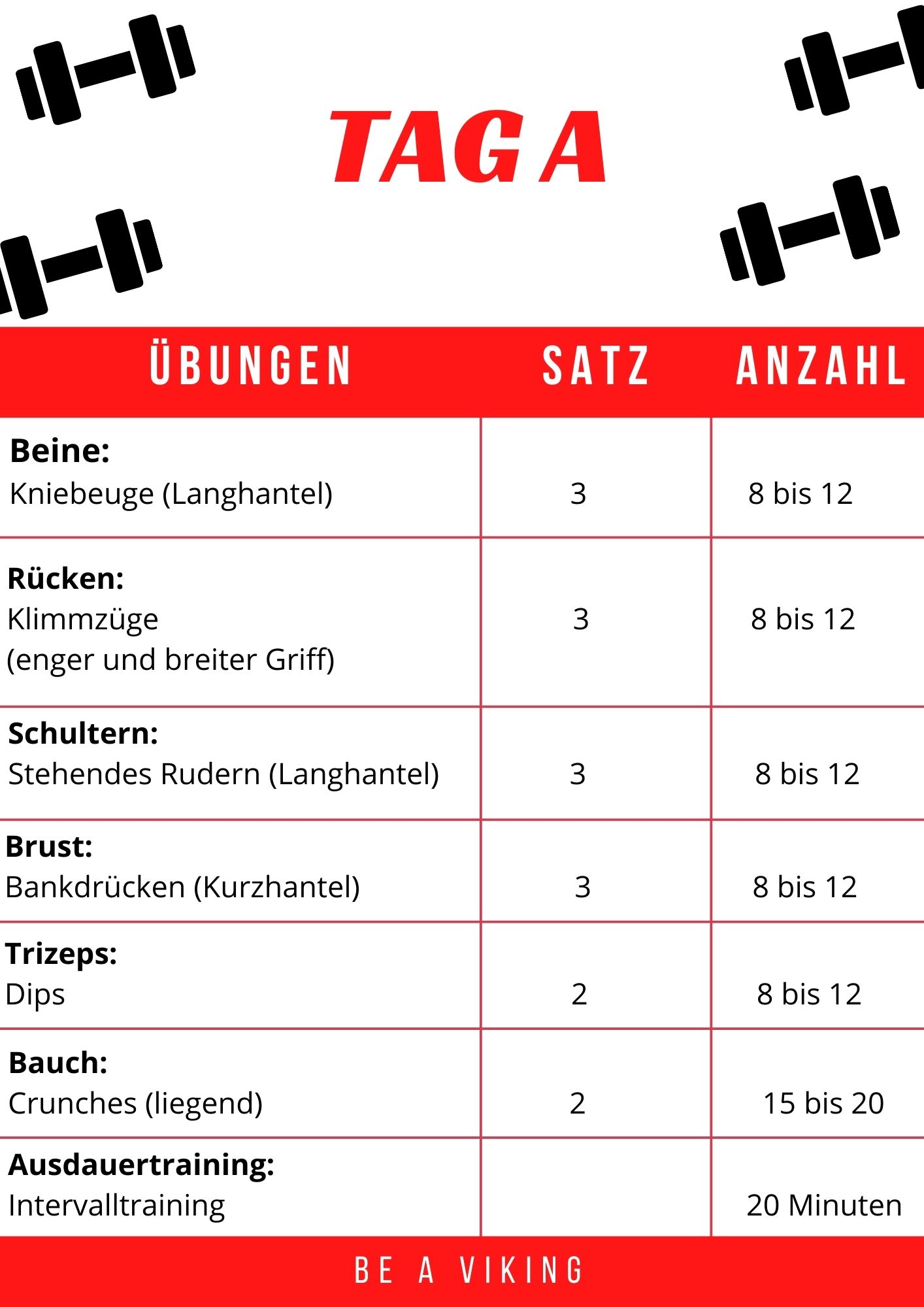
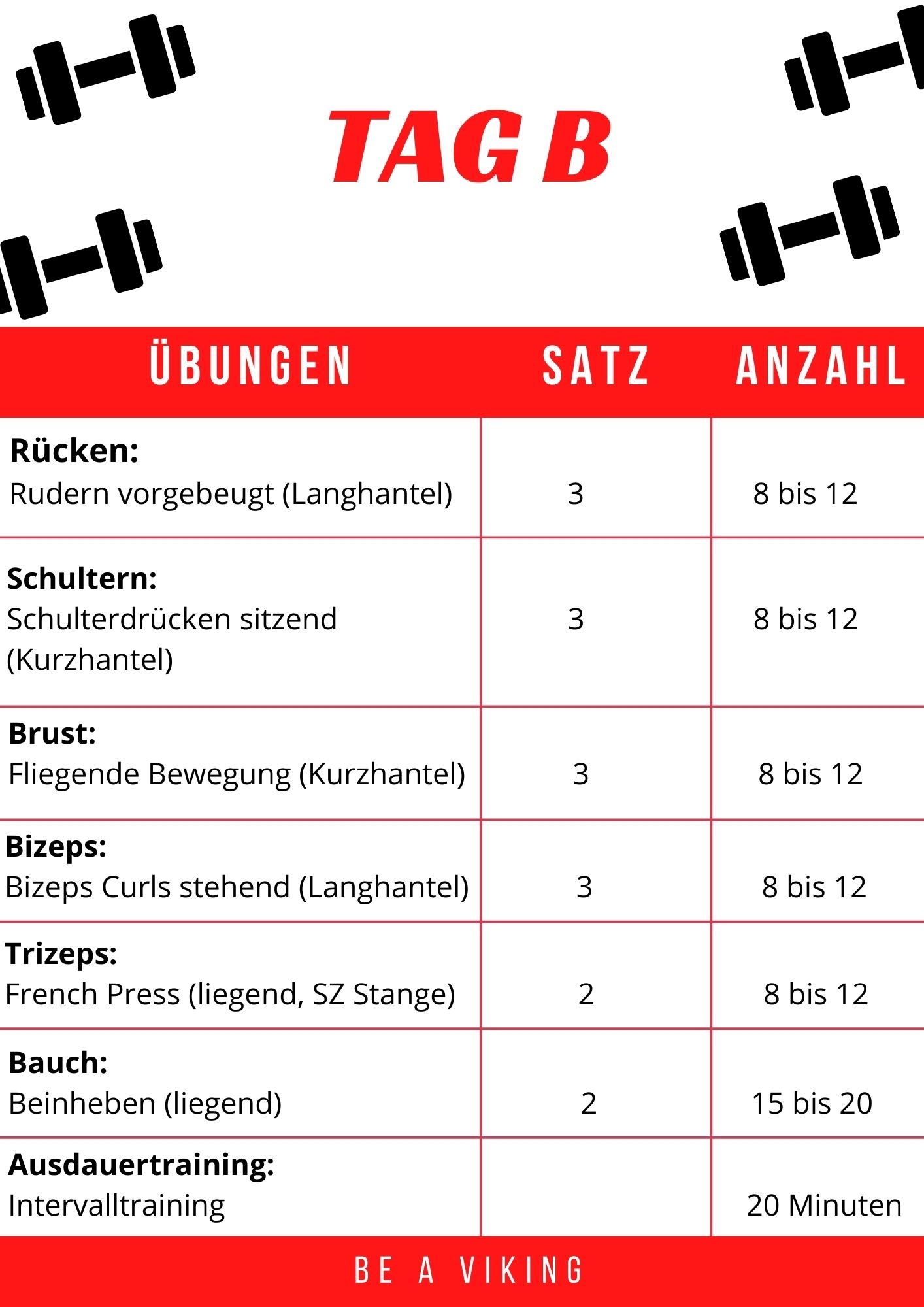
If you reach a phase in which you are no longer making progress, reduce your weight by 15-20% and start a new attempt from the bottom up. This way you are already building in active recovery!
If you've reached a point where progress is no longer possible, try one of our strength training plans to break through this plateau. You can then try again with your regular training programme! Our team will be happy to help you choose the right training plan for you.
If you still don't see any improvements, you could switch to a high-quality 3- or 4-part split. This will give you the opportunity to train your individual muscle groups more intensively and with more exercises!
The main goals of basic training for beginners are to continuously improve technique and increase weight. Let an experienced fitness trainer introduce you to our training exercises and make sure that you perform them correctly and cleanly!
Why is it important to combine cardio training with muscle-building training?
Cardio training is often missing from many training plans for muscle building. In this special training plan, however, we have deliberately decided to include endurance training, as it has numerous positive effects on the body and can even support muscle building. Regular cardio training is not only important for fat metabolism, but also for building muscle mass. By improving the cardiovascular system, your muscles are better supplied with oxygen and nutrients, which can ultimately lead to improved muscle growth.
- Overview of the benefits of cardio training in terms of muscle building:
- Improved oxygen uptake
- Improved capillarisation
- Increased number of mitochondria (powerhouse of the cells)
- Increased performance Mitochondria
- Optimisation of glycogen stores
Please don't let anyone convince you that two cardio training sessions could impair your muscle building. On the contrary, moderate cardio training can actually be beneficial for building muscle.
However, even the most effective training plan will not bring you results if you do not adjust your diet accordingly to support muscle growth.
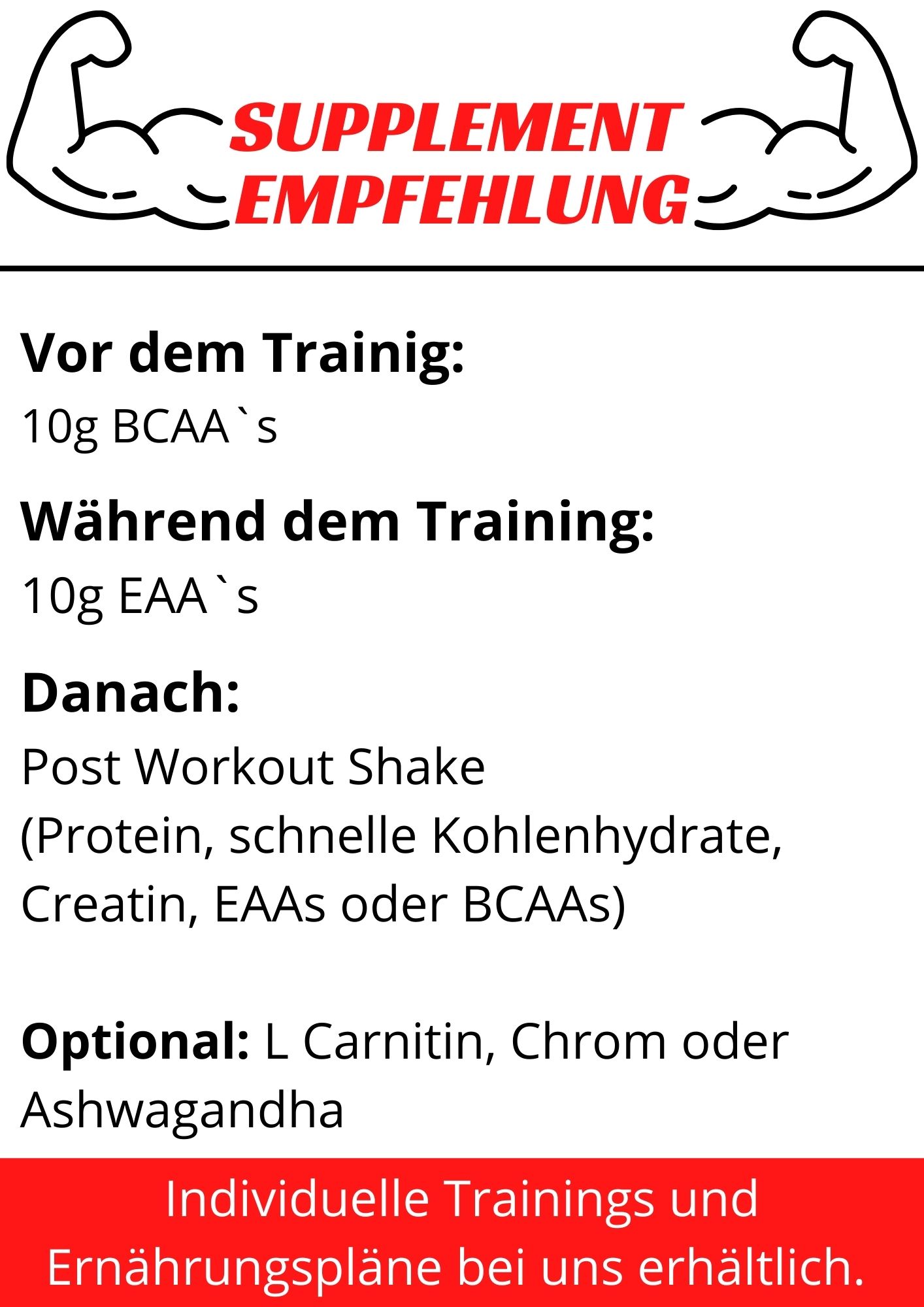
Nutrition and supplement recommendations for basic training
Different nutritional strategies are recommended depending on your individual metabolic type. You can find more information on this in various specialist articles in the Nutrition section. Our coaching programme is recommended for optimal progress. You will receive a personalised nutrition and training plan created by experts. But that's not all, because as part of our CoachingsYou will receive regular support from our consultants and your plans will be adjusted according to your successes so that you can realise your full potential. You can find more details in our coaching section!
It is very important for all metabolic types to have sufficient ProteinIn the diet to avoid a deficiency. Protein-rich foods include fish, eggs, meat and dairy products.
If required, these can be combined with our Protein products be supplemented to include many Amino acidsTo be provided. In addition to sufficient protein intake, carbohydrates are particularly important as an important source of energy; high-quality carbohydrate sources should be favoured. Especially for hardgainers Carbohydrates and a positive energy balance are essential.
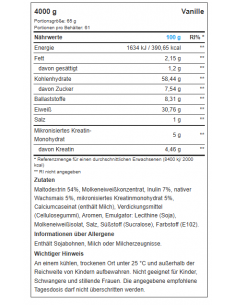
After training, it is recommended to take a post-workout shake (a mixture of Whey protein, , MaltodextrinAnd Creatine) that is adapted to your metabolic type. While the protein contributes to muscle building, the creatine it contains increases physical performance.


















Comments (0)